Earth — Page 23
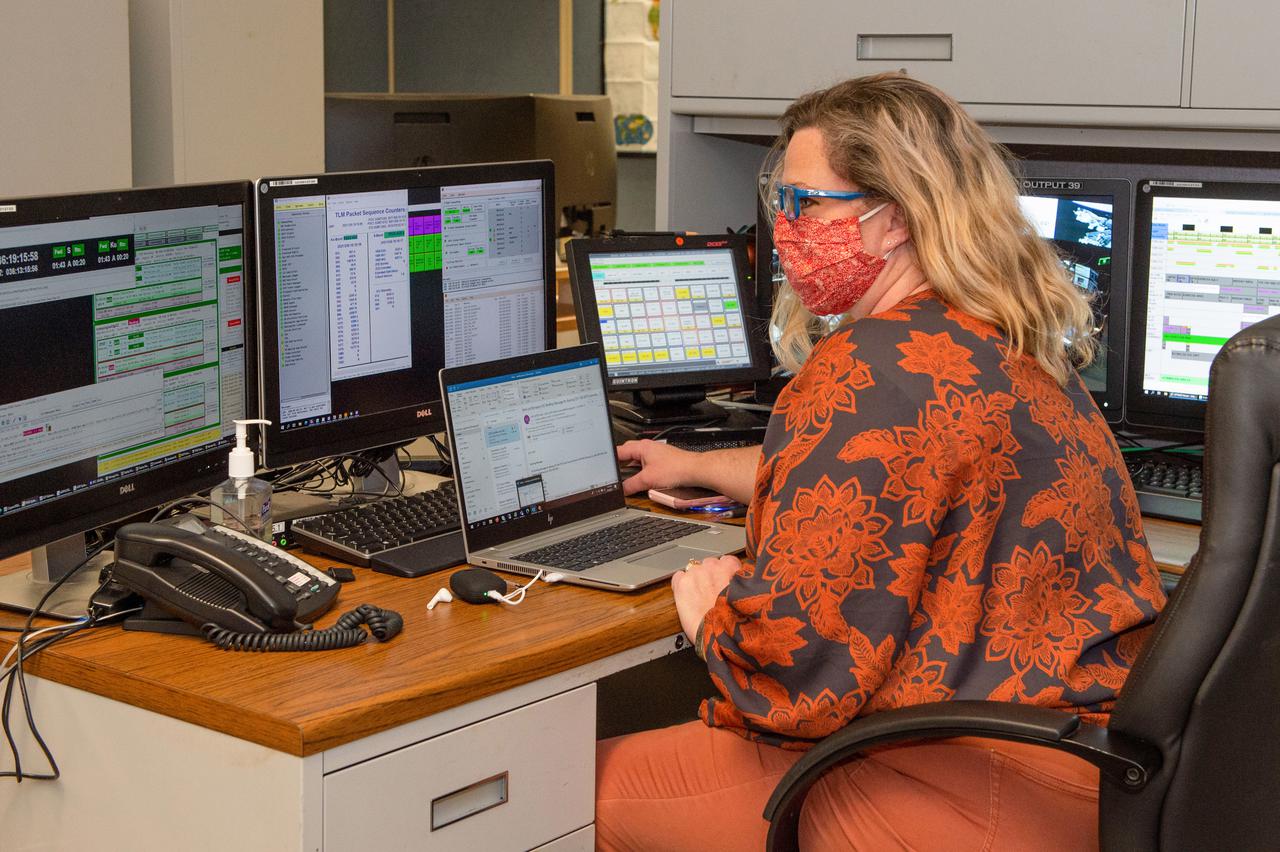
A look inside the International Space Station Payload Operations Integration Center at NASA’s Marshall Space Flight Center in Huntsville, AL. The POIC team supports science operations on the International Space Station 24 hours a day, 7 days a week. For more than 20 years the POIC team has worked with scientists from around the world to enable the space station crew to conduct experiments that improve life on Earth and enable future exploration.

A look inside the International Space Station Payload Operations Integration Center at NASA’s Marshall Space Flight Center in Huntsville, AL. The POIC team supports science operations on the International Space Station 24 hours a day, 7 days a week. For more than 20 years the POIC team has worked with scientists from around the world to enable the space station crew to conduct experiments that improve life on Earth and enable future exploration.
Open

A look inside the International Space Station Payload Operations Integration Center at NASA’s Marshall Space Flight Center in Huntsville, AL. The POIC team supports science operations on the International Space Station 24 hours a day, 7 days a week. For more than 20 years the POIC team has worked with scientists from around the world to enable the space station crew to conduct experiments that improve life on Earth and enable future exploration.
Open
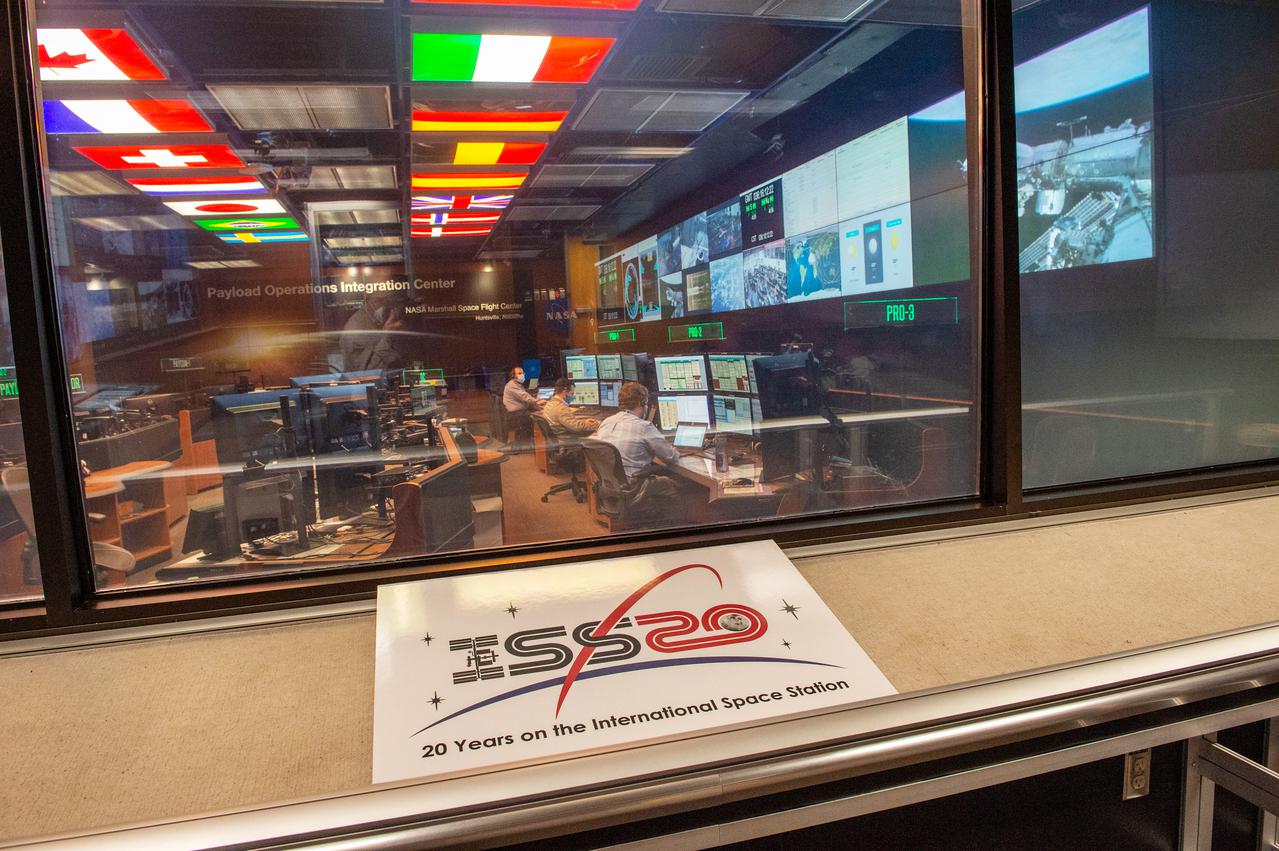
A look inside the International Space Station Payload Operations Integration Center at NASA’s Marshall Space Flight Center in Huntsville, AL. The POIC team supports science operations on the International Space Station 24 hours a day, 7 days a week. For more than 20 years the POIC team has worked with scientists from around the world to enable the space station crew to conduct experiments that improve life on Earth and enable future exploration.
Open

A look inside the International Space Station Payload Operations Integration Center at NASA’s Marshall Space Flight Center in Huntsville, AL. The POIC team supports science operations on the International Space Station 24 hours a day, 7 days a week. For more than 20 years the POIC team has worked with scientists from around the world to enable the space station crew to conduct experiments that improve life on Earth and enable future exploration.
Open

A look inside the International Space Station Payload Operations Integration Center at NASA’s Marshall Space Flight Center in Huntsville, AL. The POIC team supports science operations on the International Space Station 24 hours a day, 7 days a week. For more than 20 years the POIC team has worked with scientists from around the world to enable the space station crew to conduct experiments that improve life on Earth and enable future exploration.
Open
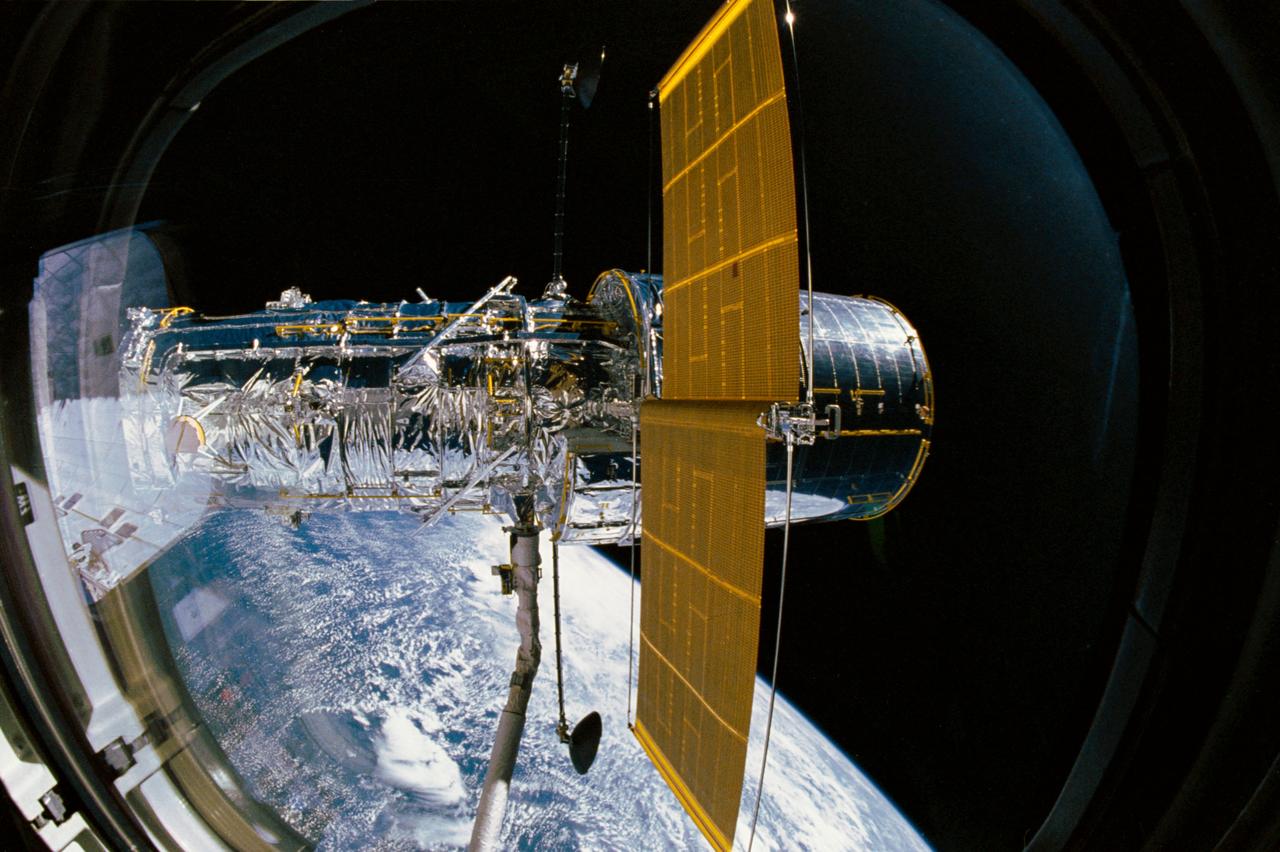
STS-31 Hubble Space Telescope (HST) (SAs & HGAs deployed) is grappled by RMS
Open
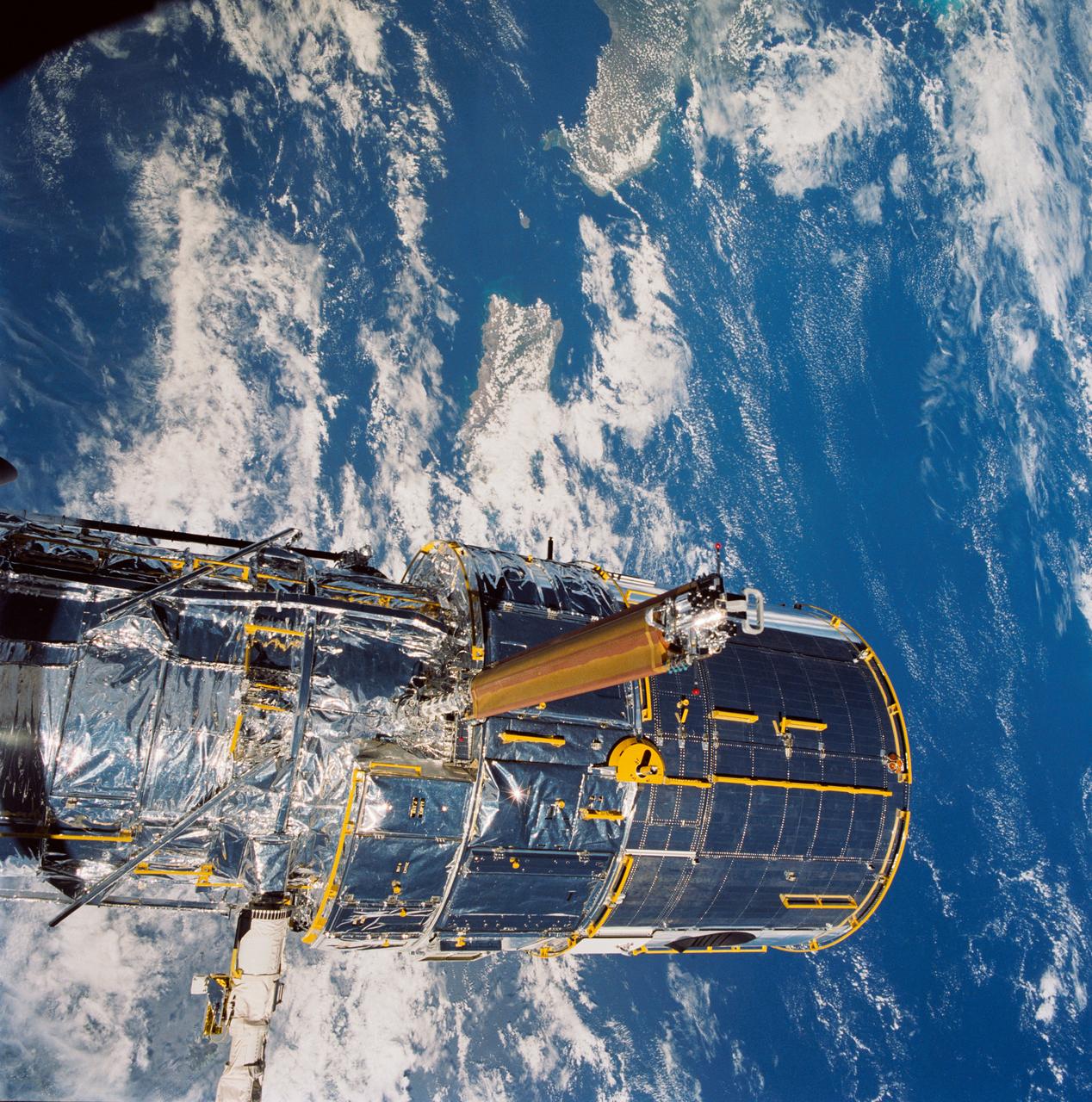
STS-31 Hubble Space Telescope (HST) pre-deployment procedures aboard OV-103
Open
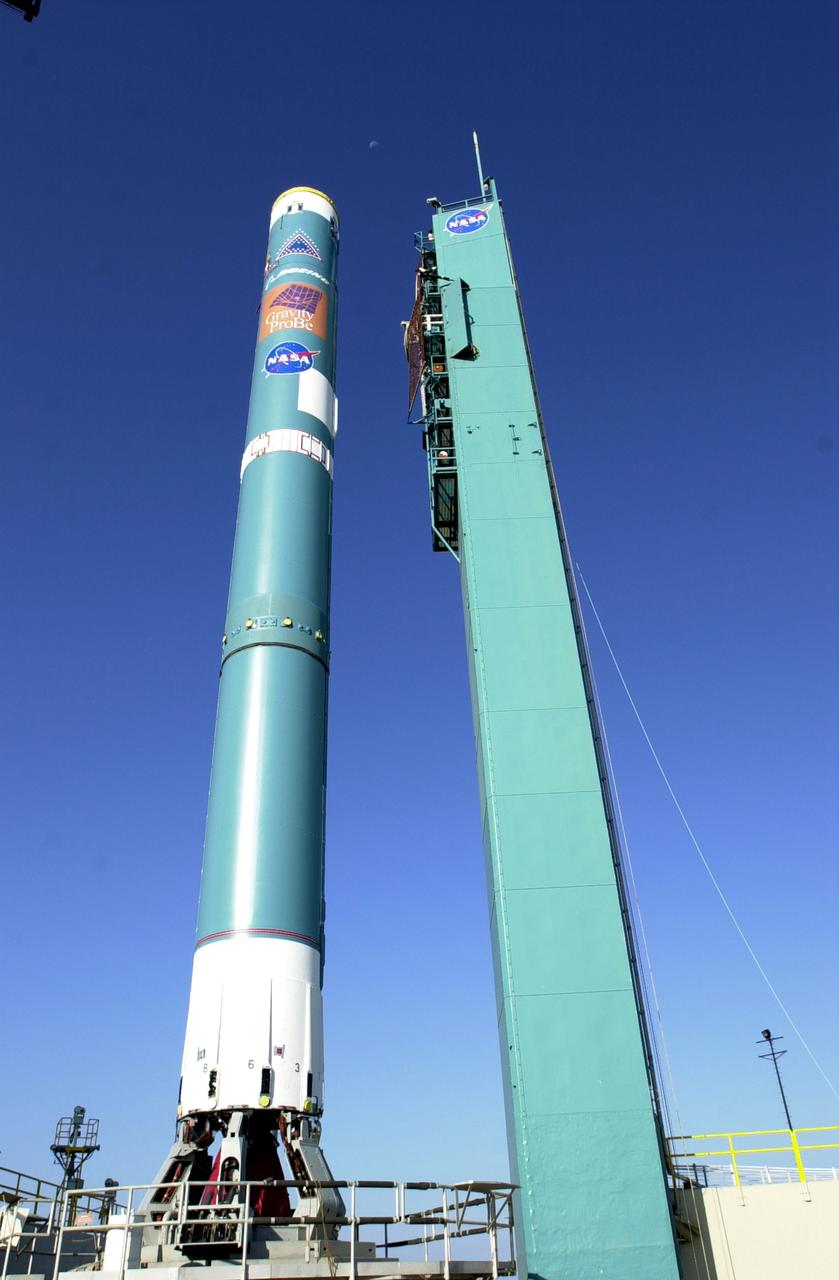
VANDENBERG AFB, CALIF. - The mobile service tower on Space Launch Complex 2, Vandenberg Air Force Base, Calif., rolls back from the Delta II rocket that will launch the Gravity Probe B experiment. The Gravity Probe B will launch a payload of four gyroscopes into low-Earth polar orbit to test two extraordinary predictions of Albert Einstein’s general theory of relativity: the geodetic effect (how space and time are warped by the presence of the Earth) and frame dragging (how Earth’s rotation drags space and time around with it). Once in orbit, for 18 months each gyroscope’s spin axis will be monitored as it travels through local spacetime, observing and measuring these effects. The experiment was developed by Stanford University, Lockheed Martin and NASA’s Marshall Space Flight Center. The targeted launch date is Dec. 6, 2003.
Open
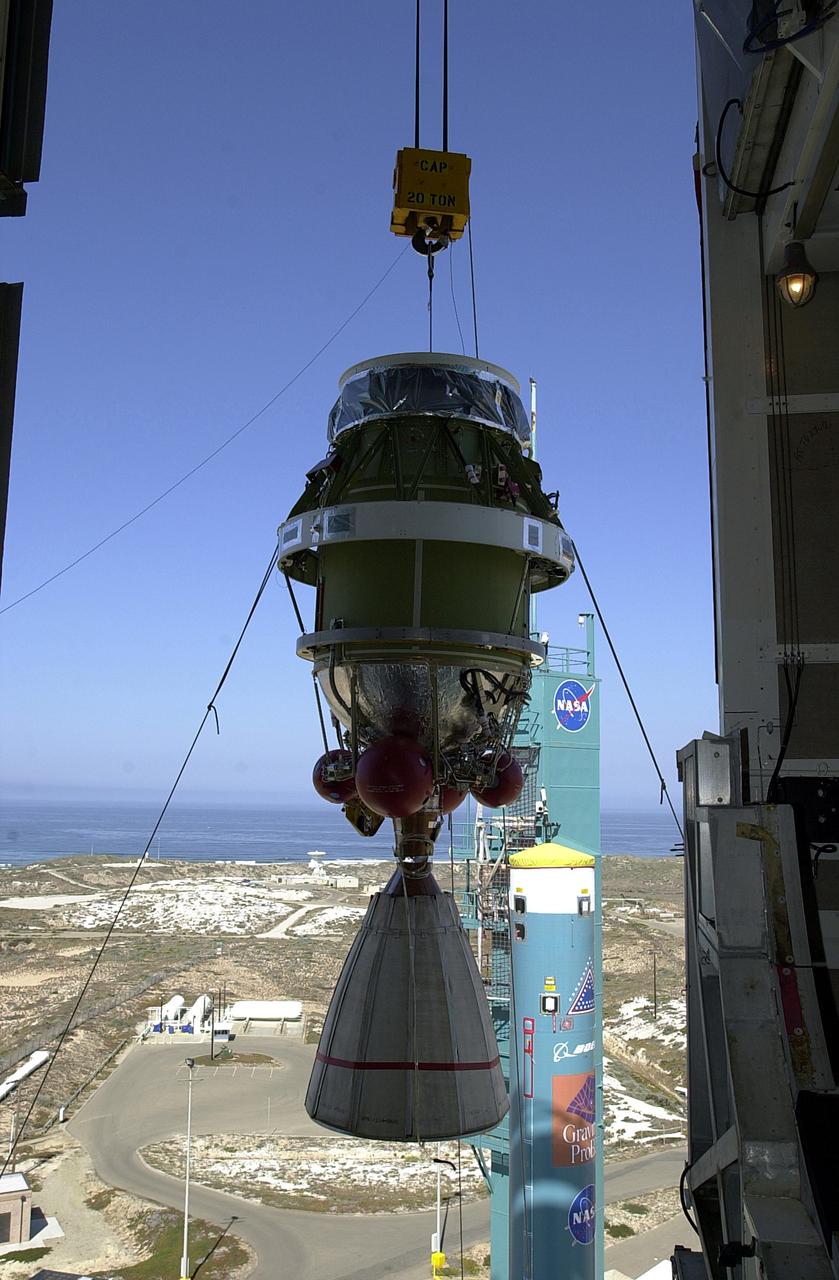
VANDENBERG AFB, CALIF. - Viewed from inside, the second stage of the Delta II launch vehicle for the Gravity Probe B experiment is lifted up the mobile service tower on Space Launch Complex 2, Vandenberg Air Force Base, Calif. Behind it is the first stage of the Delta II. The Gravity Probe B will launch a payload of four gyroscopes into low-Earth polar orbit to test two extraordinary predictions of Albert Einstein’s general theory of relativity: the geodetic effect (how space and time are warped by the presence of the Earth) and frame dragging (how Earth’s rotation drags space and time around with it). Once in orbit, for 18 months each gyroscope’s spin axis will be monitored as it travels through local spacetime, observing and measuring these effects. The experiment was developed by Stanford University, Lockheed Martin and NASA’s Marshall Space Flight Center. The targeted launch date is Dec. 6, 2003.
Open

VANDENBERG AFB, CALIF. - Viewed from inside, the second stage of the Delta II launch vehicle for the Gravity Probe B experiment is lifted up the mobile service tower on Space Launch Complex 2, Vandenberg Air Force Base, Calif. The Gravity Probe B will launch a payload of four gyroscopes into low-Earth polar orbit to test two extraordinary predictions of Albert Einstein’s general theory of relativity: the geodetic effect (how space and time are warped by the presence of the Earth) and frame dragging (how Earth’s rotation drags space and time around with it). Once in orbit, for 18 months each gyroscope’s spin axis will be monitored as it travels through local spacetime, observing and measuring these effects. The experiment was developed by Stanford University, Lockheed Martin and NASA’s Marshall Space Flight Center. The targeted launch date is Dec. 6, 2003.
Open
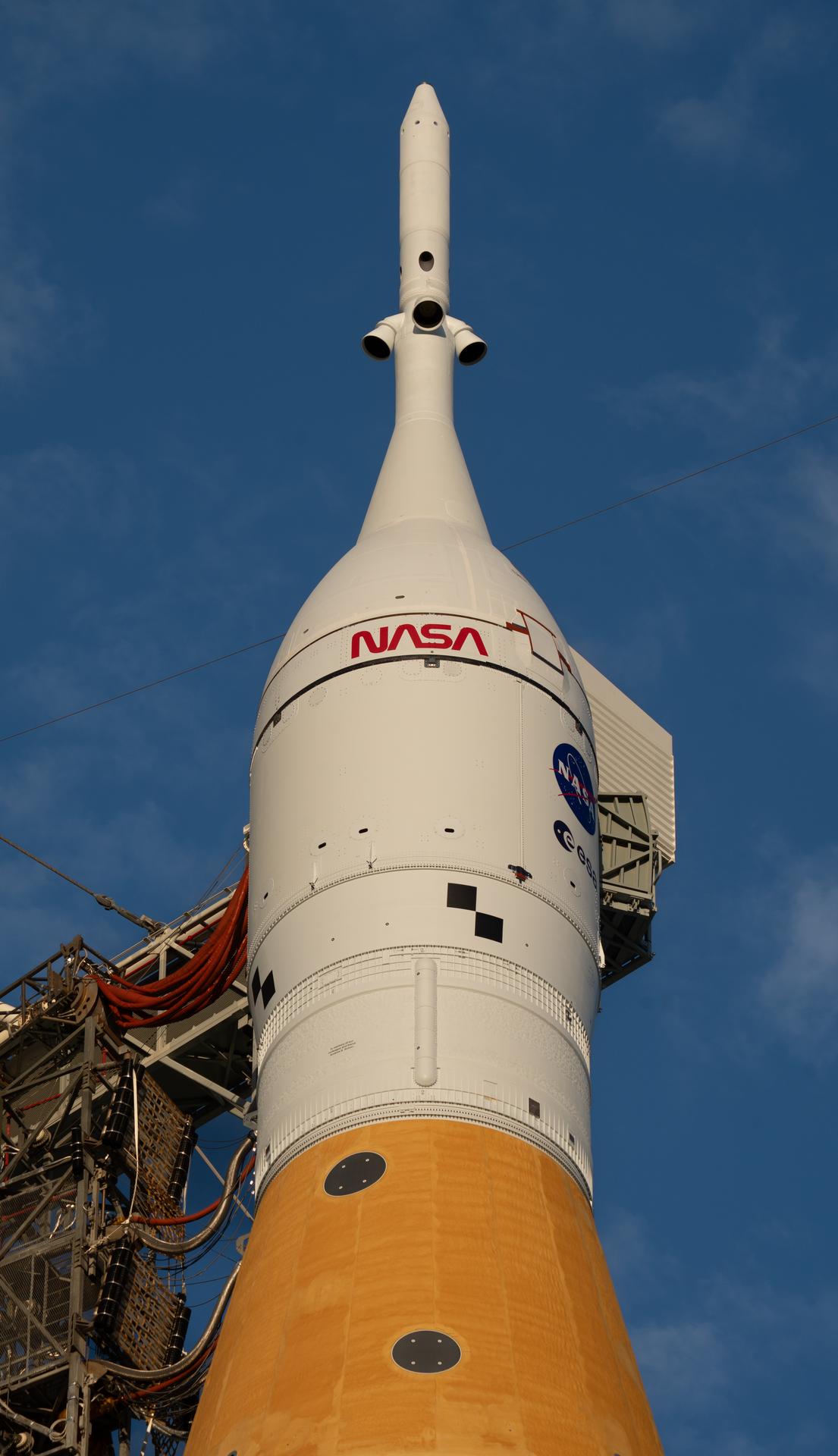
Artemis II on Launch Pad 39B
Open
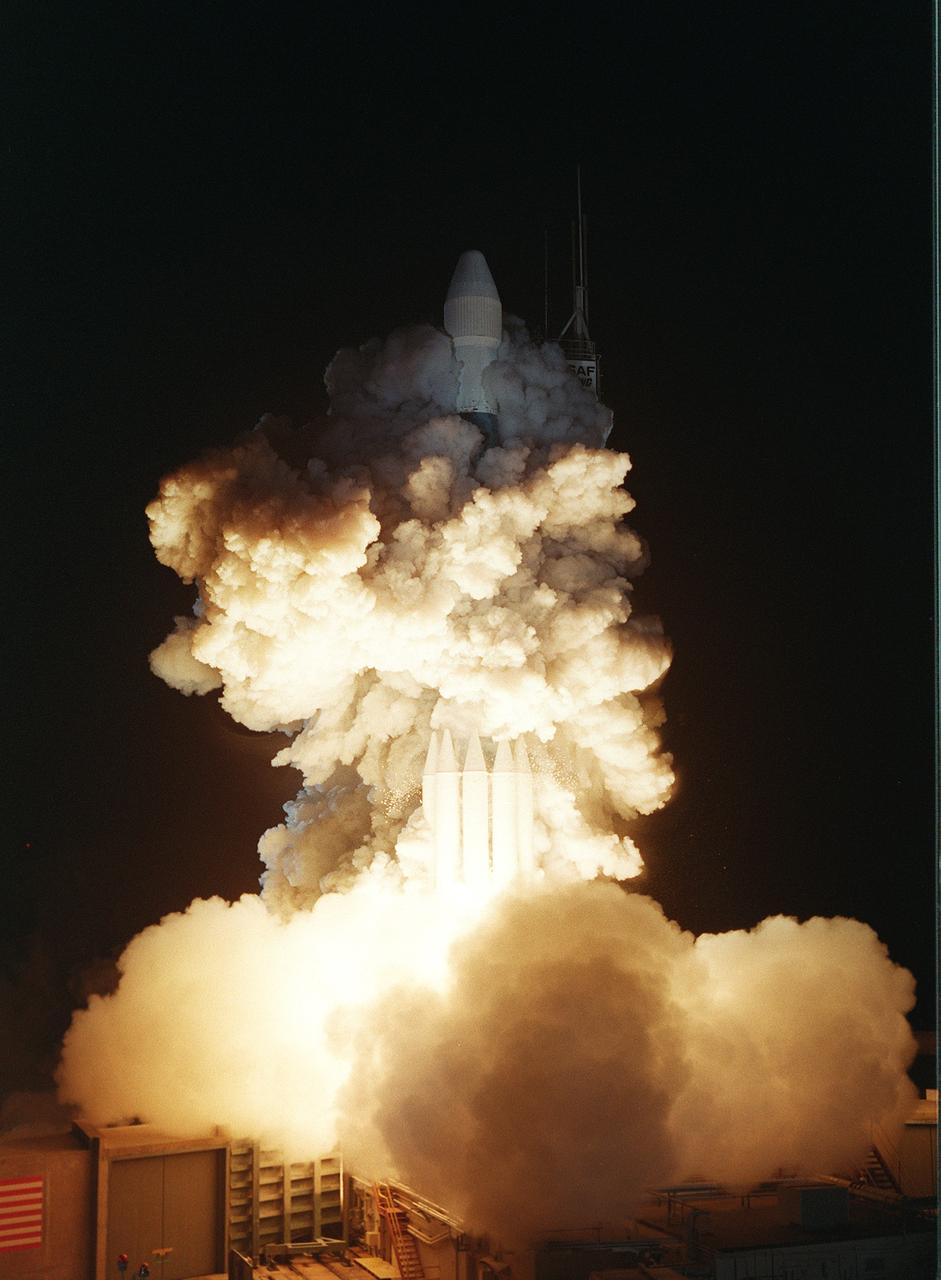
KENNEDY SPACE CENTER, FLA. - From a burst of fire and smoke, the Delta II launch vehicle races into the sky carrying the second Mars Exploration Rover, Opportunity. The bright glare briefly illuminated Florida Space Coast beaches. Opportunity’s dash to Mars began with liftoff at 11:18:15 p.m. Eastern Daylight Time from Cape Canaveral Air Force Station, Fla. The spacecraft separated successfully from the Delta's third stage 83 minutes later, after it had been boosted out of Earth orbit and onto a course toward Mars.
Open
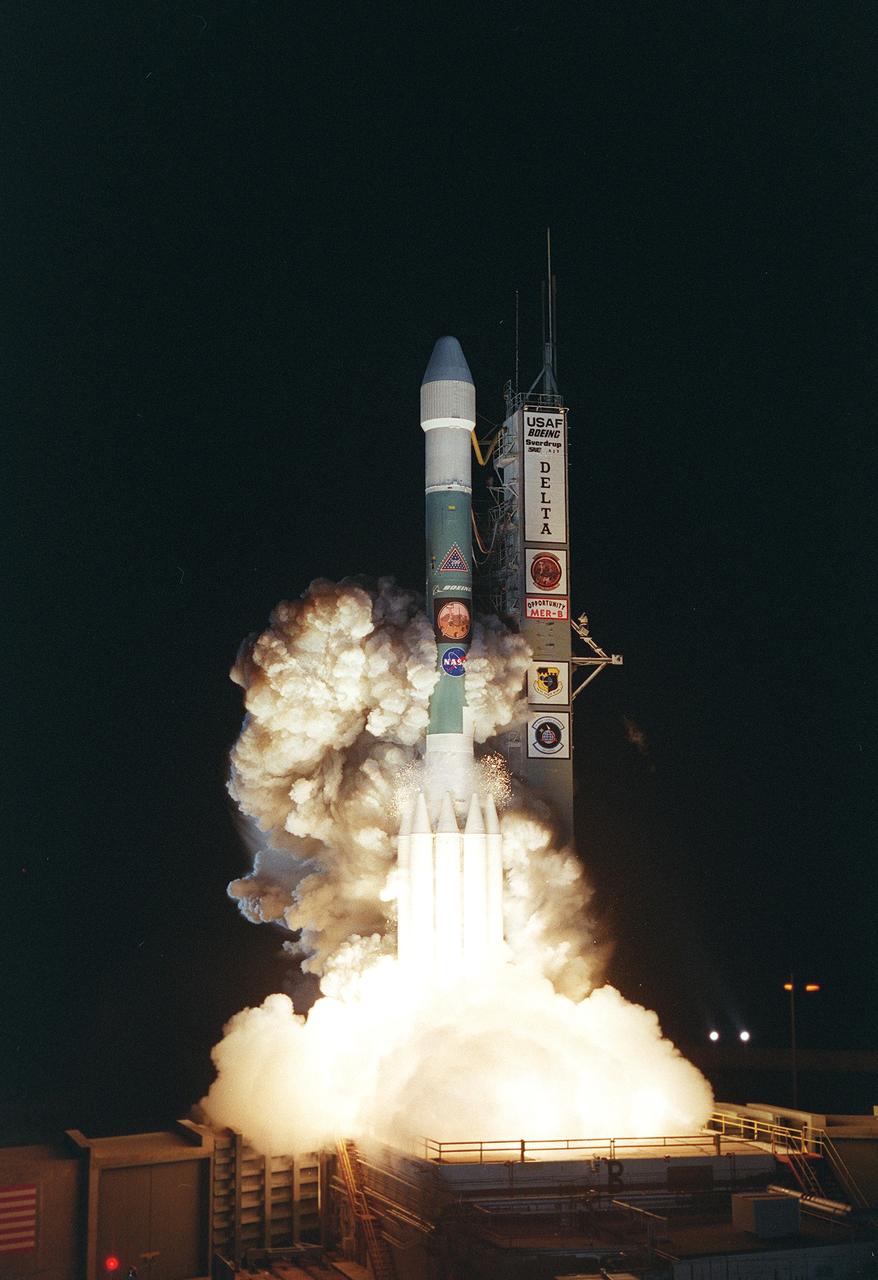
KENNEDY SPACE CENTER, FLA. - From a burst of fire and smoke, the Delta II launch vehicle races into the sky carrying the second Mars Exploration Rover, Opportunity. The bright glare briefly illuminated Florida Space Coast beaches. Opportunity’s dash to Mars began with liftoff at 11:18:15 p.m. Eastern Daylight Time from Cape Canaveral Air Force Station, Fla. The spacecraft separated successfully from the Delta's third stage 83 minutes later, after it had been boosted out of Earth orbit and onto a course toward Mars.
Open
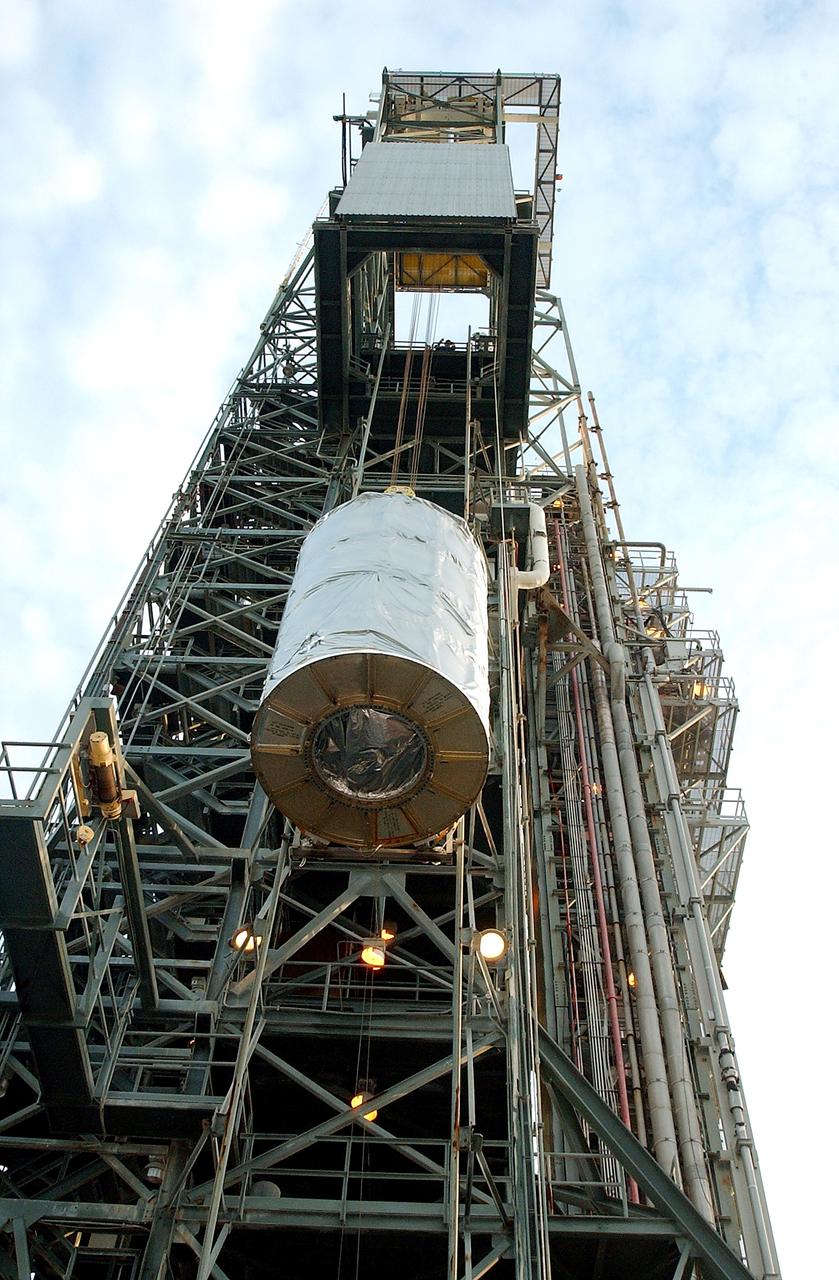
KENNEDY SPACE CENTER, FLA. - Viewed from below, the Space Infrared Telescope Facility (SIRTF) is lifted up the mobile service tower on Launch Pad 17-B, Cape Canaveral Air Force Station. SIRTF will be attached to the Delta II rocket and encapsulated in its fairing before launch. Consisting of three cryogenically cooled science instruments and an 0.85-meter telescope, SIRTF is one of NASA’s largest infrared telescopes to be launched. It is the fourth and final element in NASA’s family of orbiting “Great Observatories.” SIRTF will obtain images and spectra by detecting the infrared energy, or heat, radiated by objects in space. Most of this infrared radiation is blocked by the Earth's atmosphere and cannot be observed from the ground.
Open
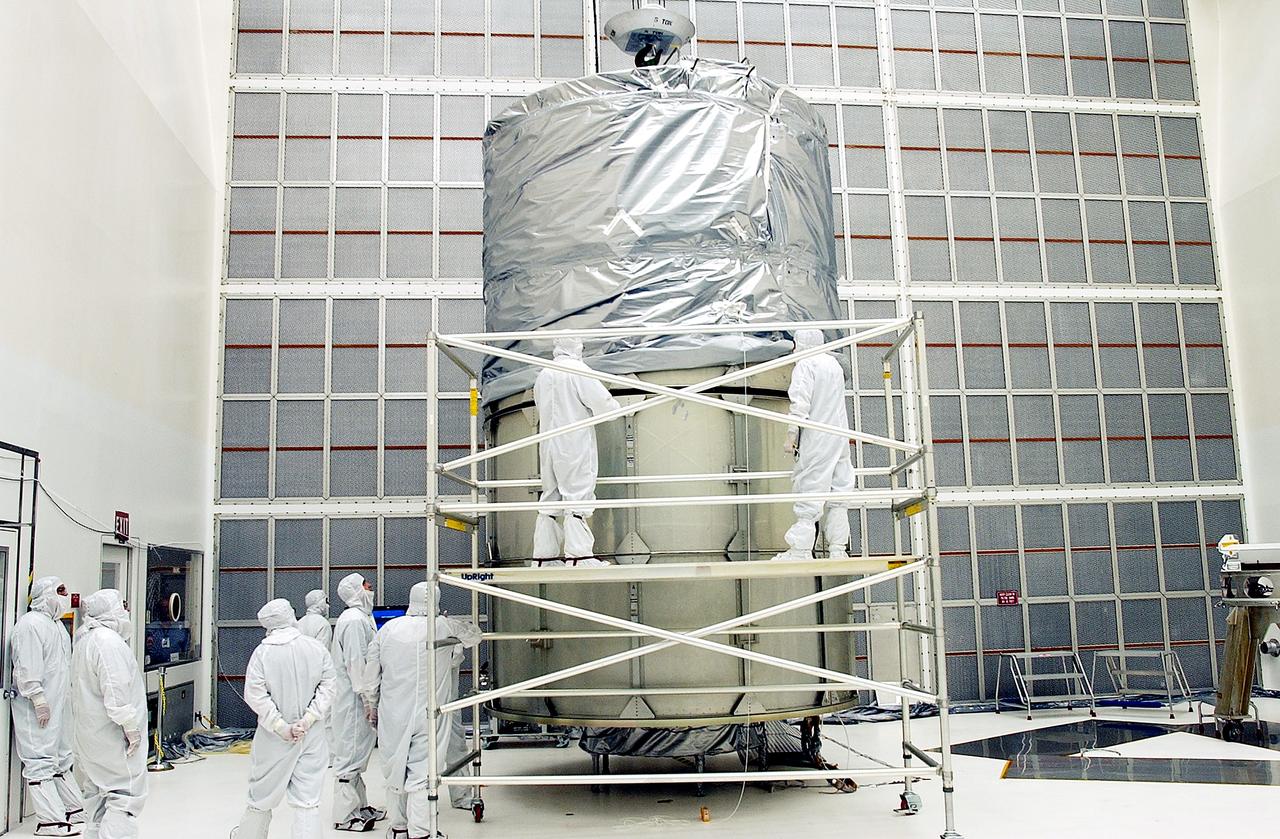
KENNEDY SPACE CENTER, FLA. - Working from a stand, technicians fasten the upper portion of the canister to the middle panels around the Space Infrared Telescope Facility (SIRTF). The spacecraft will be transported to Launch Complex 17-B for mating with its launch vehicle, the Delta II rocket. SIRTF consists of three cryogenically cooled science instruments and an 0.85-meter telescope, and is one of NASA's largest infrared telescopes to be launched. SIRTF will obtain images and spectra by detecting the infrared energy, or heat, radiated by objects in space. Most of this infrared radiation is blocked by the Earth's atmosphere and cannot be observed from the ground.
Open
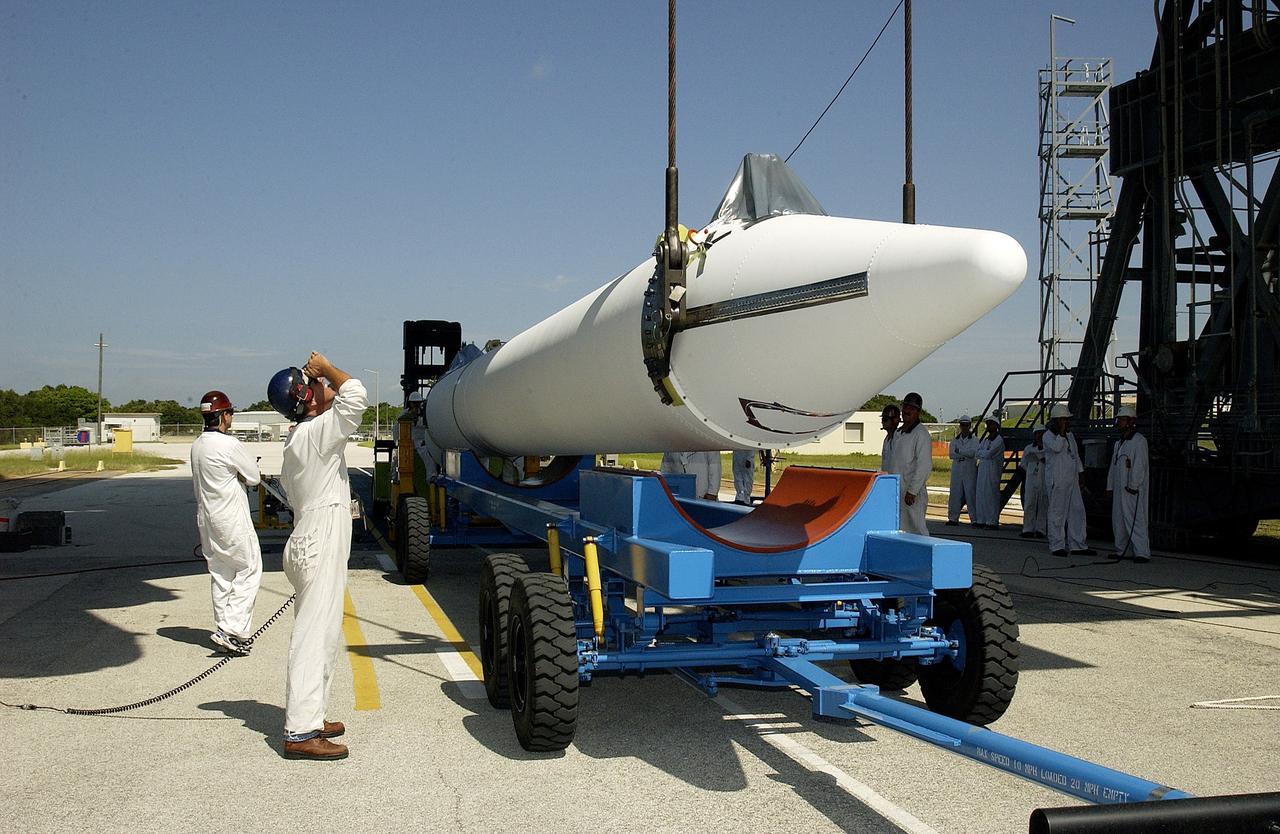
KENNEDY SPACE CENTER, FLA. - On Launch Complex 17-B, Cape Canaveral Air Force Station, another solid rocket booster (SRB) is being raised from its transporter to lift it to vertical. It is one of nine 46-inch-diameter, stretched SRBs that are being attached to the Delta II Heavy rocket that will launch the Space Infrared Telescope Facility (SIRTF). Consisting of three cryogenically cooled science instruments and an 0.85-meter telescope, SIRTF is one of NASA's largest infrared telescopes to be launched. SIRTF will obtain images and spectra by detecting the infrared energy, or heat, radiated by objects in space. Most of this infrared radiation is blocked by the Earth's atmosphere and cannot be observed from the ground.
Open
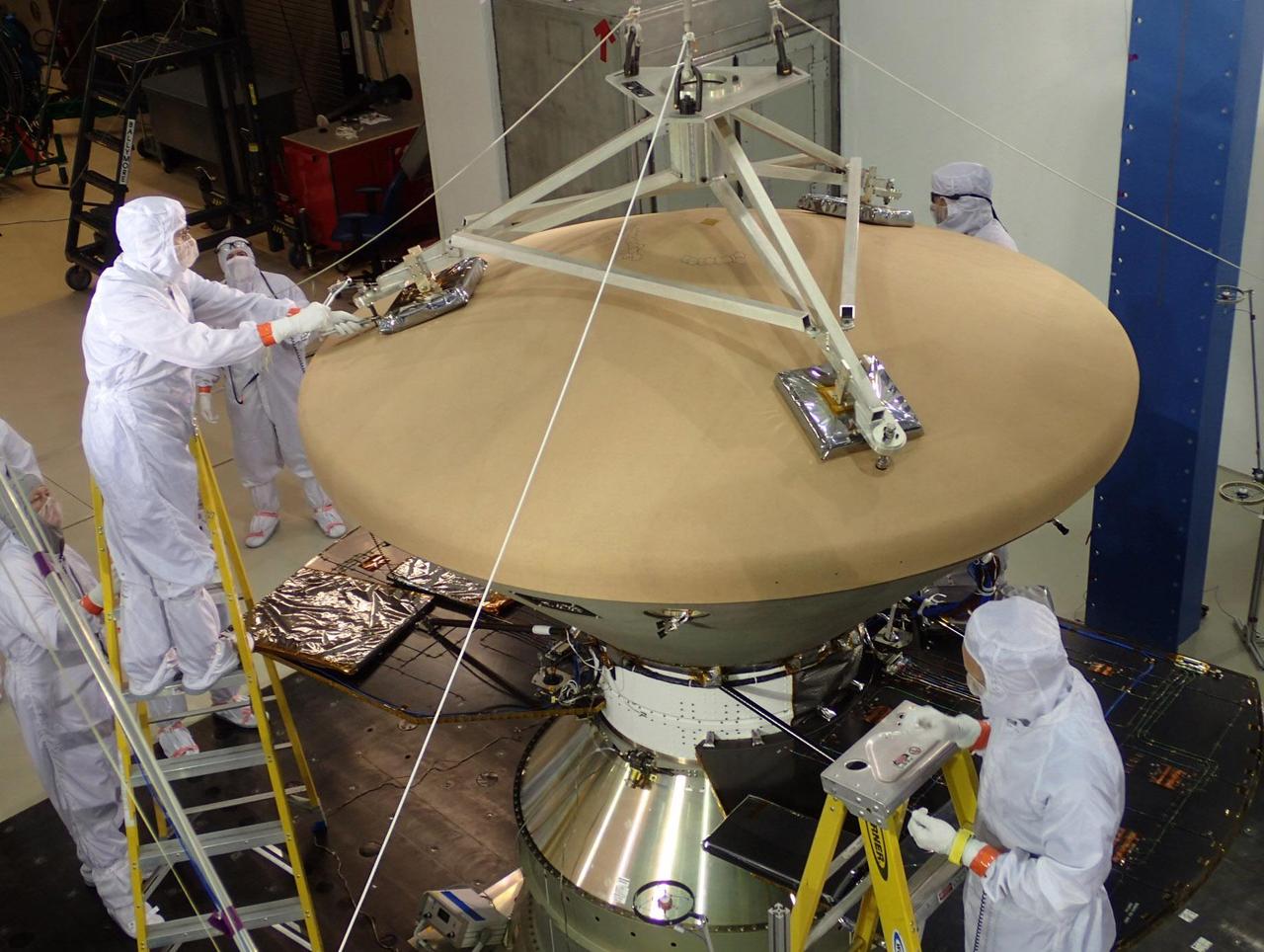
Preparing NASA InSight Spacecraft for Vibration Test
Open
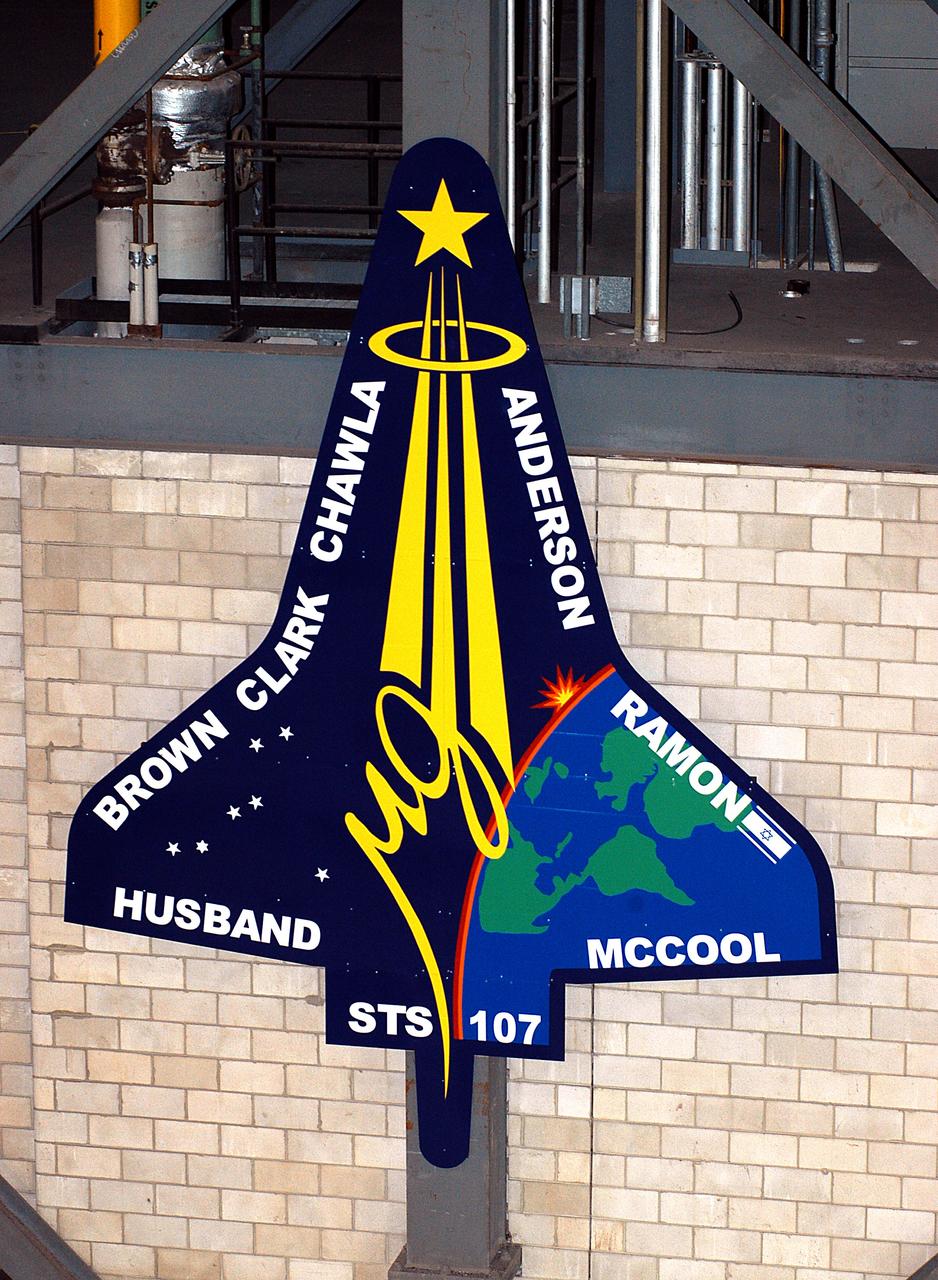
KENNEDY SPACE CENTER, FLA. - A 20-foot by 15-foot replica of the STS-107 logo has been installed above the “A” on the A tower in the transfer aisle of the Vehicle Assembly Building. The debris from the orbiter Columbia, lost in a tragic accident on its return to Earth from the STS-107 mission, is permanently stored in the tower. A dedication ceremony Jan. 29, 2004, unveiled a plaque being installed in the storage area in honor of “Columbia, the crew of STS-107, and their loved ones.”
Open
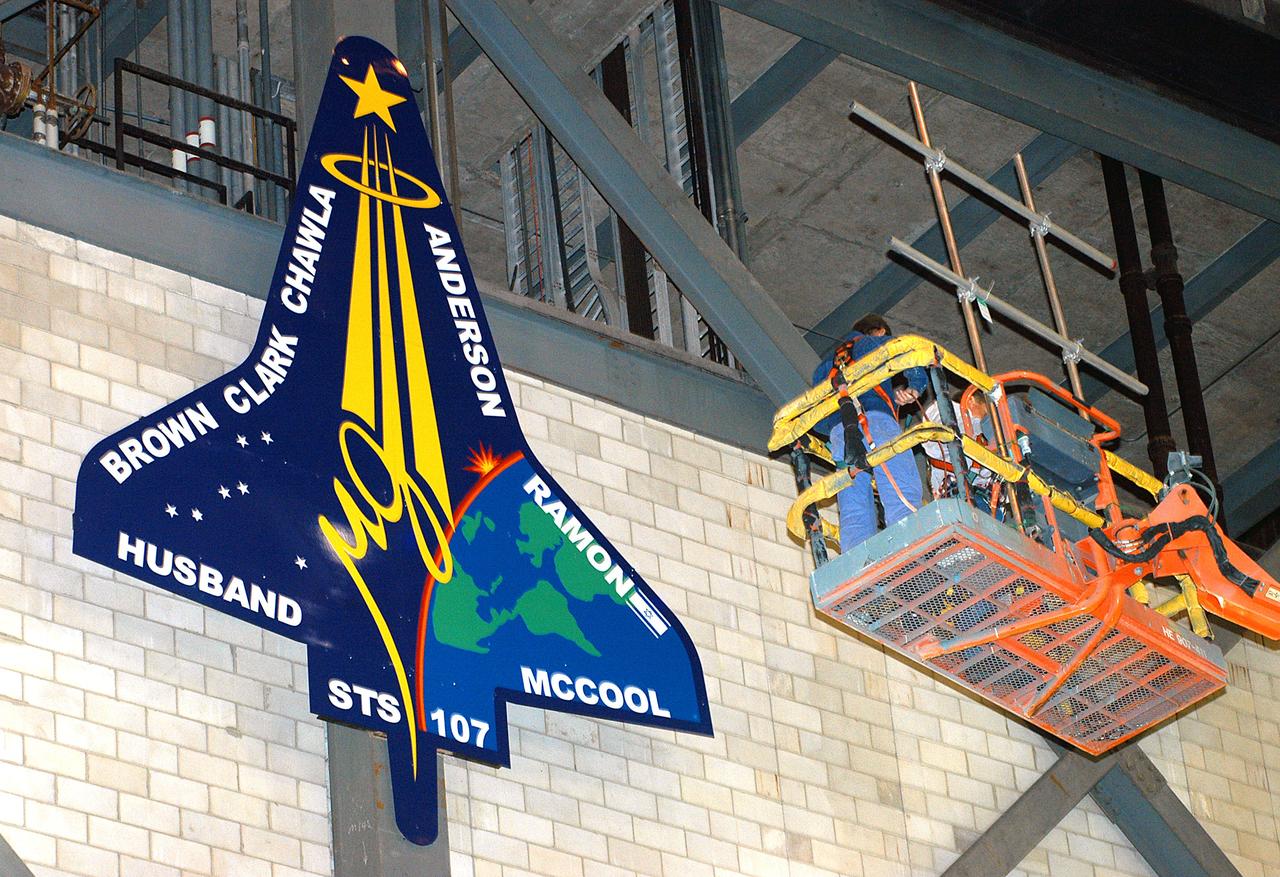
KENNEDY SPACE CENTER, FLA. - Workers install a 20-foot by 15-foot replica of the STS-107 logo above the “A” on the A tower in the transfer aisle of the Vehicle Assembly Building. The debris from the orbiter Columbia, lost in a tragic accident on its return to Earth from the STS-107 mission, is permanently stored in the tower. A dedication ceremony Jan. 29, 2004, revealed a plaque being installed in the storage area in honor of “Columbia, the crew of STS-107, and their loved ones.”
Open
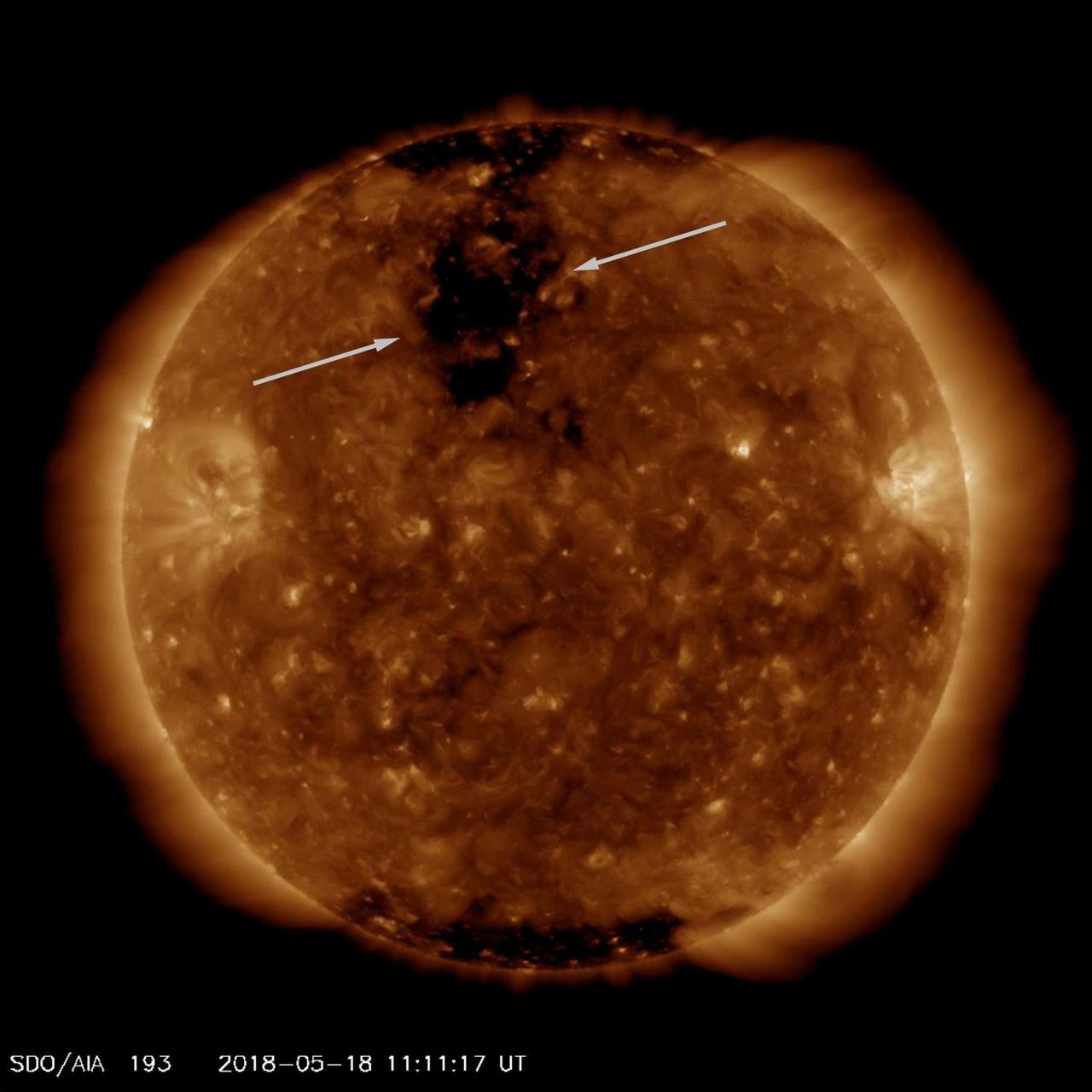
Coronal Hole Rotating Towards Us
Open
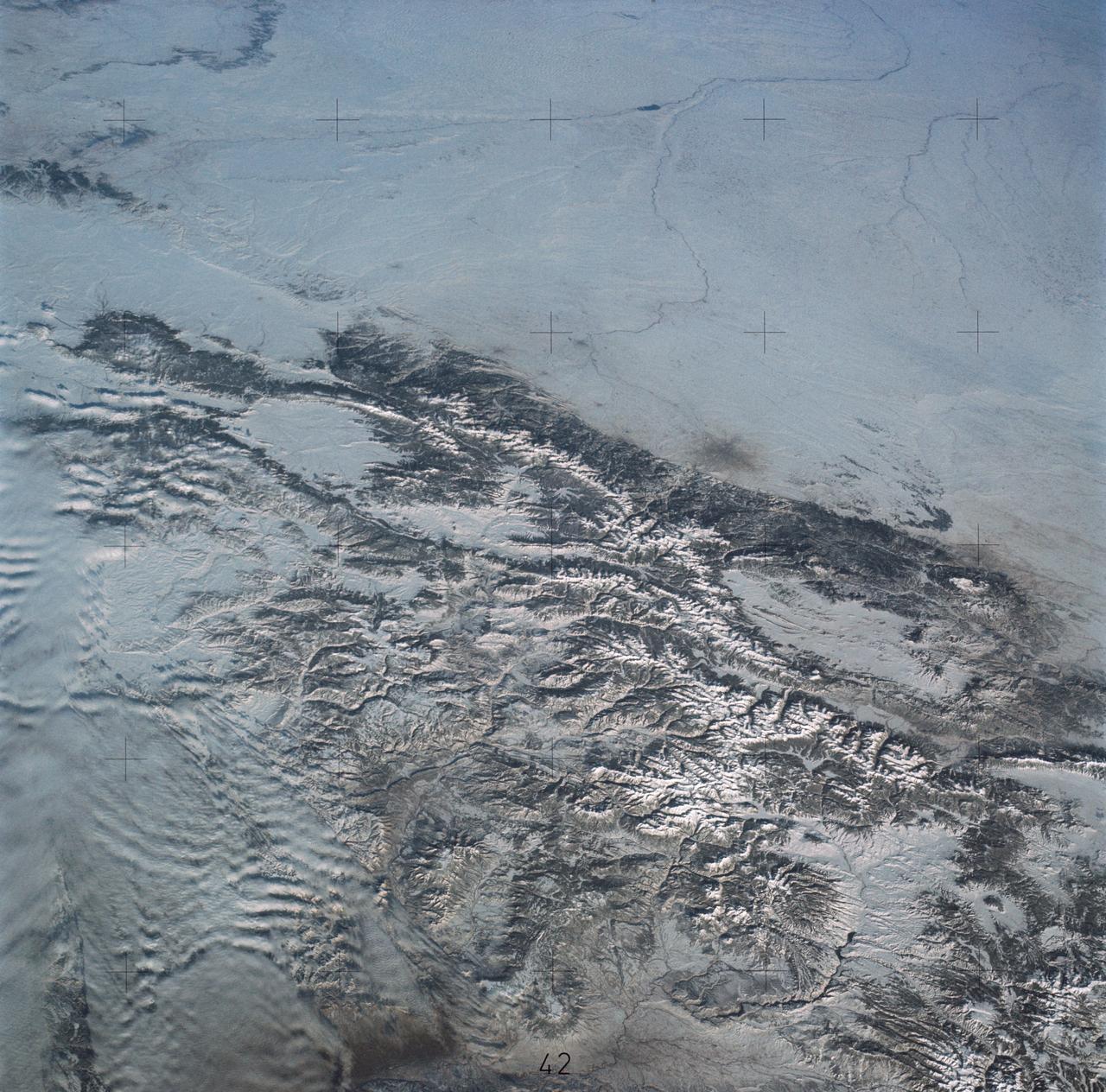
View east over the Rocky Mountains and Great Plains
Open
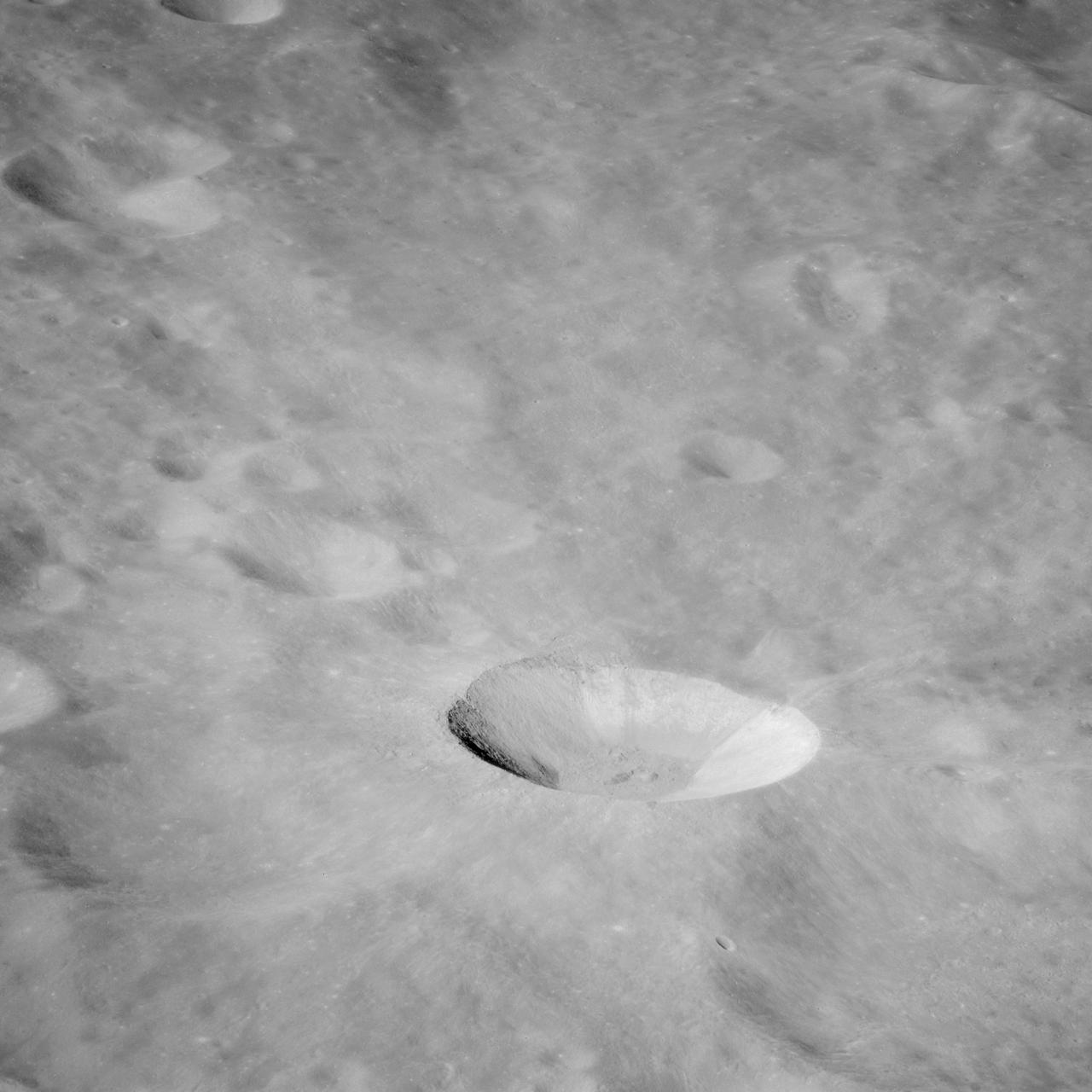
Northeasterly, low-oblique view of unnamed crater on lunar farside
Open
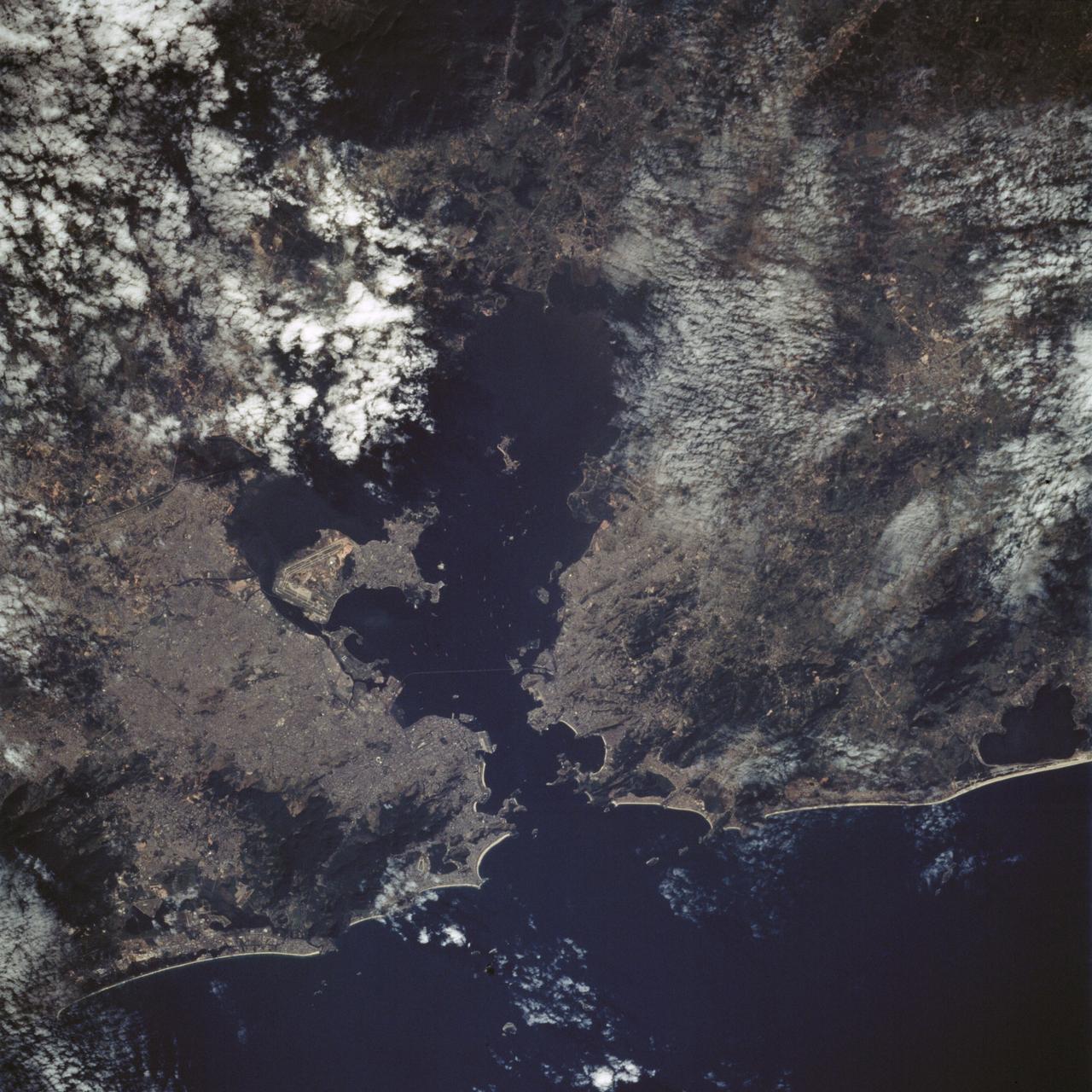
STS-65 Earth observation of Rio de Janeiro in Brazil taken from OV-102
Open
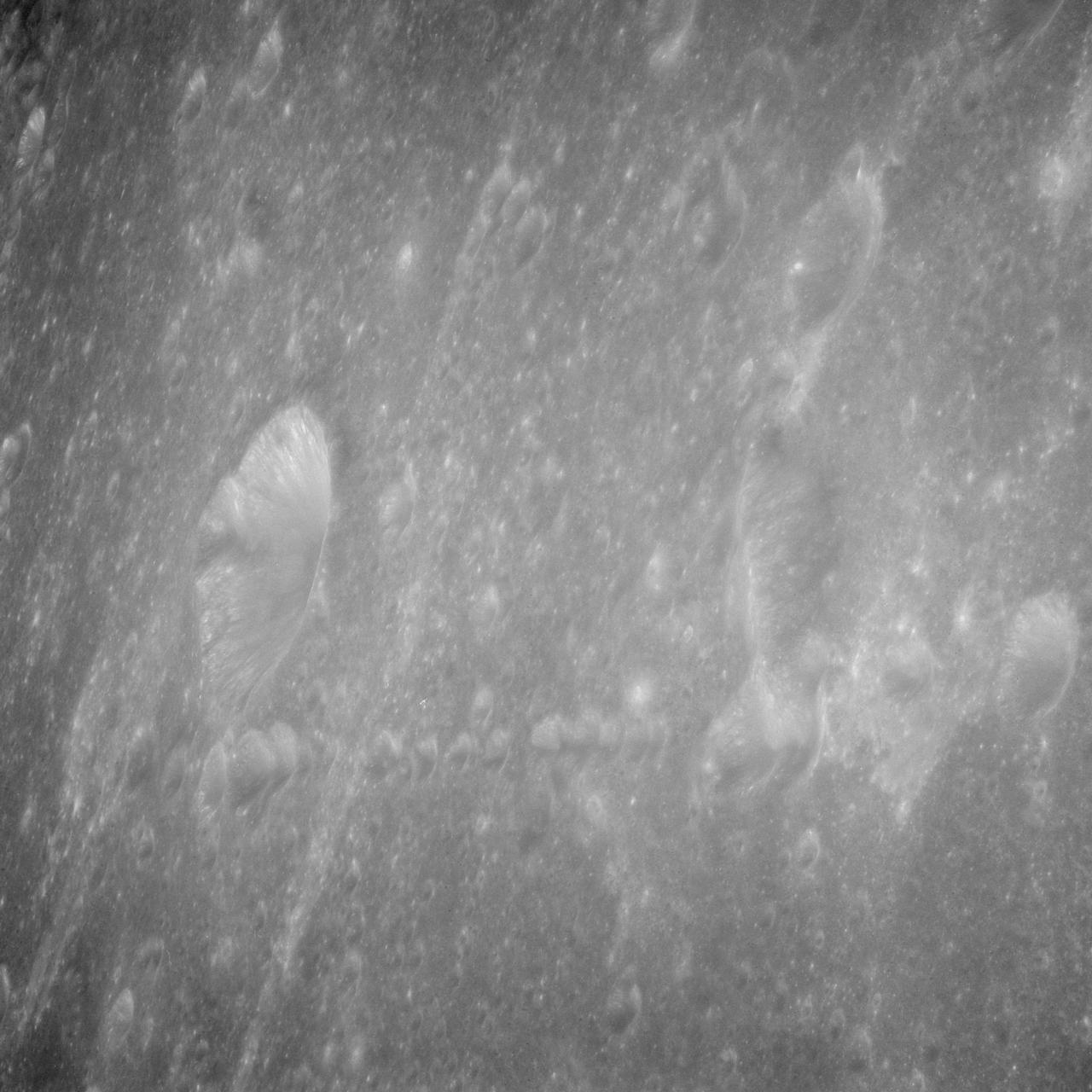
Apollo 11 oblique view of lunar farside
Open