Featured — Page 67
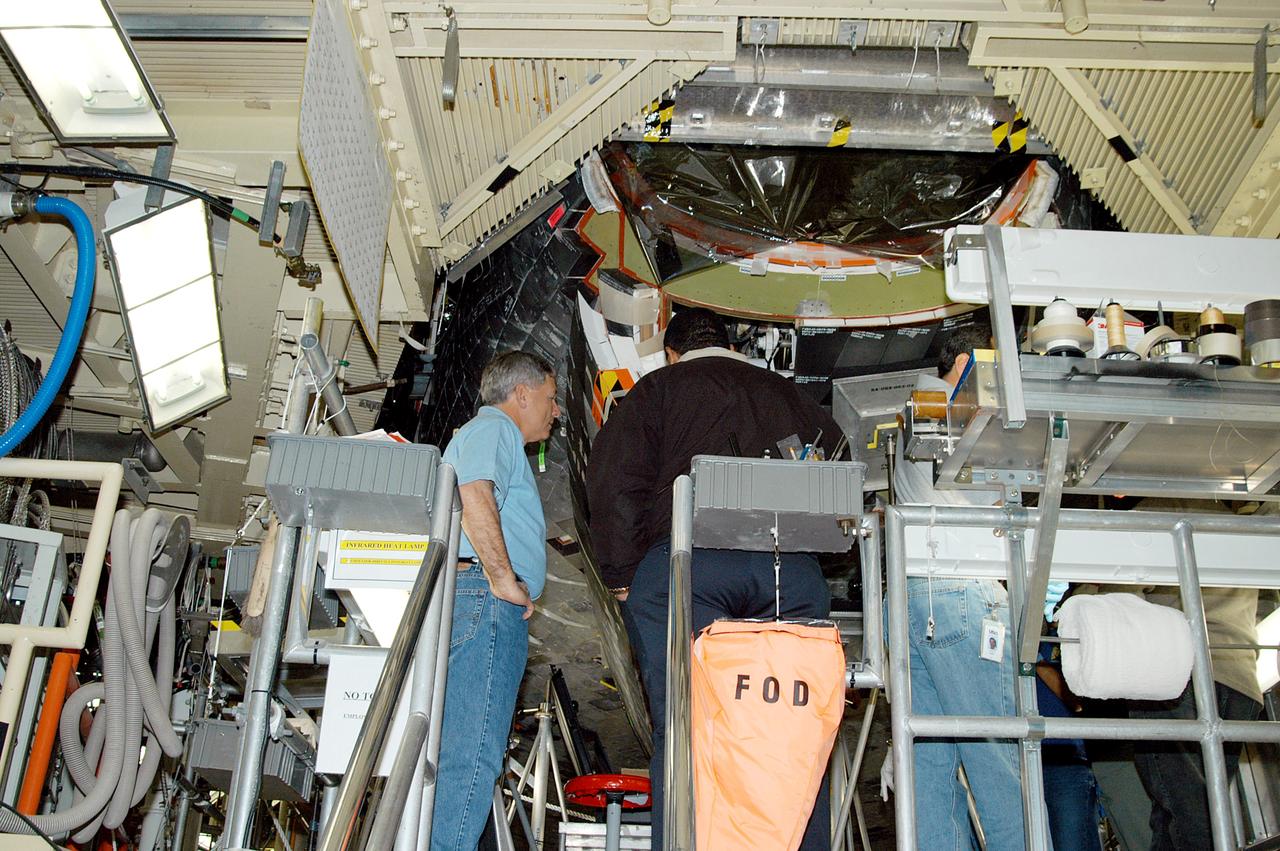
KENNEDY SPACE CENTER, FLA. -- NASA Deputy Associate Administrator for Space Station and Shuttle Programs Michael Kostelnik (left) discusses some of the working parts inside the nose of Shuttle Discovery in Orbiter Processing Facility Bay 3 with a United Space Alliance (USA) technician (back to camera). NASA and USA Space Shuttle program management are participating in a leadership workday. The day is intended to provide management with an in-depth, hands-on look at Shuttle processing activities at KSC.
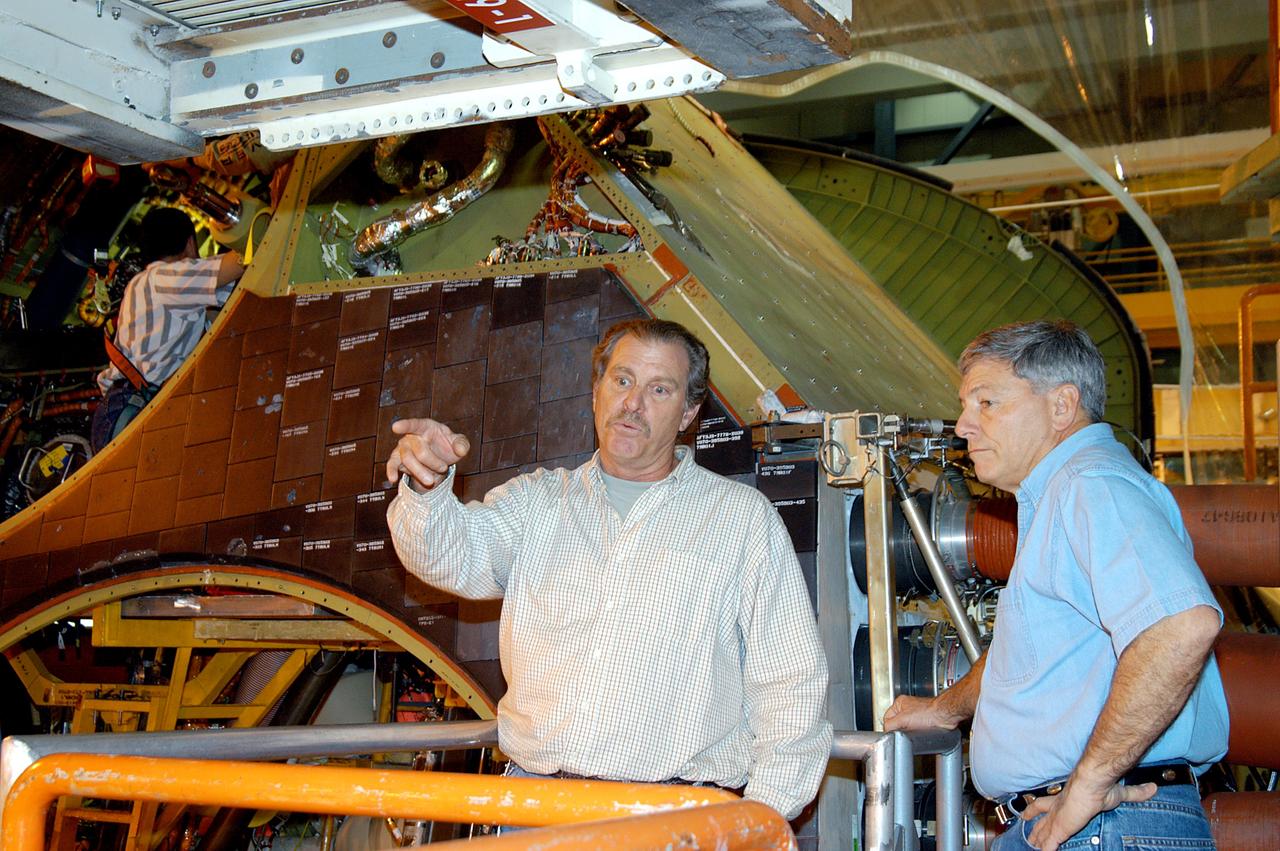
KENNEDY SPACE CENTER, FLA. -- NASA Deputy Associate Administrator for Space Station and Shuttle Programs Michael Kostelnik (right) discusses a speed brake on Shuttle Discovery in Orbiter Processing Facility Bay 3 with a United Space Alliance (USA) technician (left). NASA and USA Space Shuttle program management are participating in a leadership workday. The day is intended to provide management with an in-depth, hands-on look at Shuttle processing activities at KSC.
Open
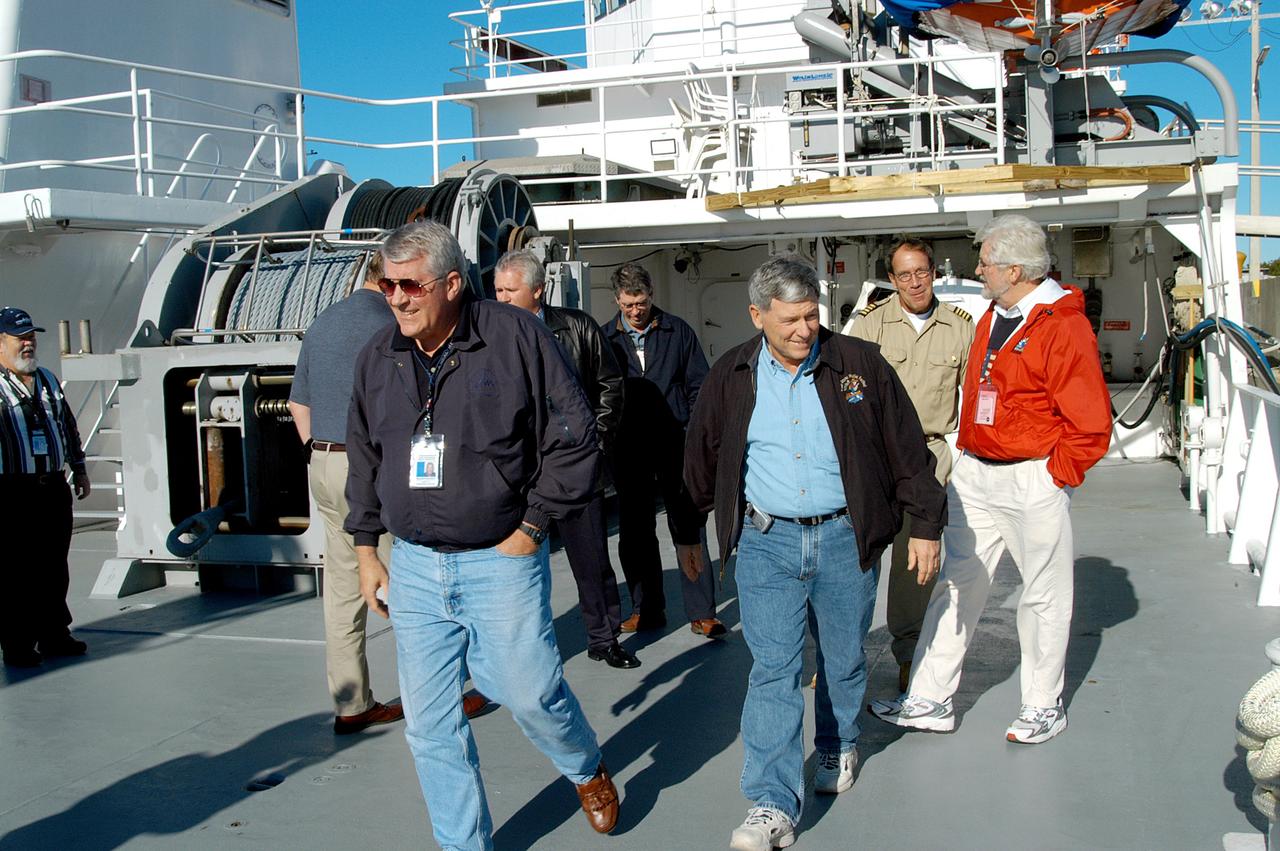
KENNEDY SPACE CENTER, FLA. -- United Space Alliance (USA) Vice President and Associate Program Manager of Florida Operations Bill Pickavance (left front) and NASA Deputy Associate Administrator for Space Station and Shuttle Programs Michael Kostelnik (right front) tour a solid rocket booster (SRB) retrieval ship at Cape Canaveral. NASA and USA Space Shuttle program management are participating in a leadership workday. The day is intended to provide management with an in-depth, hands-on look at Shuttle processing activities at KSC.
Open
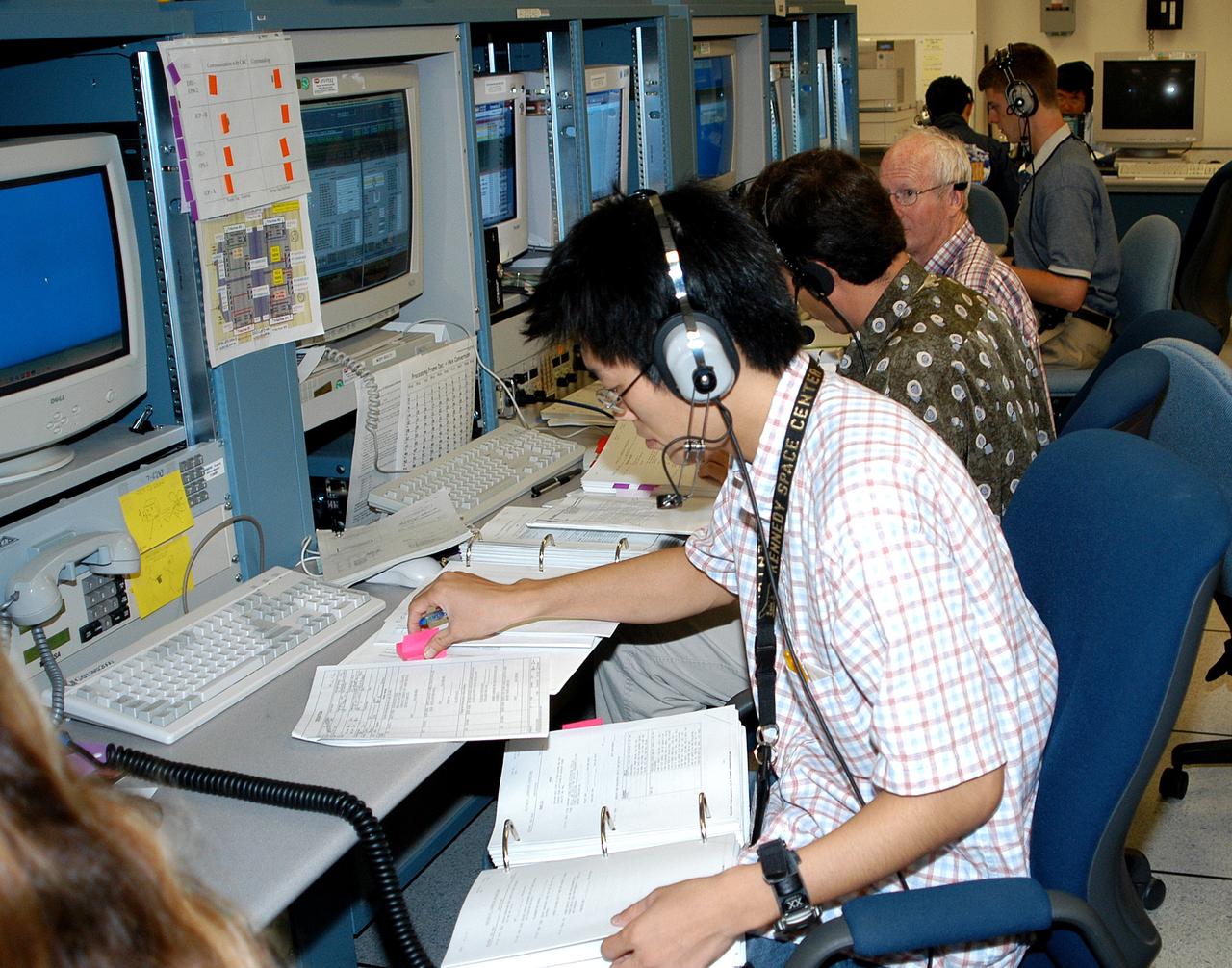
KENNEDY SPACE CENTER, FLA. - In the Space Station Processing Facility, personnel observe sensors during a Multi-Equipment Interface Test (MEIT) on the Japanese Experiment Module (JEM). The National Space Development Agency of Japan (NASDA) developed the laboratory at the Tsukuba Space Center near Tokyo. It is the first element, named "Kibo" (Hope), to be delivered to KSC. The JEM is Japan's primary contribution to the Station. It will enhance the unique research capabilities of the orbiting complex by providing an additional environment for astronauts to conduct science experiments.
Open
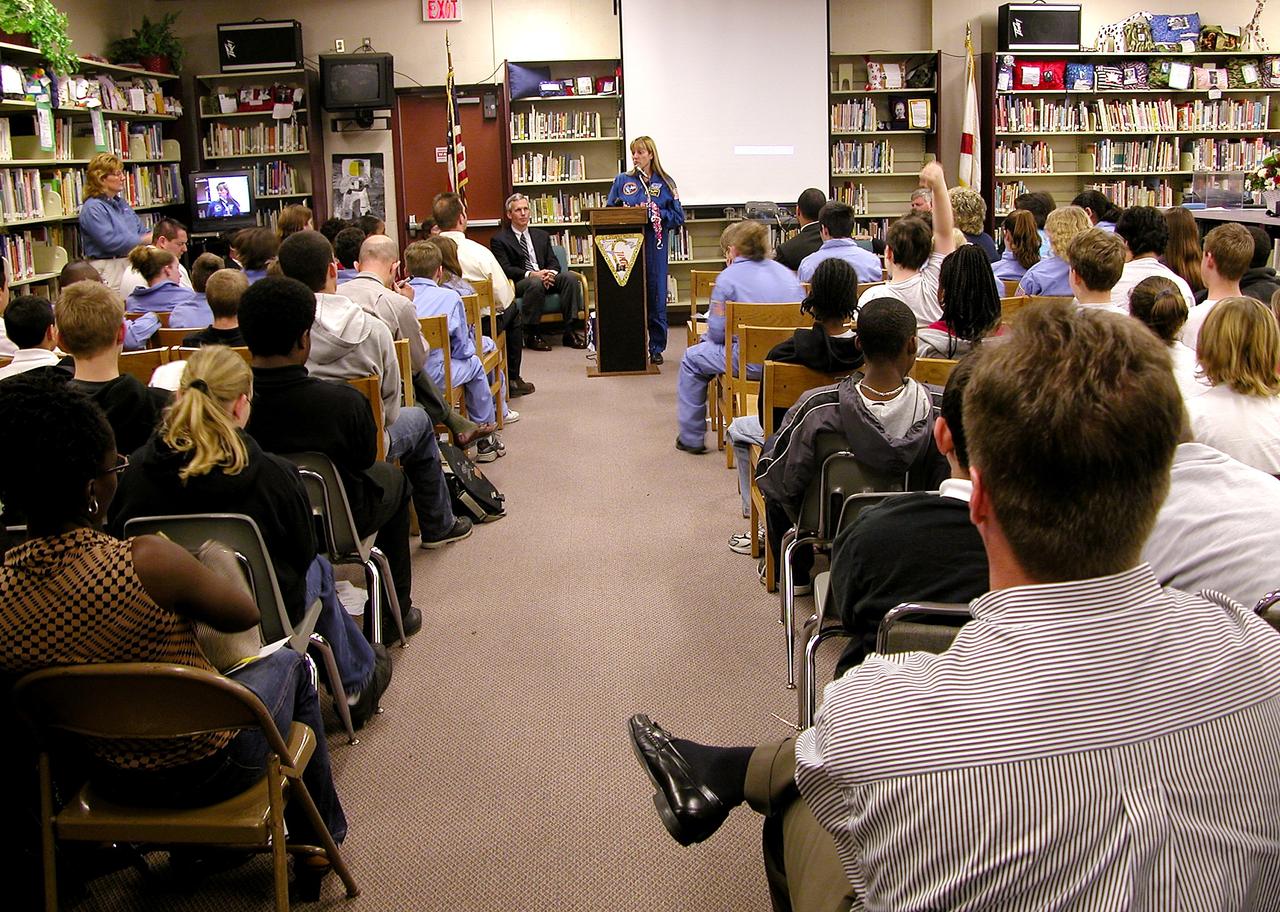
KENNEDY SPACE CENTER, FLA. - Astronaut Kay Hire talks to students in Garland V. Stewart Magnet Middle School, a NASA Explorer School (NES) in Tampa, Fla. She joined Center Director Jim Kennedy in sharing the agency’s new vision for space exploration with the next generation of explorers. Kennedy is talking with students about our destiny as explorers, NASA’s stepping stone approach to exploring Earth, the Moon, Mars and beyond, how space impacts our lives, and how people and machines rely on each other in space.
Open
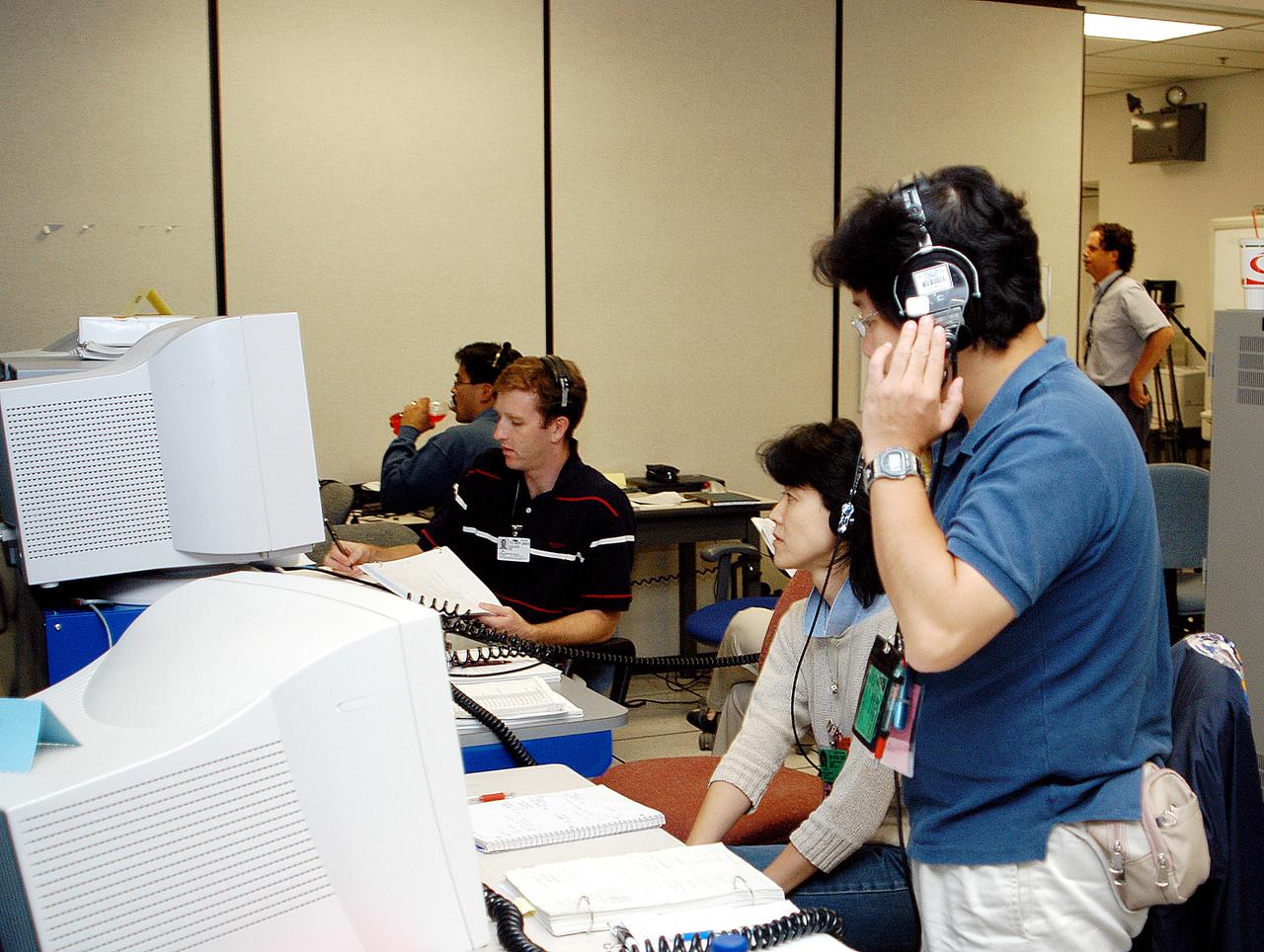
KENNEDY SPACE CENTER, FLA. - In the Space Station Processing Facility, Japanaese astronauts and personnel observe sensors during a Multi-Equipment Interface Test (MEIT) on the Japanese Experiment Module (JEM). The National Space Development Agency of Japan (NASDA) developed the laboratory at the Tsukuba Space Center near Tokyo. It is the first element, named "Kibo" (Hope), to be delivered to KSC. The JEM is Japan's primary contribution to the Station. It will enhance the unique research capabilities of the orbiting complex by providing an additional environment for astronauts to conduct science experiments.
Open
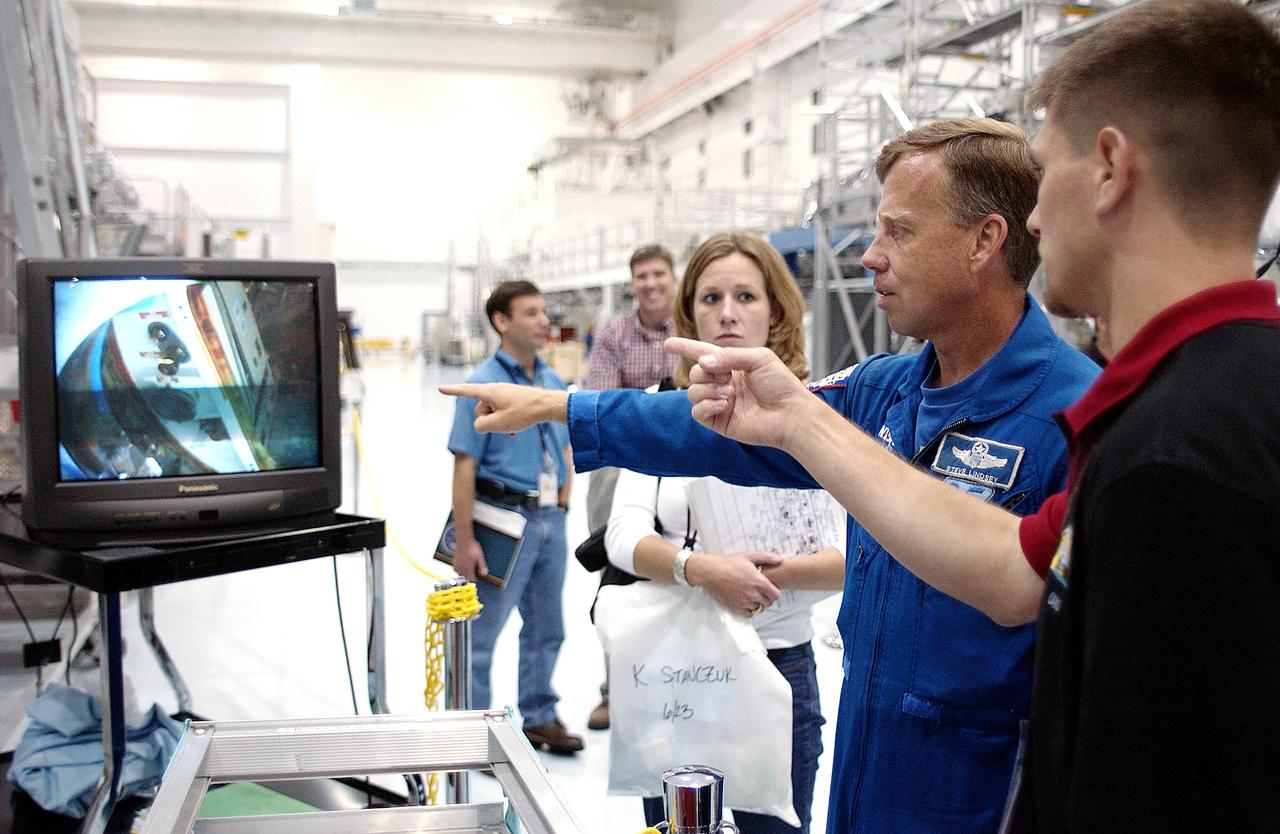
KENNEDY SPACE CENTER, FLA. - NASA astronaut Steven W. Lindsey (second from right) views the interior of the pressurized module of the Japanese Experiment Module (JEM) on a television monitor in the Space Station Processing Facility. This major component of JEM, named "Kibo" (Hope), is Japan's primary contribution to the International Space Station and arrived at KSC on June 4. Lindsey is assigned to command STS-119, an upcoming Space Shuttle flight to the Station.
Open
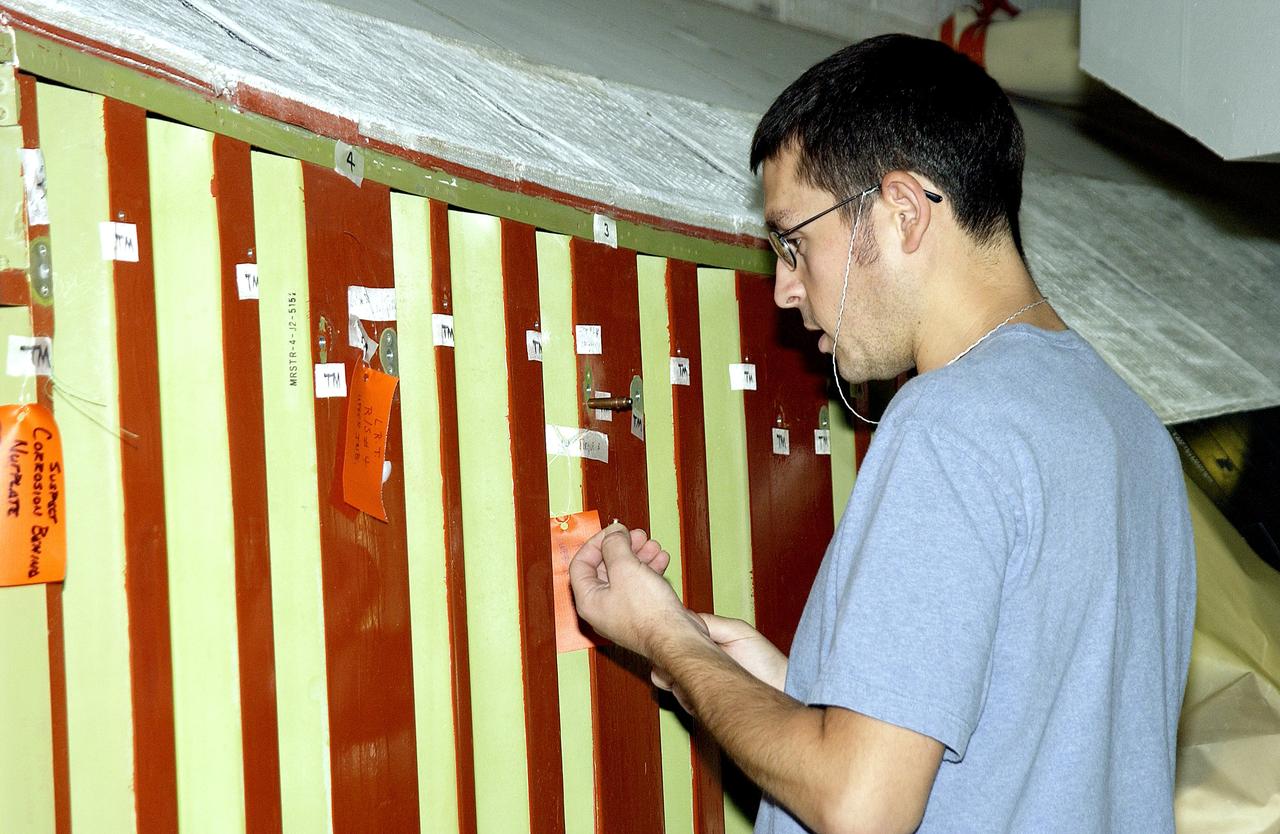
KENNEDY SPACE CENTER, FLA. -In the Orbiter Processing Facility (OPF), a United Space Alliance technician examines the attachment points for the spars on the exterior of a wing of Space Shuttle Atlantis. Reinforced Carbon Carbon (RCC) panels are mechanically attached to the wing with a series of floating joints - spars - to reduce loading on the panels caused by wing deflections. The aluminum and the metallic attachments are protected from exceeding temperature limits by internal insulation. The next launch of Atlantis will be on mission STS-114, a utilization and logistics flight to the International Space Station.
Open
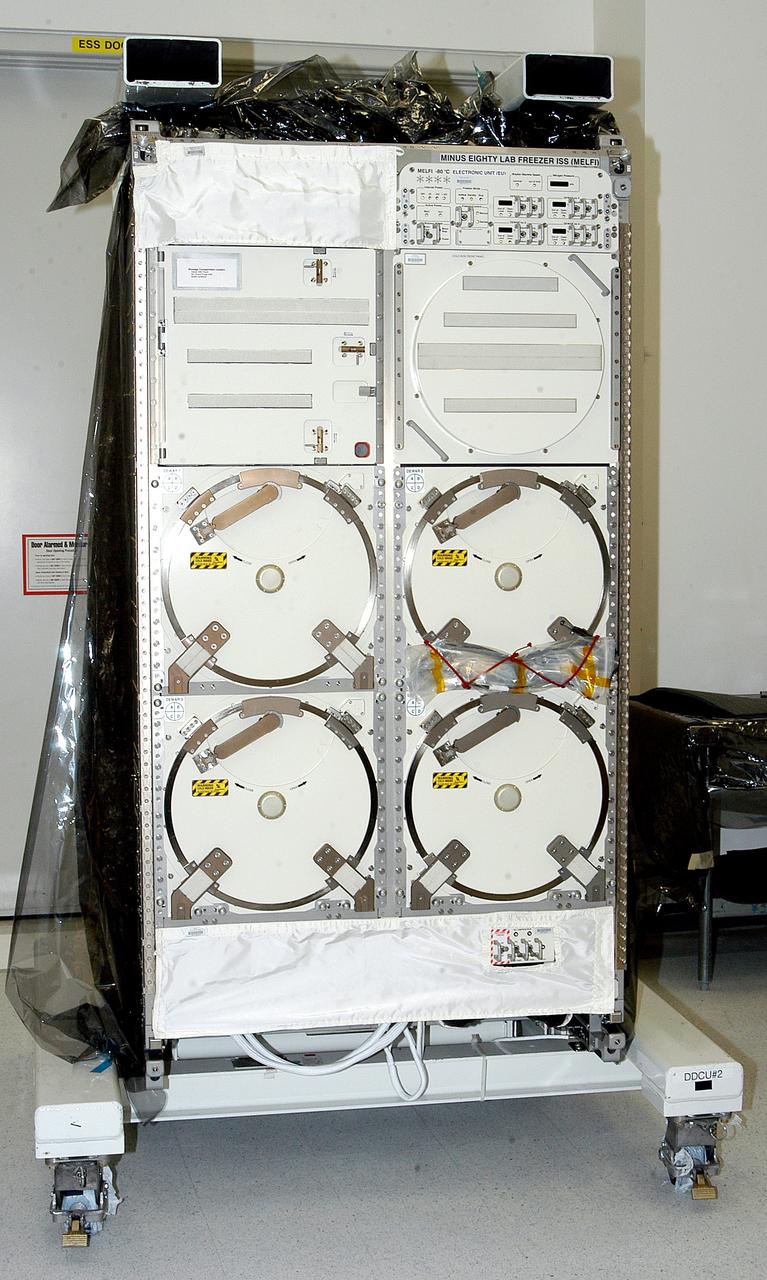
KENNEDY SPACE CENTER, FLA. - The Minus Eighty Lab Freezer for ISS (MELFI), provided as Laboratory Support Equipment by the European Space Agency for the International Space Station, is seen in the Space Station Processing Facility. The lab will provide cooling and storage for reagents, samples and perishable materials in four insulated containers called dewars with independently selectable temperatures of -80°C, -26°C, and +4°C. It also will be used to transport samples to and from the station. The MELFI is planned for launch on the ULF-1 mission.
Open
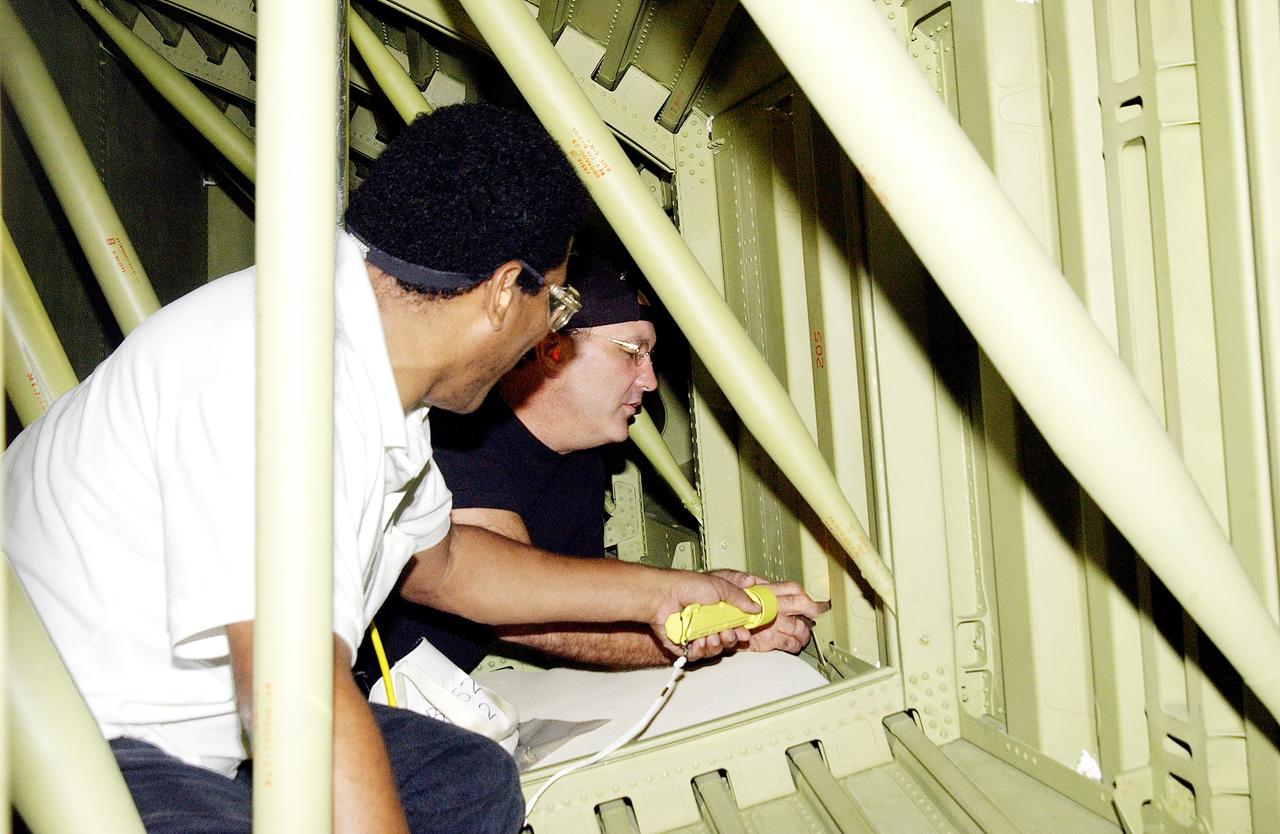
KENNEDY SPACE CENTER, FLA. - In the Orbiter Processing Facility (OPF), United Space Alliance technicians replace the attachment points for the spars on the interior of a wing of Space Shuttle Atlantis. Reinforced Carbon Carbon (RCC) panels are mechanically attached to the wing with a series of floating joints - spars - to reduce loading on the panels caused by wing deflections. The aluminum and the metallic attachments are protected from exceeding temperature limits by internal insulation. The next launch of Atlantis will be on mission STS-114, a utilization and logistics flight to the International Space Station.
Open
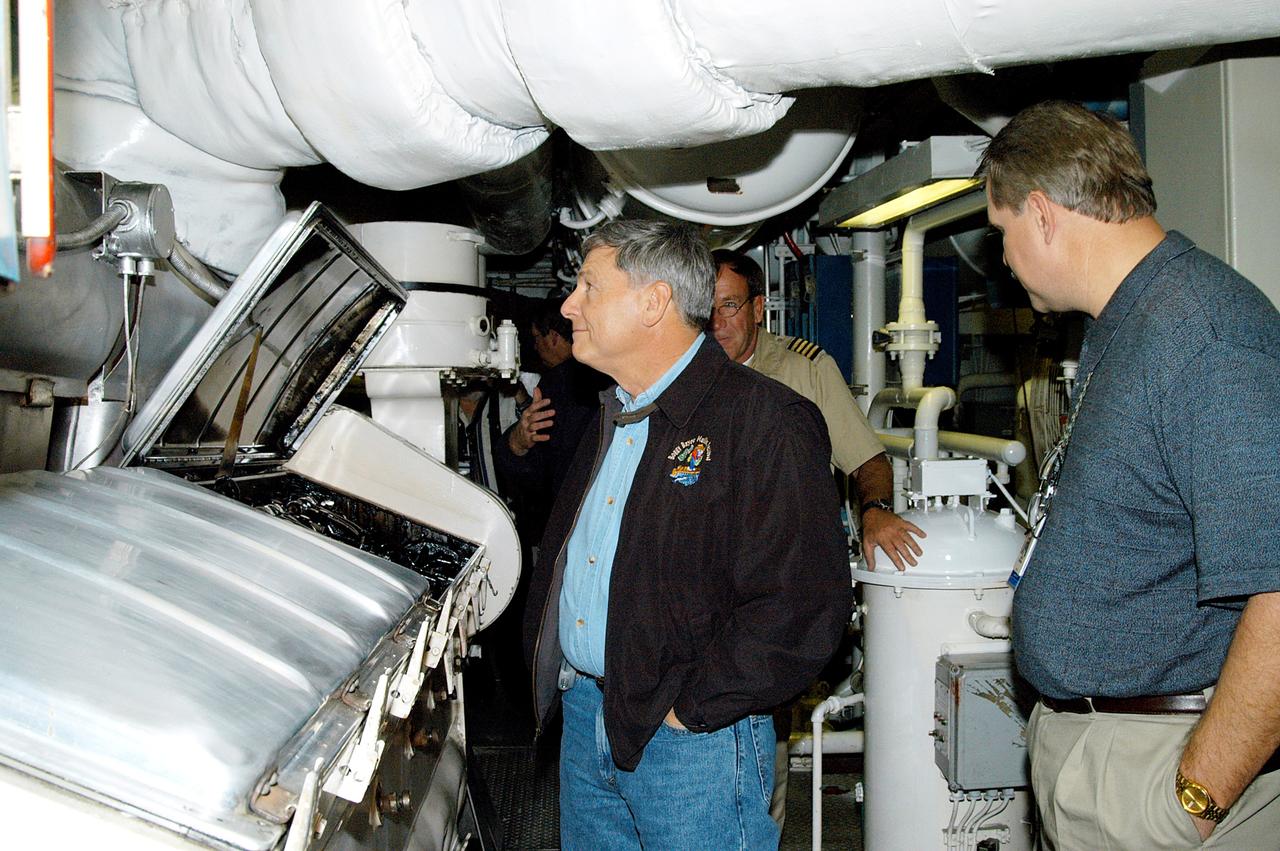
KENNEDY SPACE CENTER, FLA. -- NASA Deputy Associate Administrator for Space Station and Shuttle Programs Michael Kostelnik (left) tours a solid rocket booster (SRB) retrieval ship at Cape Canaveral. NASA and United Space Alliance (USA) Space Shuttle program management are participating in a leadership workday. The day is intended to provide management with an in-depth, hands-on look at Shuttle processing activities at KSC.
Open
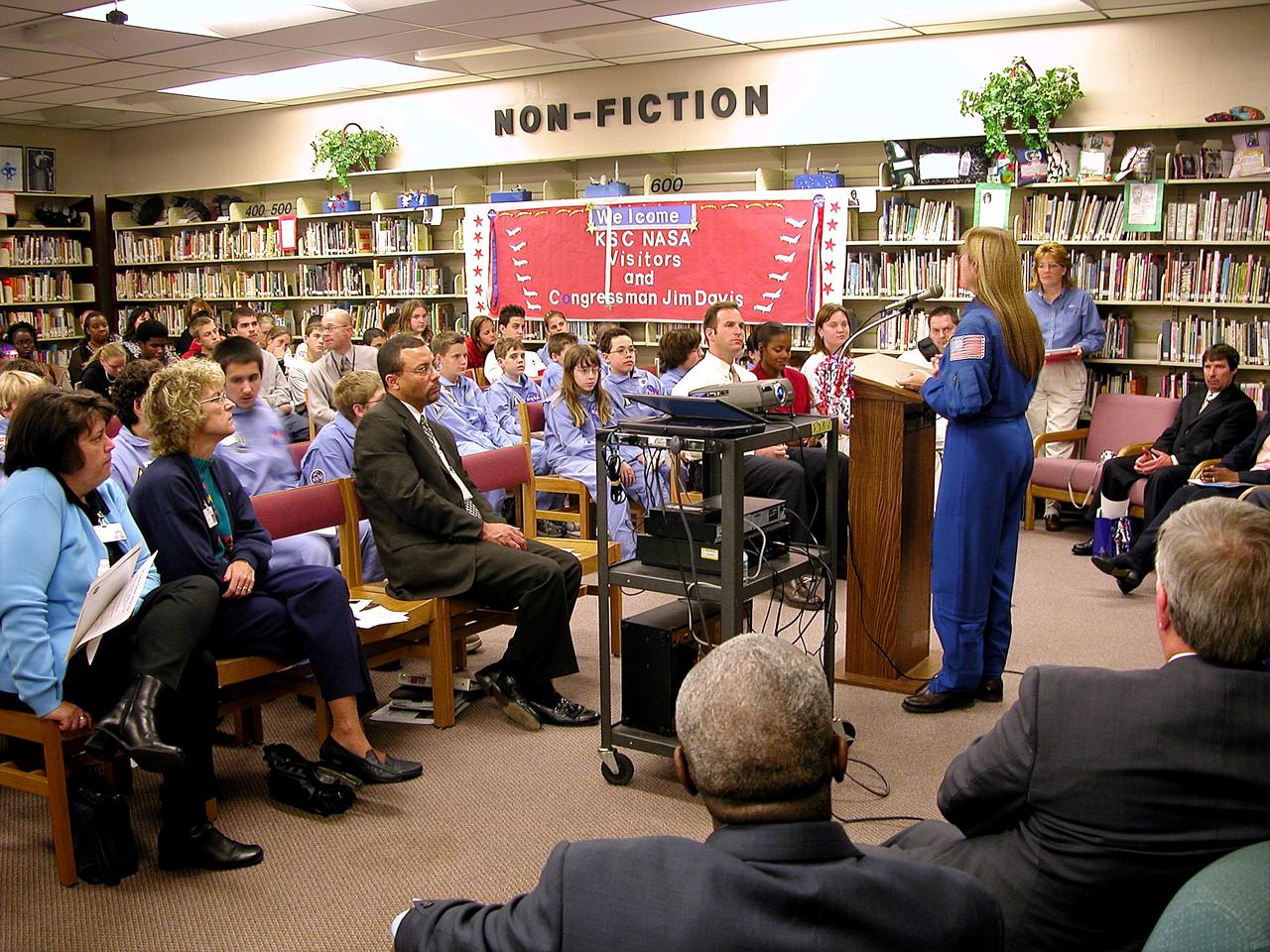
KENNEDY SPACE CENTER, FLA. - Astronaut Kay Hire talks to students in Garland V. Stewart Magnet Middle School, a NASA Explorer School (NES) in Tampa, Fla. She joined Center Director Jim Kennedy in sharing the agency’s new vision for space exploration with the next generation of explorers. Kennedy is talking with students about our destiny as explorers, NASA’s stepping stone approach to exploring Earth, the Moon, Mars and beyond, how space impacts our lives, and how people and machines rely on each other in space.
Open
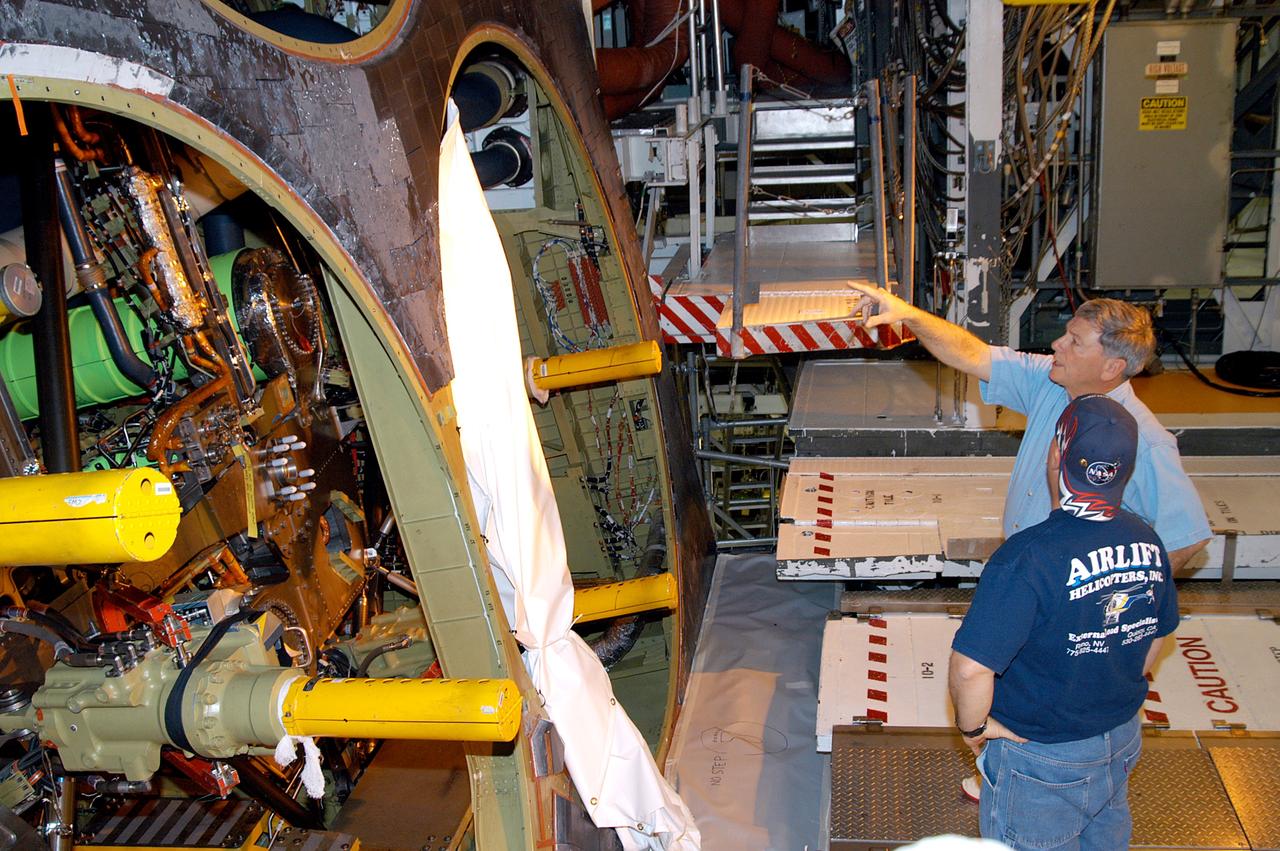
KENNEDY SPACE CENTER, FLA. -- NASA Deputy Associate Administrator for Space Station and Shuttle Programs Michael Kostelnik (top) discusses the inner workings of Shuttle Atlantis in Orbiter Processing Facility Bay 1 with a United Space Alliance (USA) technician (bottom). NASA and USA Space Shuttle program management are participating in a leadership workday. The day is intended to provide management with an in-depth, hands-on look at Shuttle processing activities at KSC.
Open
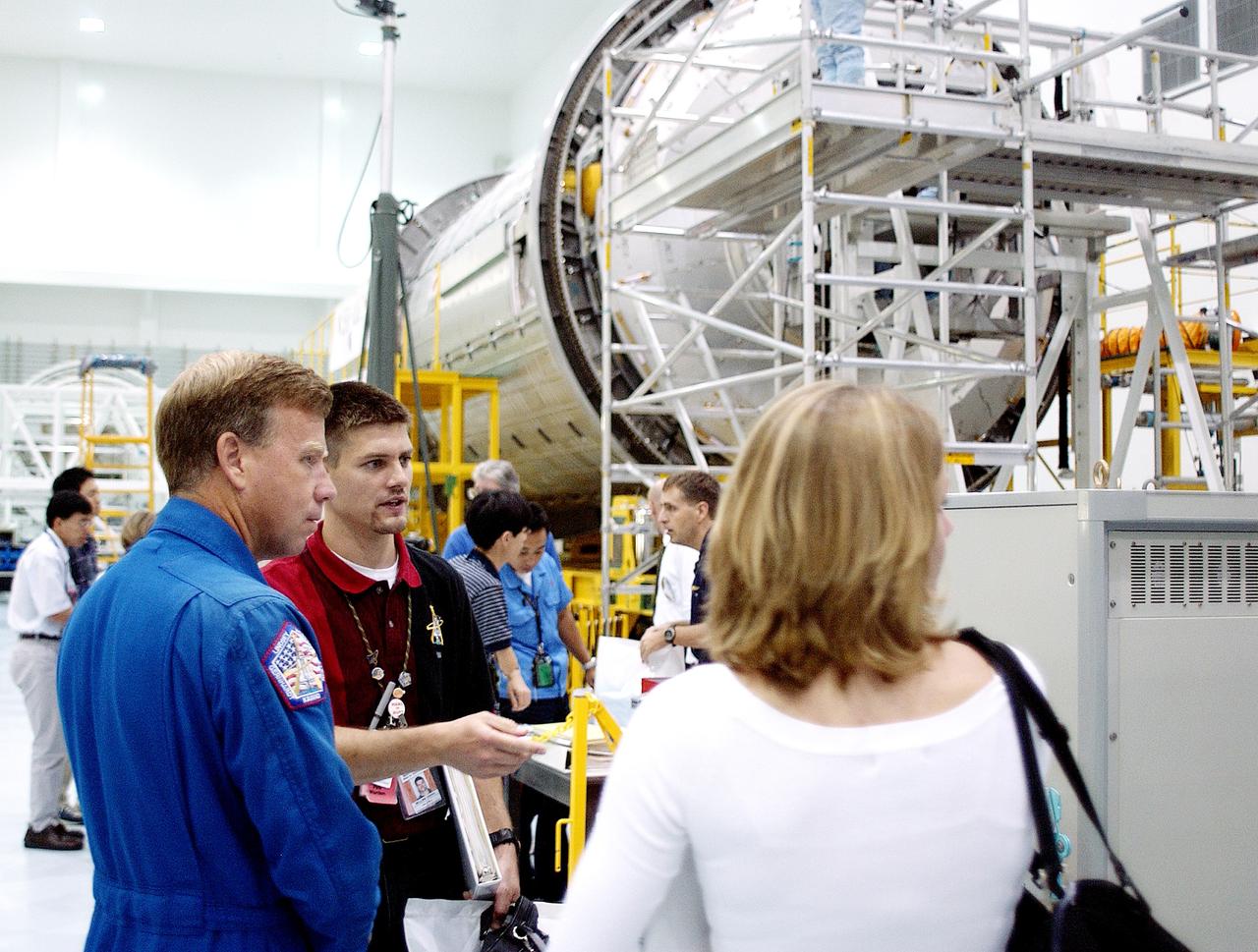
KENNEDY SPACE CENTER, FLA. - NASA astronaut Steven W. Lindsey (left) listens to a briefing about the pressurized module of the Japanese Experiment Module (JEM) in the Space Station Processing Facility. This major component of JEM, named "Kibo" (Hope), is Japan's primary contribution to the International Space Station and arrived at KSC on June 4. Lindsey is assigned to command STS-119, an upcoming Space Shuttle flight to the Station.
Open
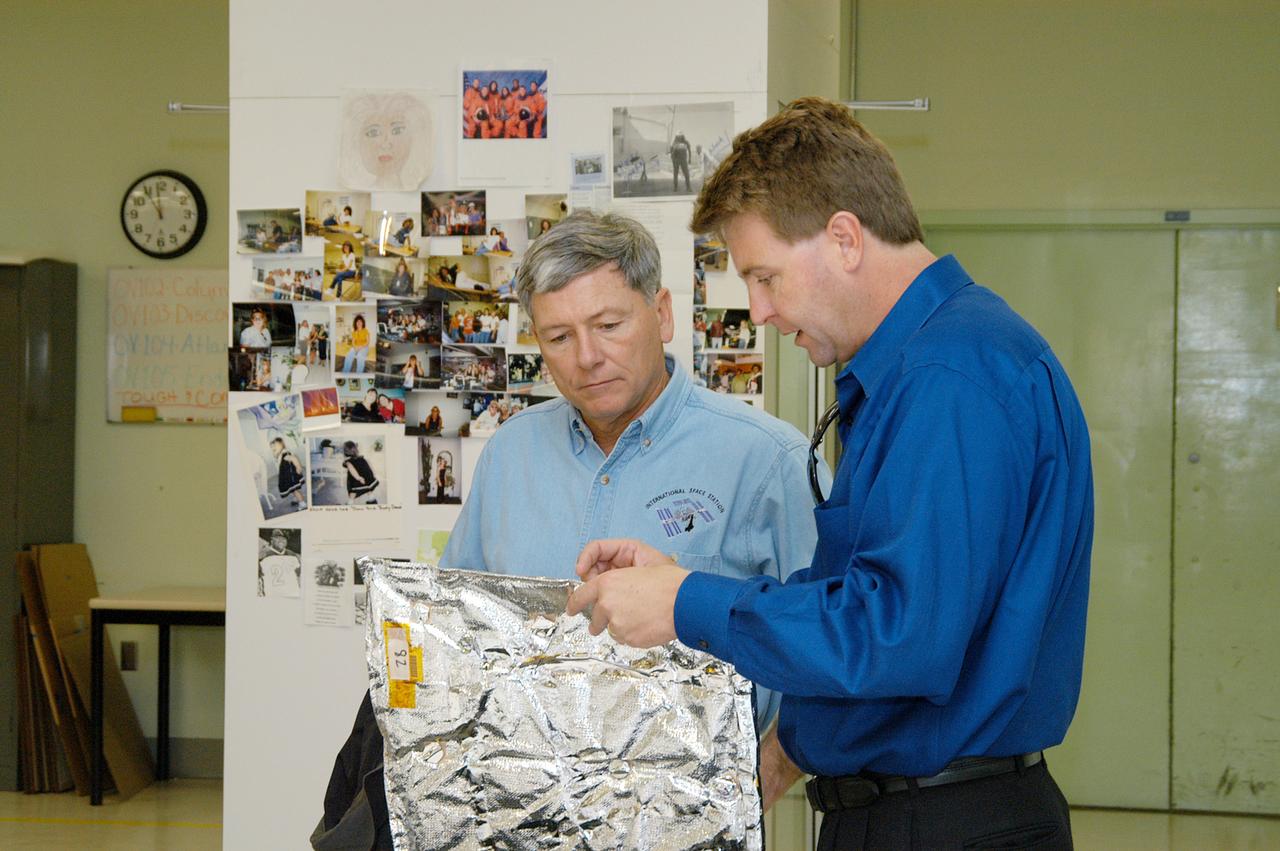
KENNEDY SPACE CENTER, FLA. -- United Space Alliance (USA) Manager of the Thermal Protection System (TPS) Facility Martin Wilson (right) briefs NASA Deputy Associate Administrator for Space Station and Shuttle Programs Michael Kostelnik (left) on the properties of a thermal blanket used in the Shuttle's TPS. NASA and USA Space Shuttle program management are participating in a leadership workday. The day is intended to provide management with an in-depth, hands-on look at Shuttle processing activities at KSC.
Open
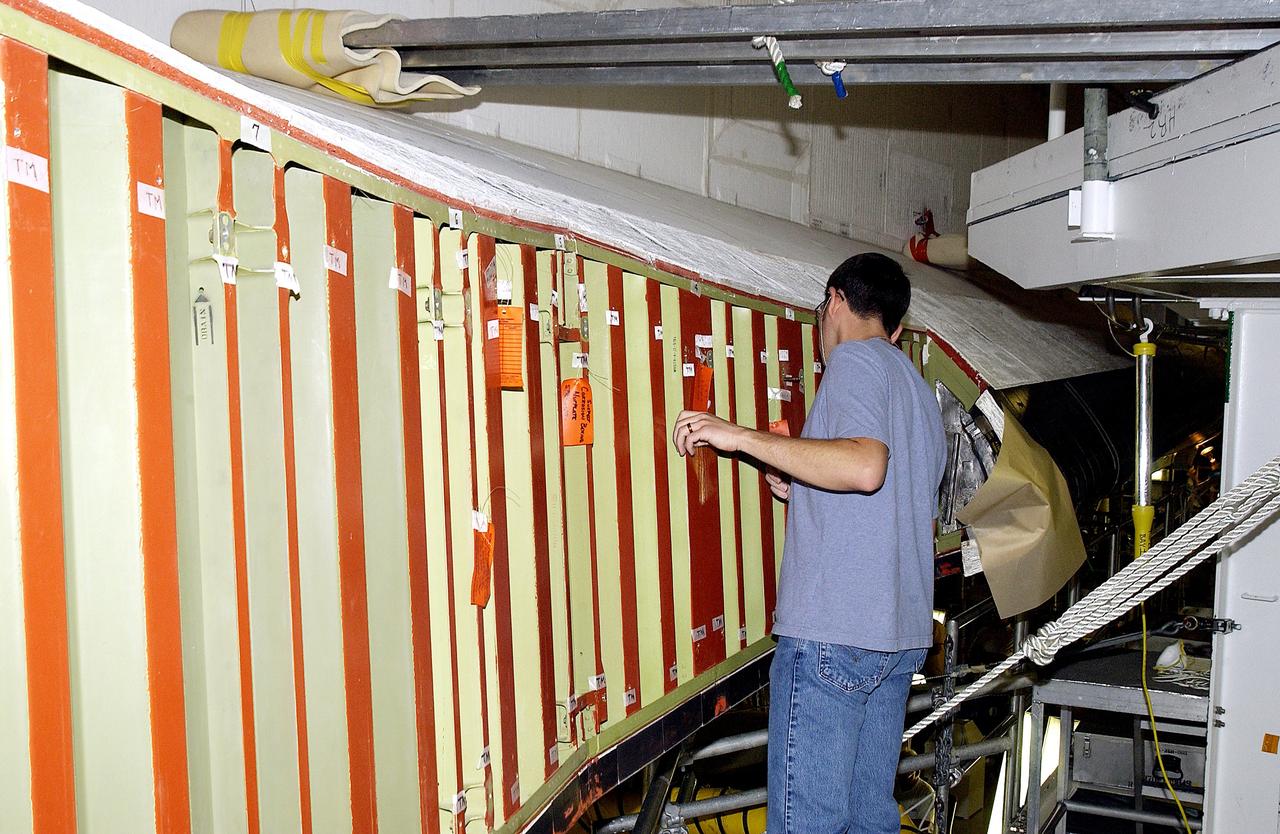
KENNEDY SPACE CENTER, FLA. - In the Orbiter Processing Facility (OPF), a United Space Alliance technician examines the attachment points for the spars on the exterior of a wing of Space Shuttle Atlantis. Reinforced Carbon Carbon (RCC) panels are mechanically attached to the wing with a series of floating joints - spars - to reduce loading on the panels caused by wing deflections. The aluminum and the metallic attachments are protected from exceeding temperature limits by internal insulation. The next launch of Atlantis will be on mission STS-114, a utilization and logistics flight to the International Space Station.
Open
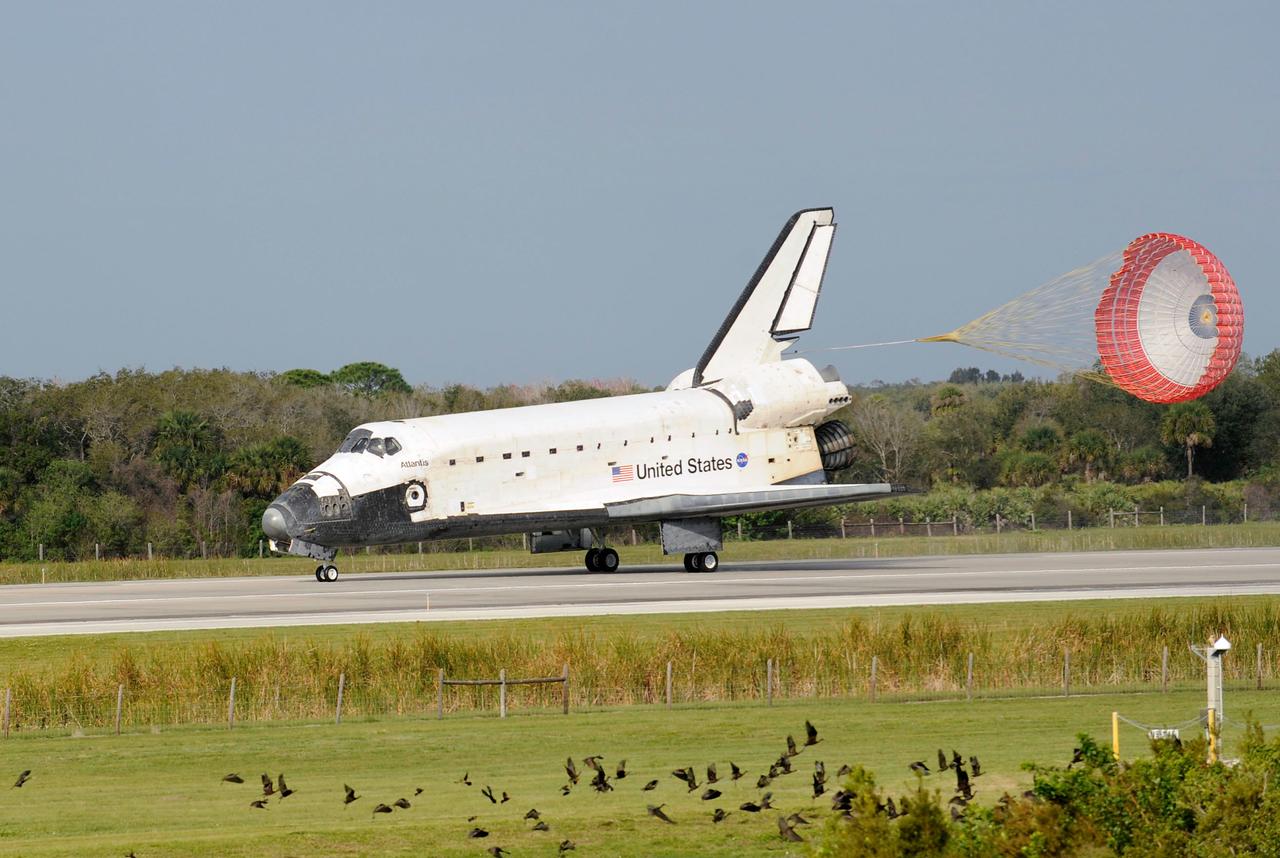
200802200002HQ Space Shuttle Atlantis (STS-122) Lands
Open
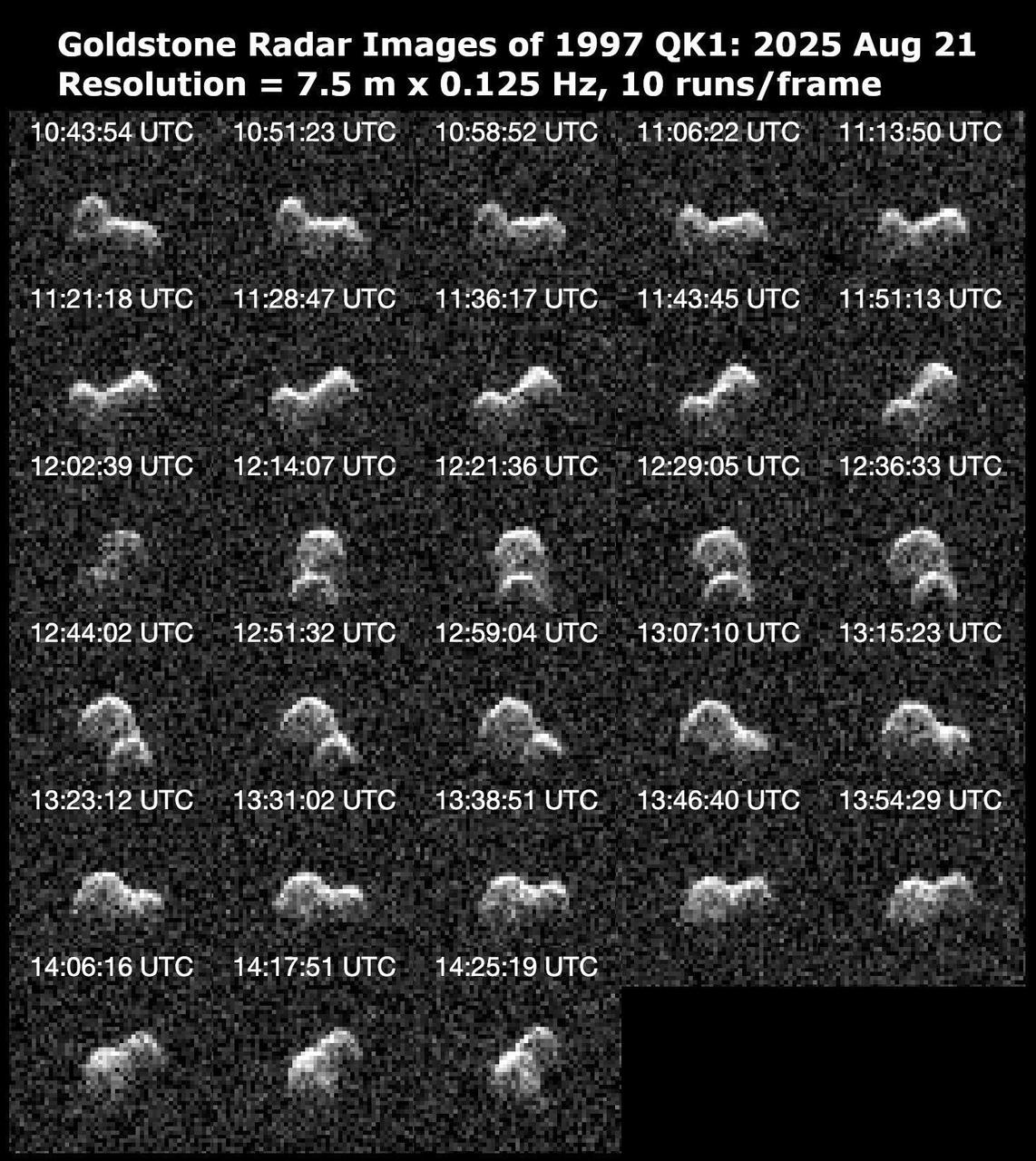
NASA's Planetary Radar Reveals Peanut Shape of Asteroid 1997 QK1
Open
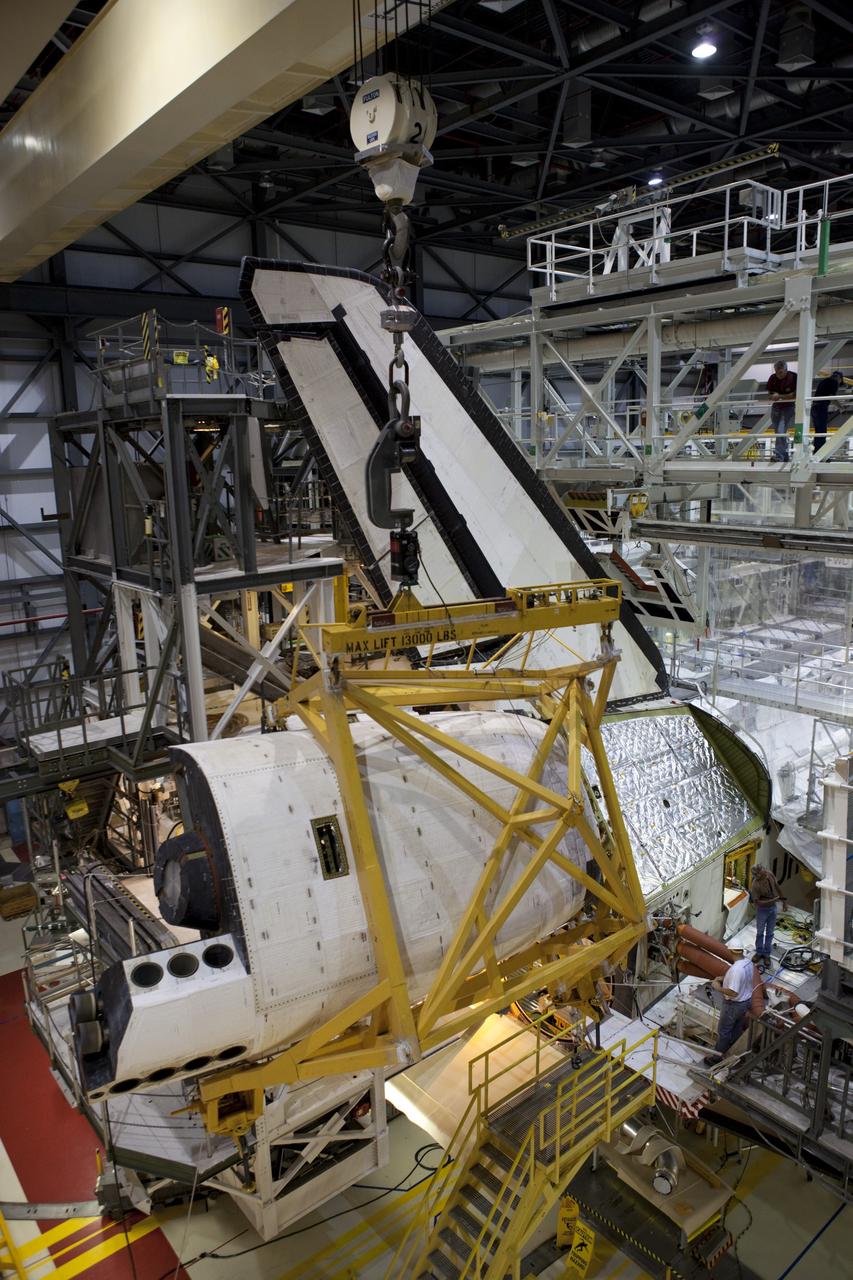
KSC-2012-3411
Open
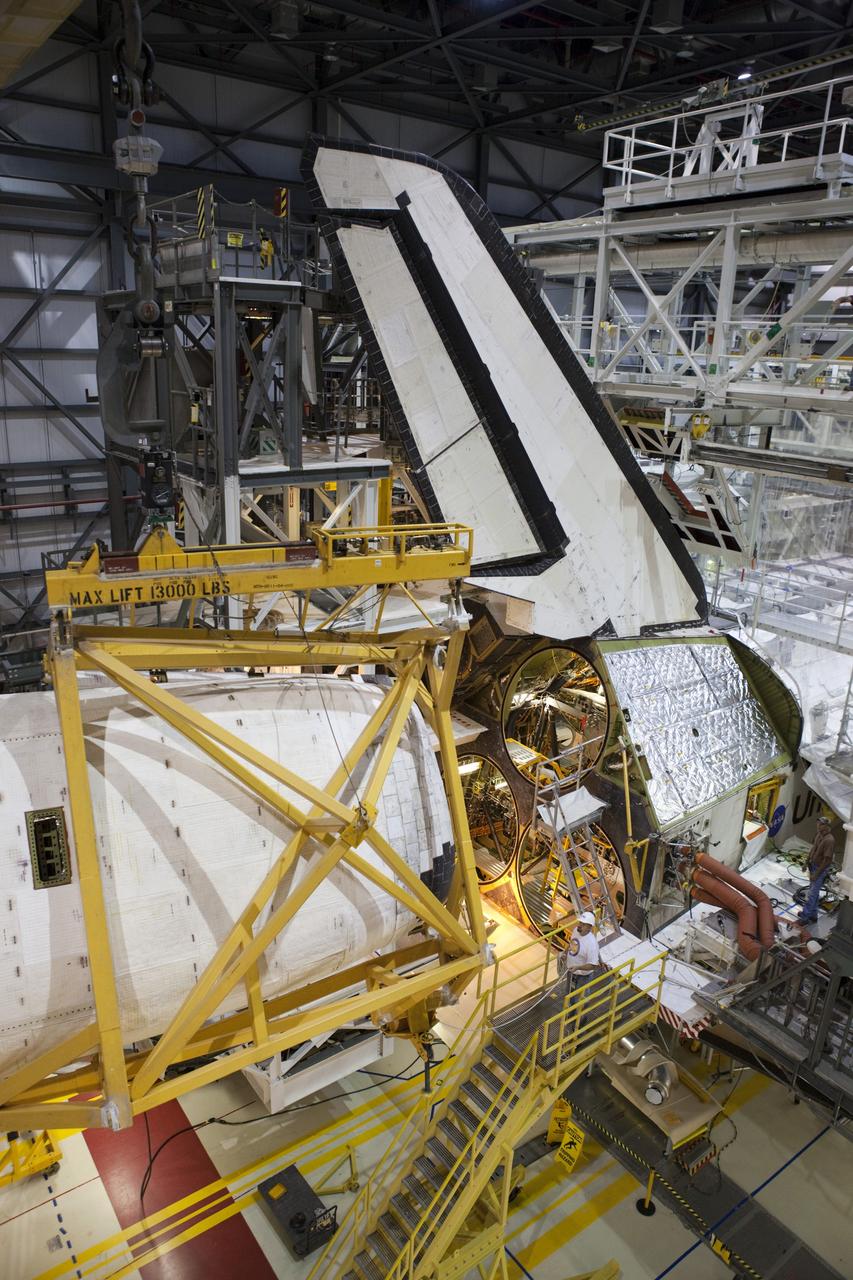
KSC-2012-3409
Open

KSC-2012-2753
Open
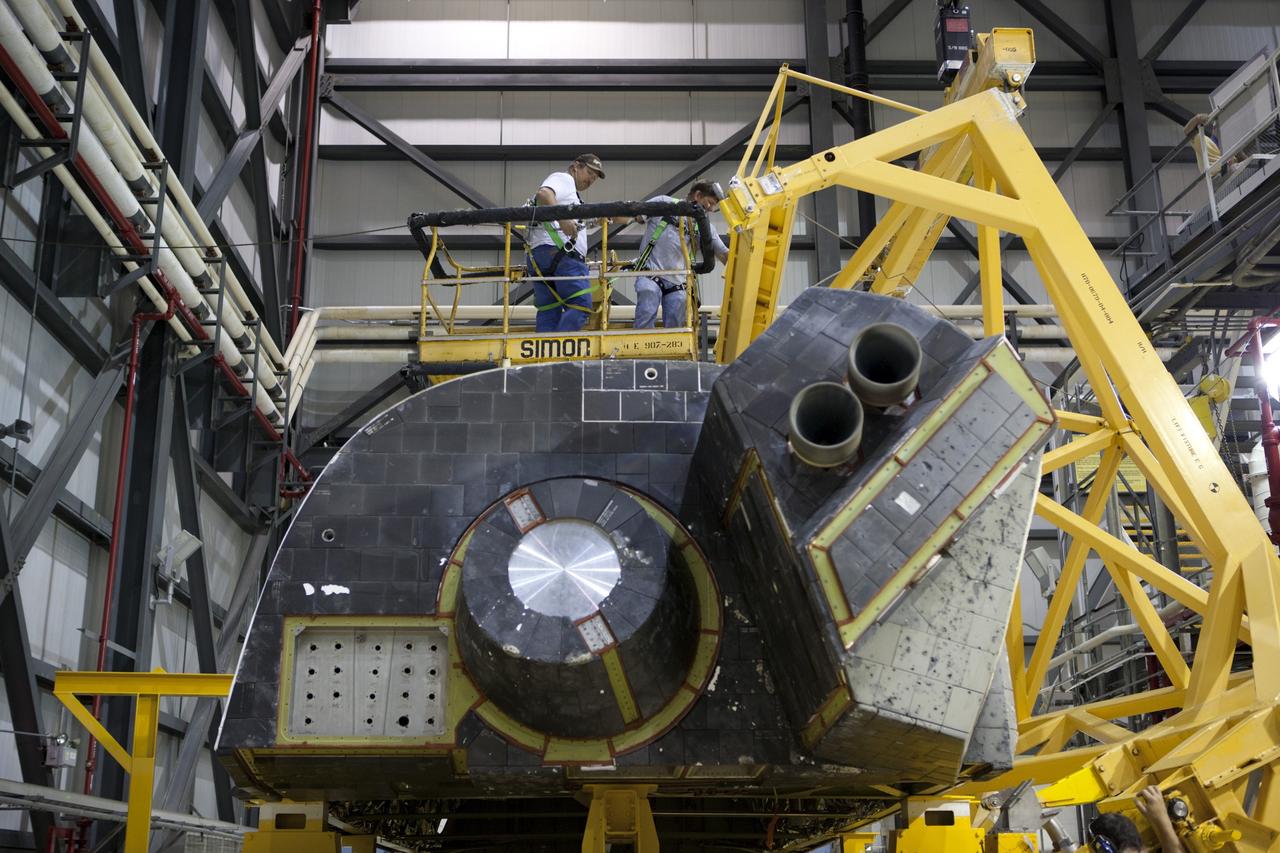
KSC-2012-3401
Open
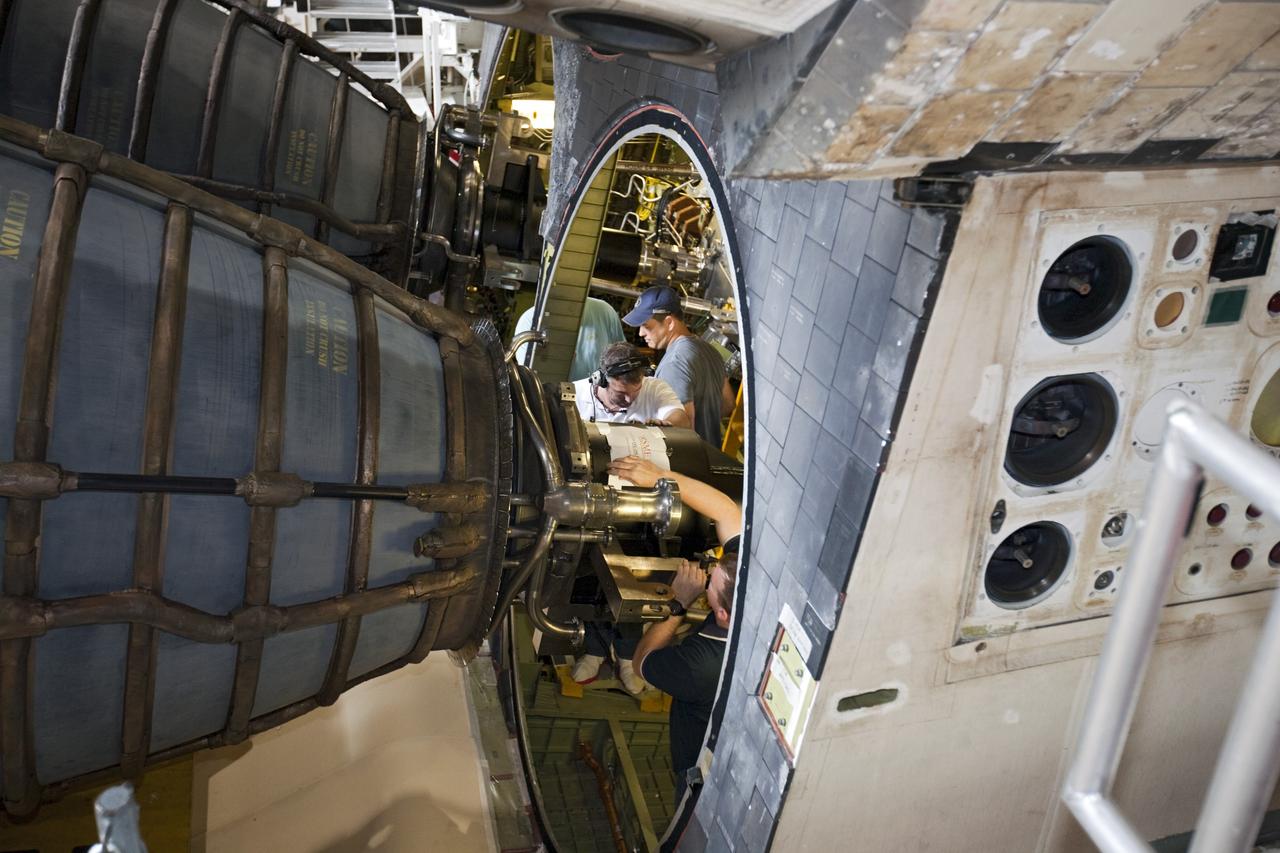
KSC-2012-3505
Open
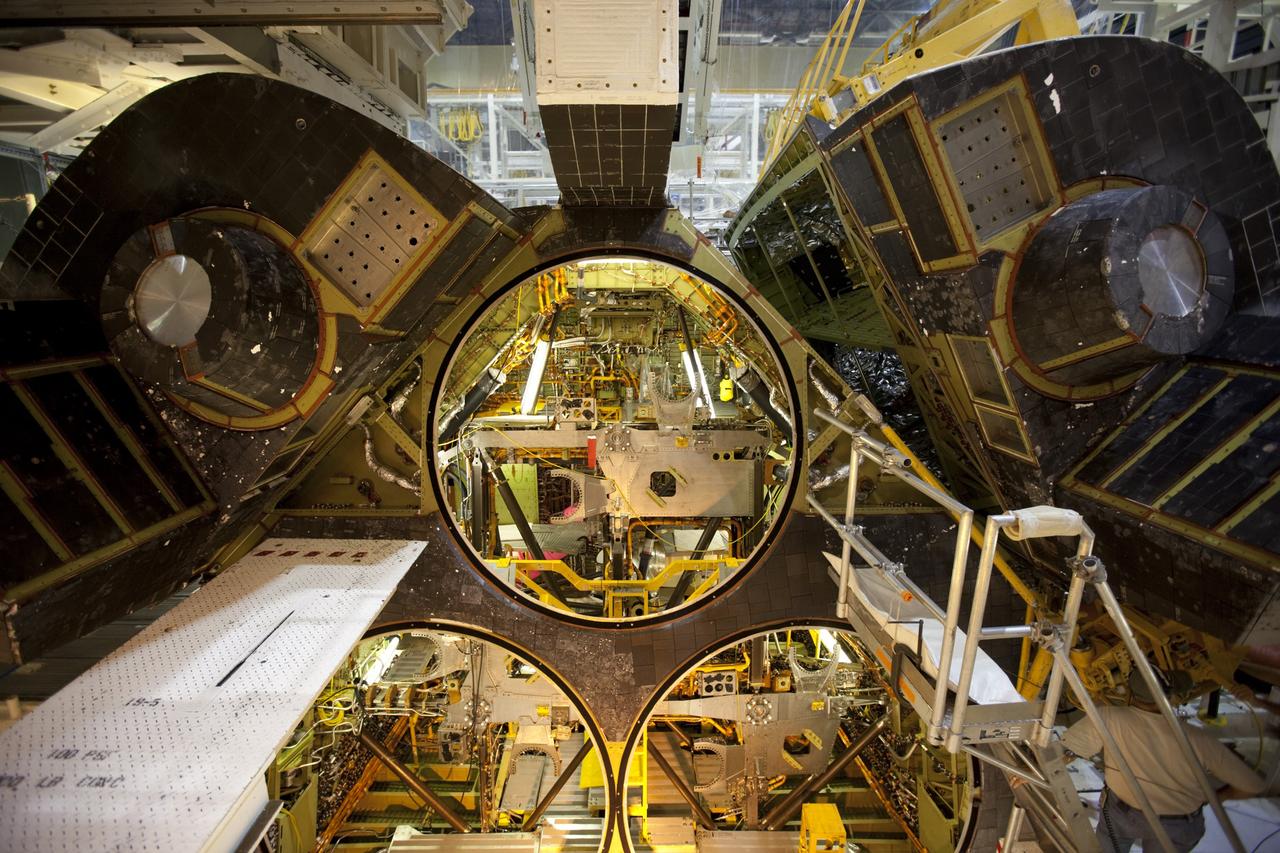
KSC-2012-3416
Open
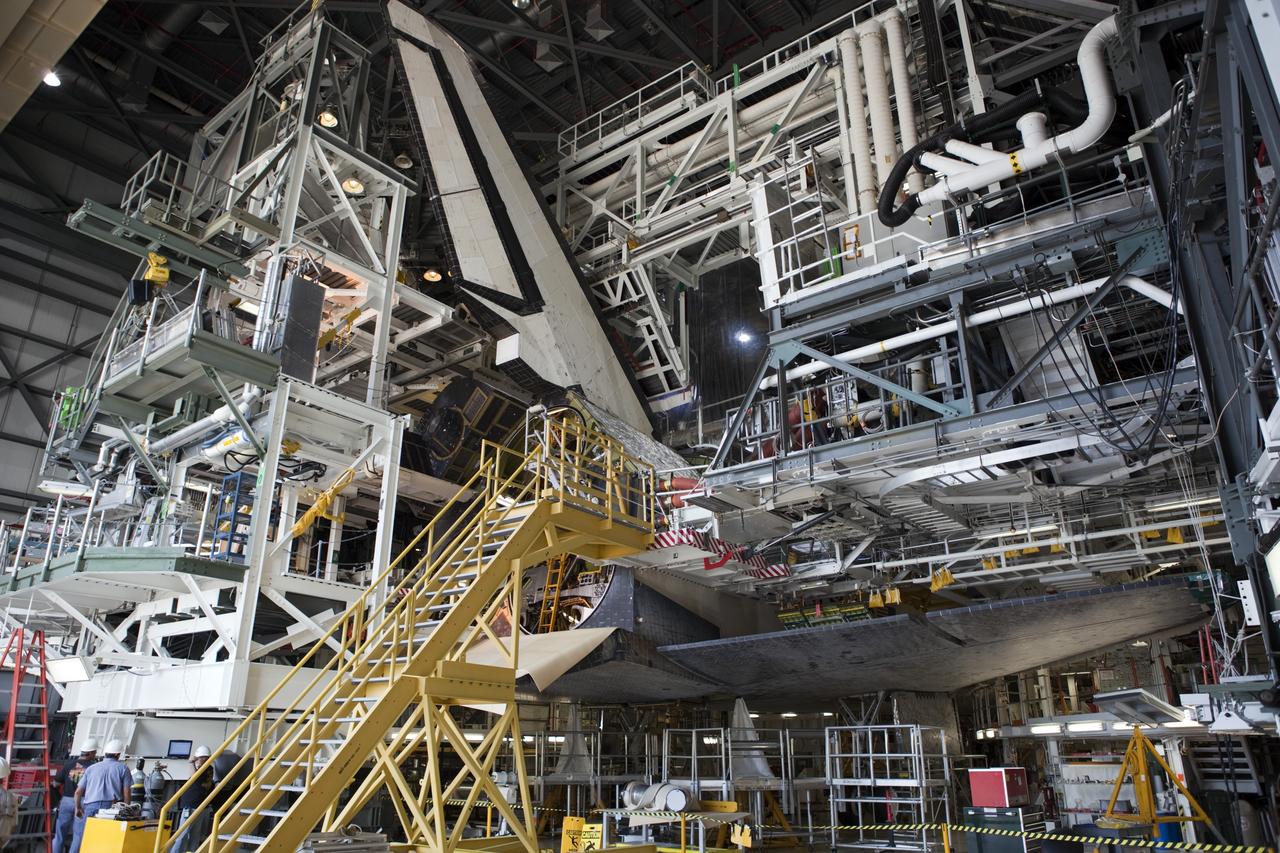
KSC-2012-3398
Open