VoidView.Space
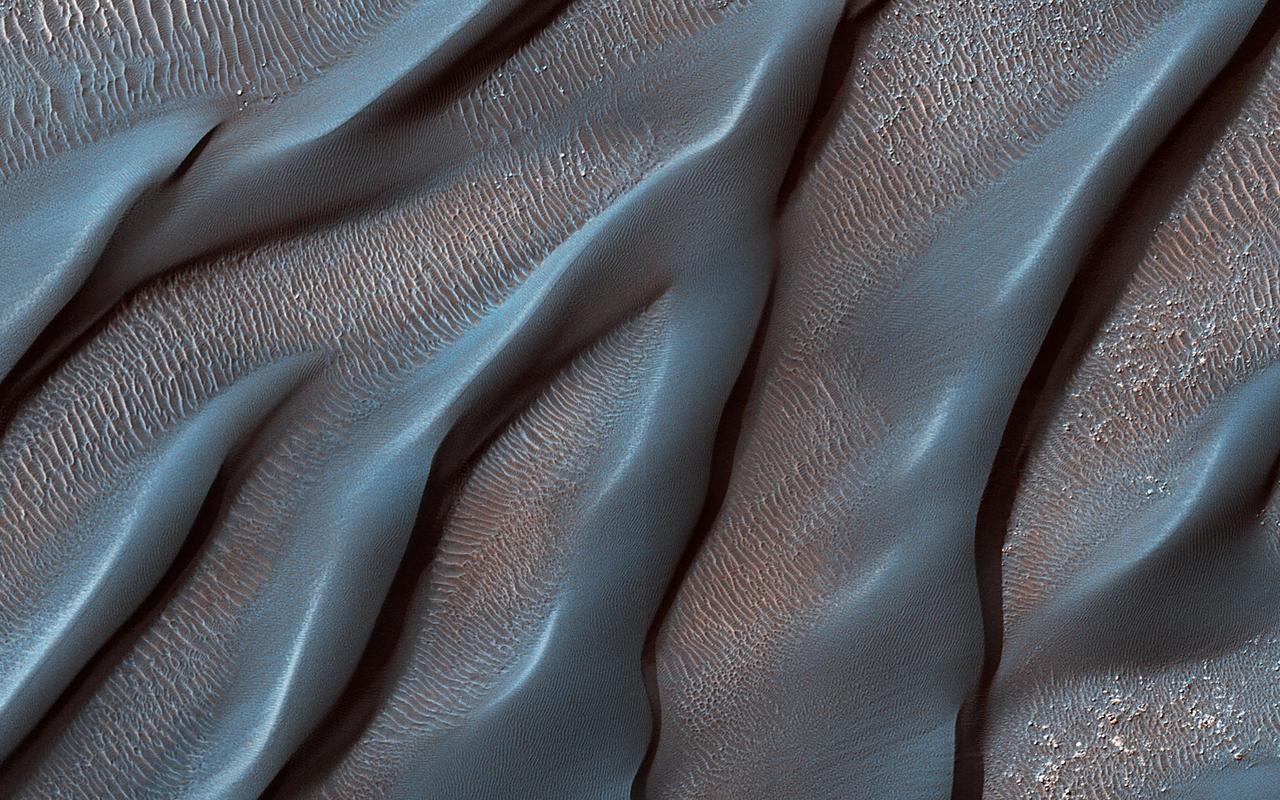
Marvelous Martian Mega-Ripples

Mars — Page 84

Marvelous Martian Mega-Ripples

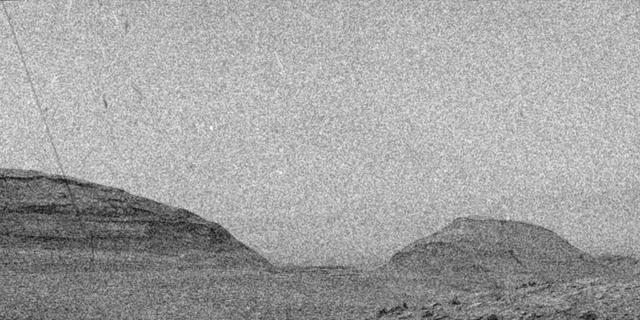
Curiosity Sees Streaks and Specks During 2024 Solar Storm

Curiosity Sees Streaks and Specks During 2024 Solar Storm

Open
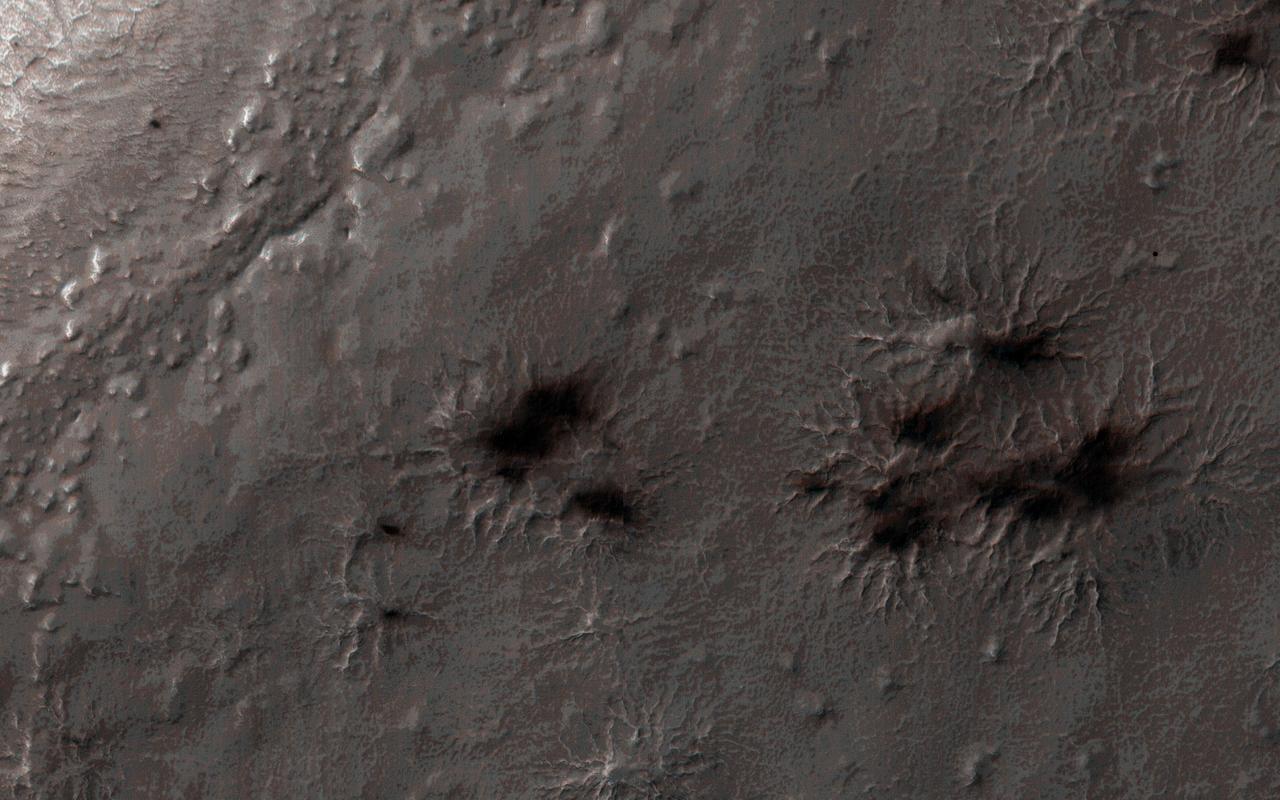
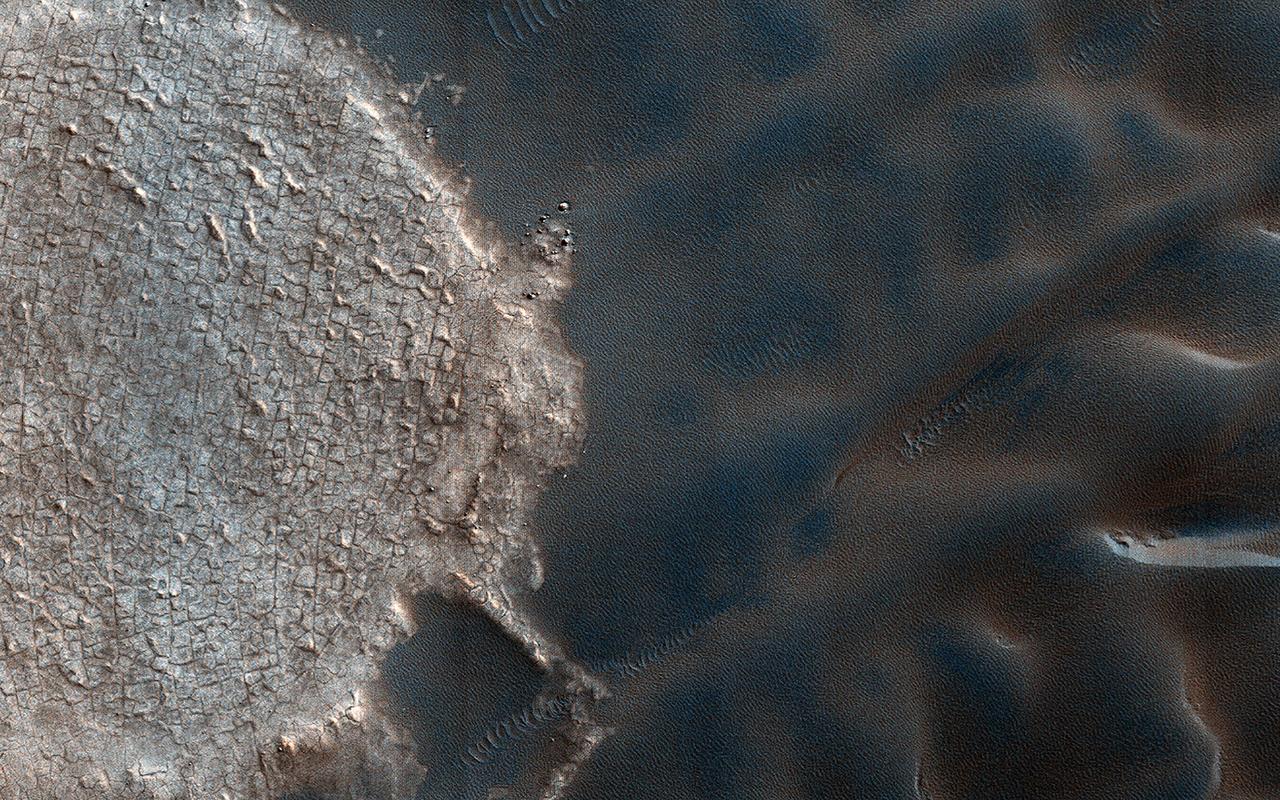
Spring in Inca City I

Spring in Inca City I

Open

Waxing and Waning Winds

Waxing and Waning Winds

Open

Tell-Tale Bedrock in Tyrrhena Terra

Tell-Tale Bedrock in Tyrrhena Terra

Open
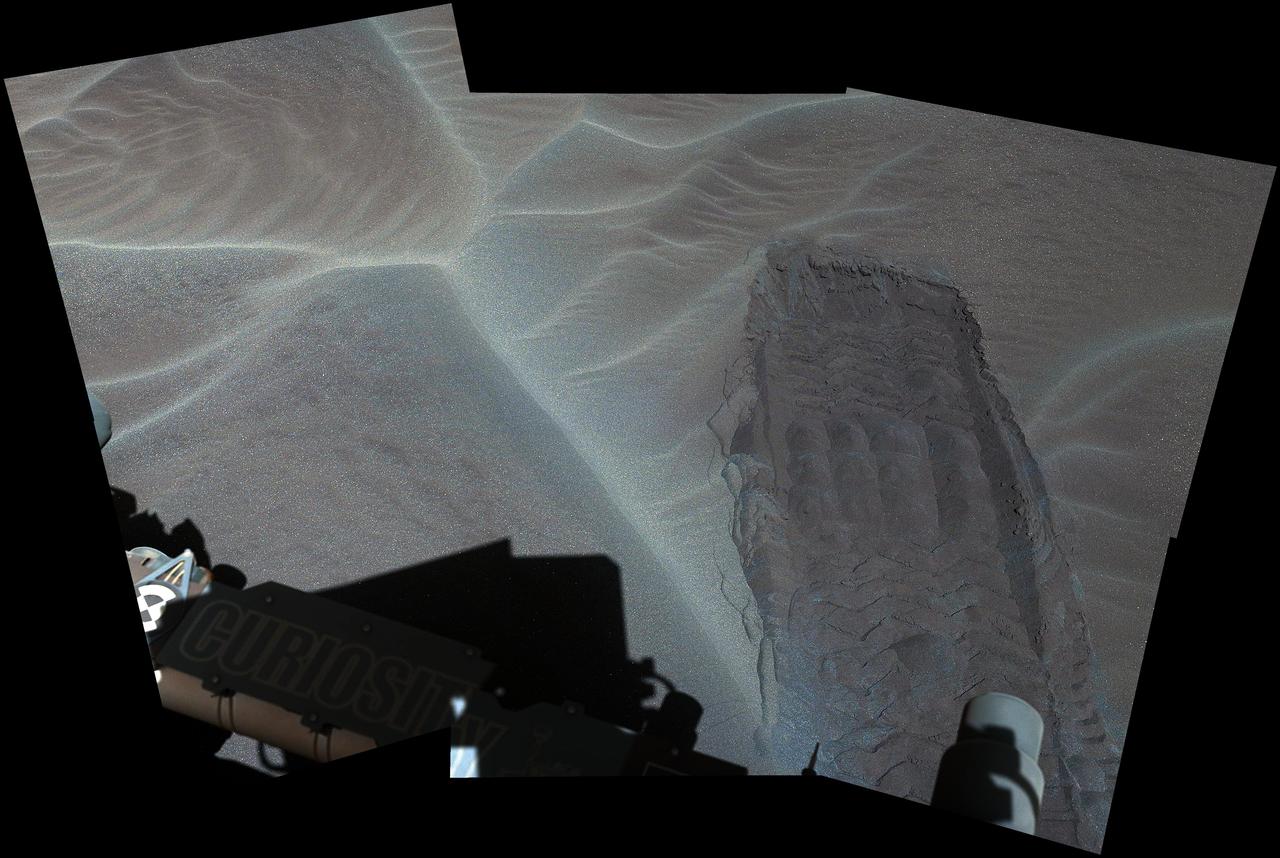
Rover Track in Sand Sheet Near Martian Sand Dune

Rover Track in Sand Sheet Near Martian Sand Dune

Open
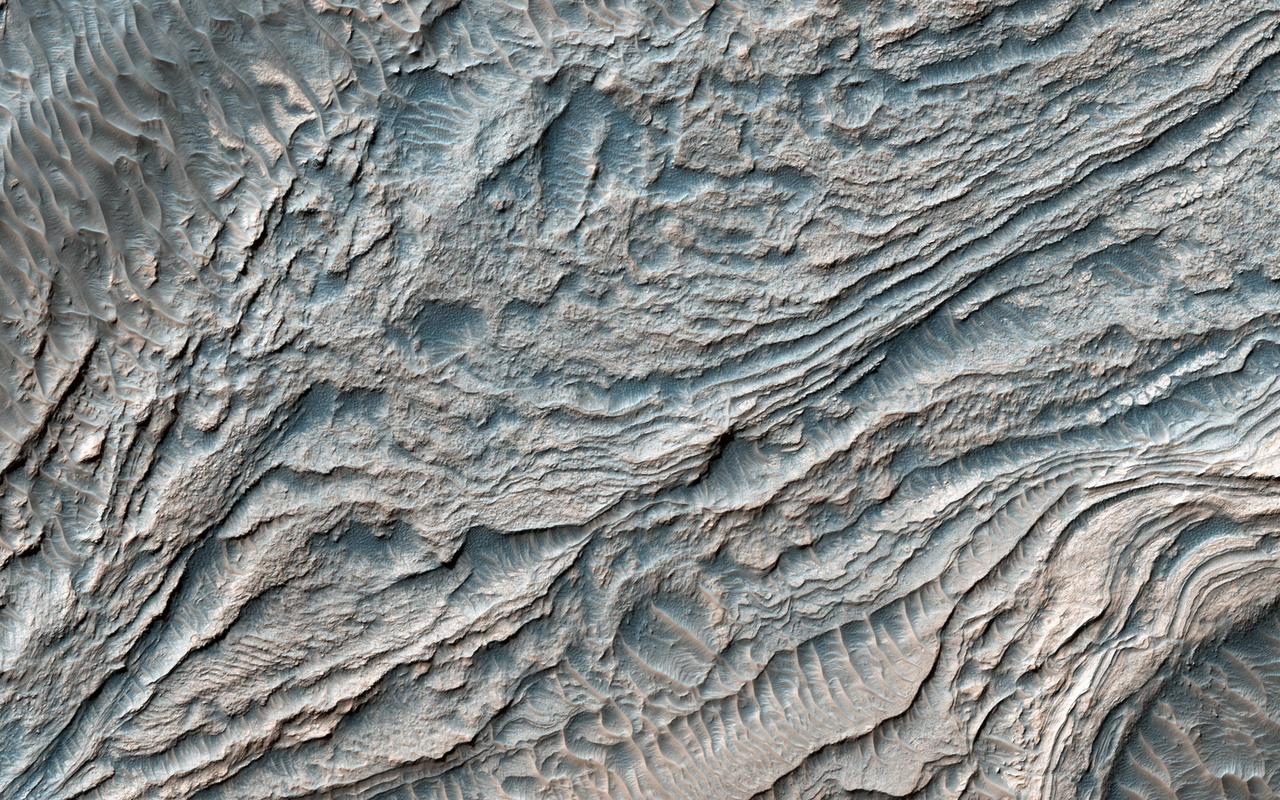
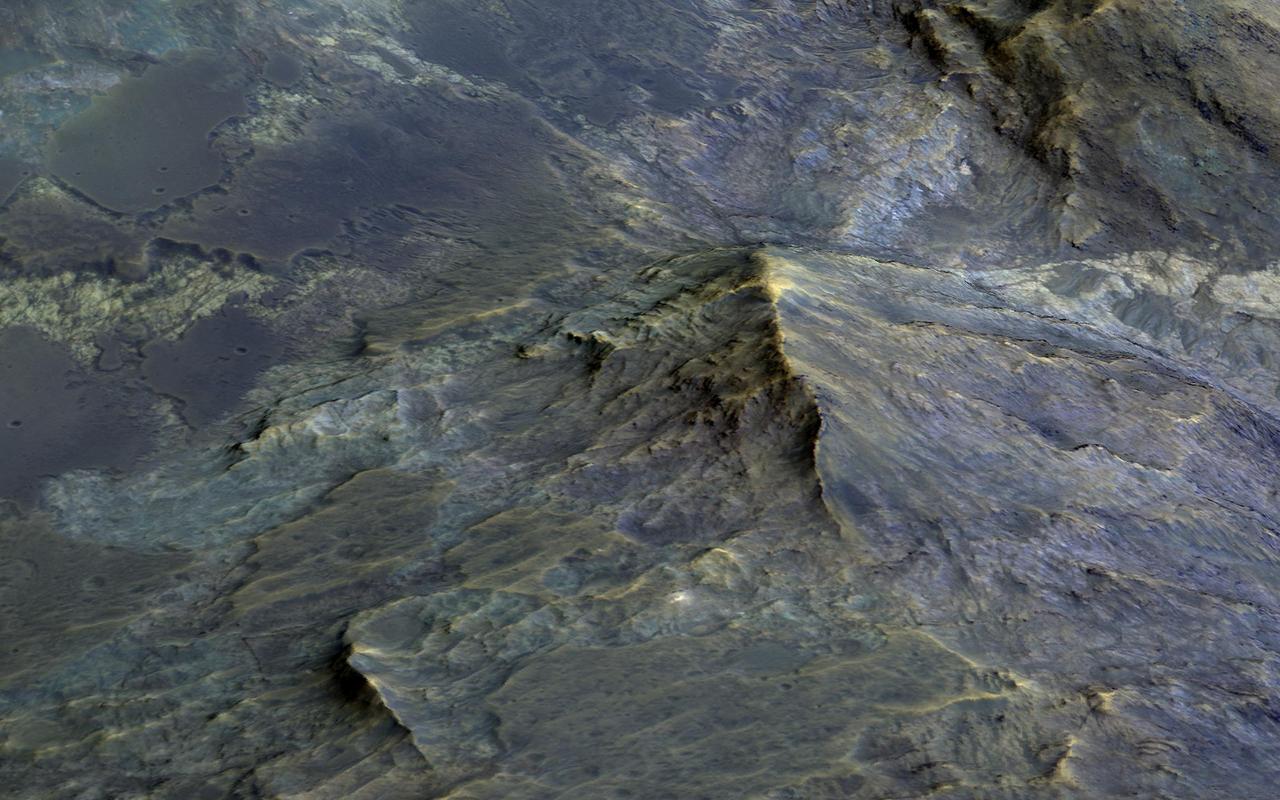
Clinoforms in Melas Chasma

Clinoforms in Melas Chasma

Open

Active Flows on Steep Slopes in Ganges Chasma

Active Flows on Steep Slopes in Ganges Chasma

Open
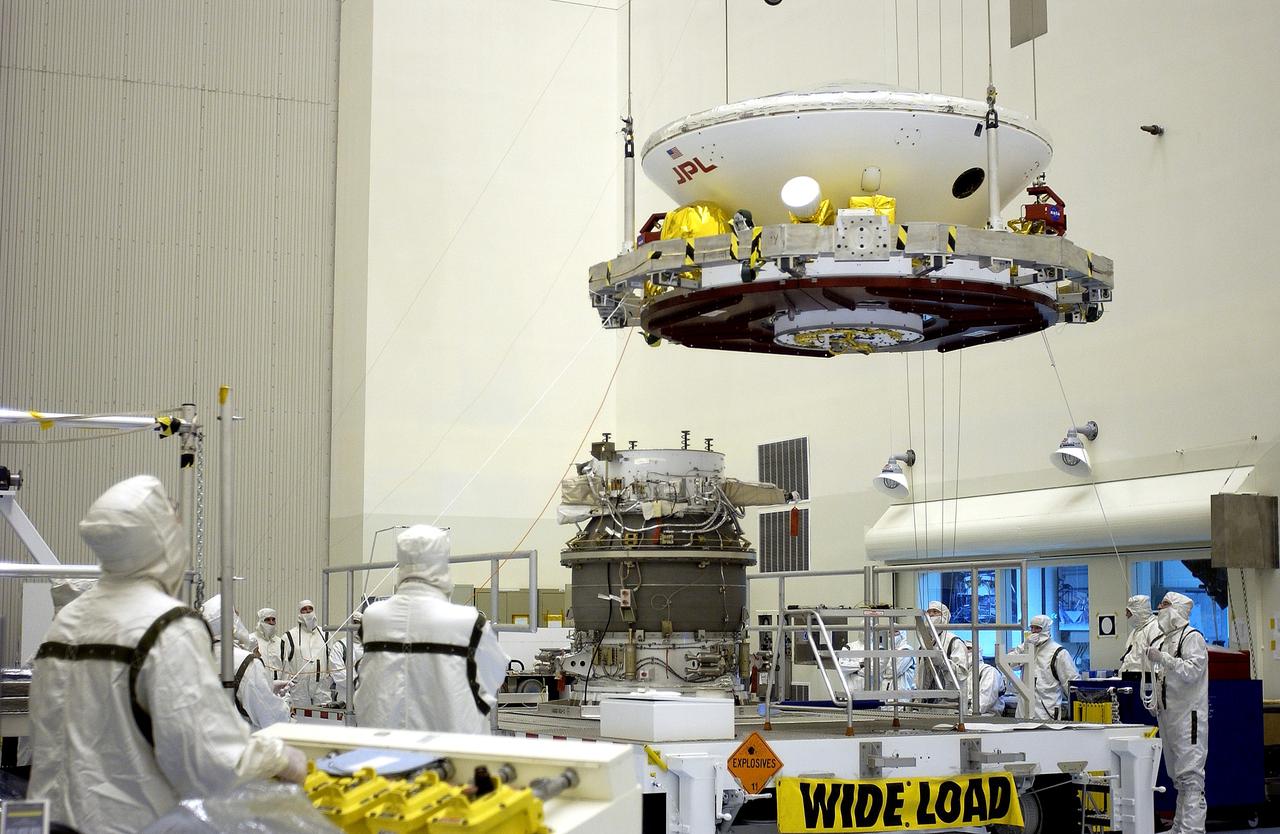
KENNEDY SPACE CENTER, FLA. -  In the Payload Hazardous Servicing Facility, workers prepare to mate the Mars Exploration Rover-2 (MER-2) to the third stage of a Delta II rocket for launch on June 5.  NASA’s twin Mars Exploration Rovers are designed to study the history of water on Mars. These robotic geologists are equipped with a robotic arm, a drilling tool, three spectrometers, and four pairs of cameras that allow them to have a human-like, 3D view of the terrain. Each rover could travel as far as 100 meters in one day to act as Mars scientists' eyes and hands, exploring an environment where humans can’t yet go.  MER-1 (MER-B) will launch June 25.

KENNEDY SPACE CENTER, FLA. - In the Payload Hazardous Servicing Facility, workers prepare to mate the Mars Exploration Rover-2 (MER-2) to the third stage of a Delta II rocket for launch on June 5. NASA’s twin Mars Exploration Rovers are designed to study the history of water on Mars. These robotic geologists are equipped with a robotic arm, a drilling tool, three spectrometers, and four pairs of cameras that allow them to have a human-like, 3D view of the terrain. Each rover could travel as far as 100 meters in one day to act as Mars scientists' eyes and hands, exploring an environment where humans can’t yet go. MER-1 (MER-B) will launch June 25.

Open
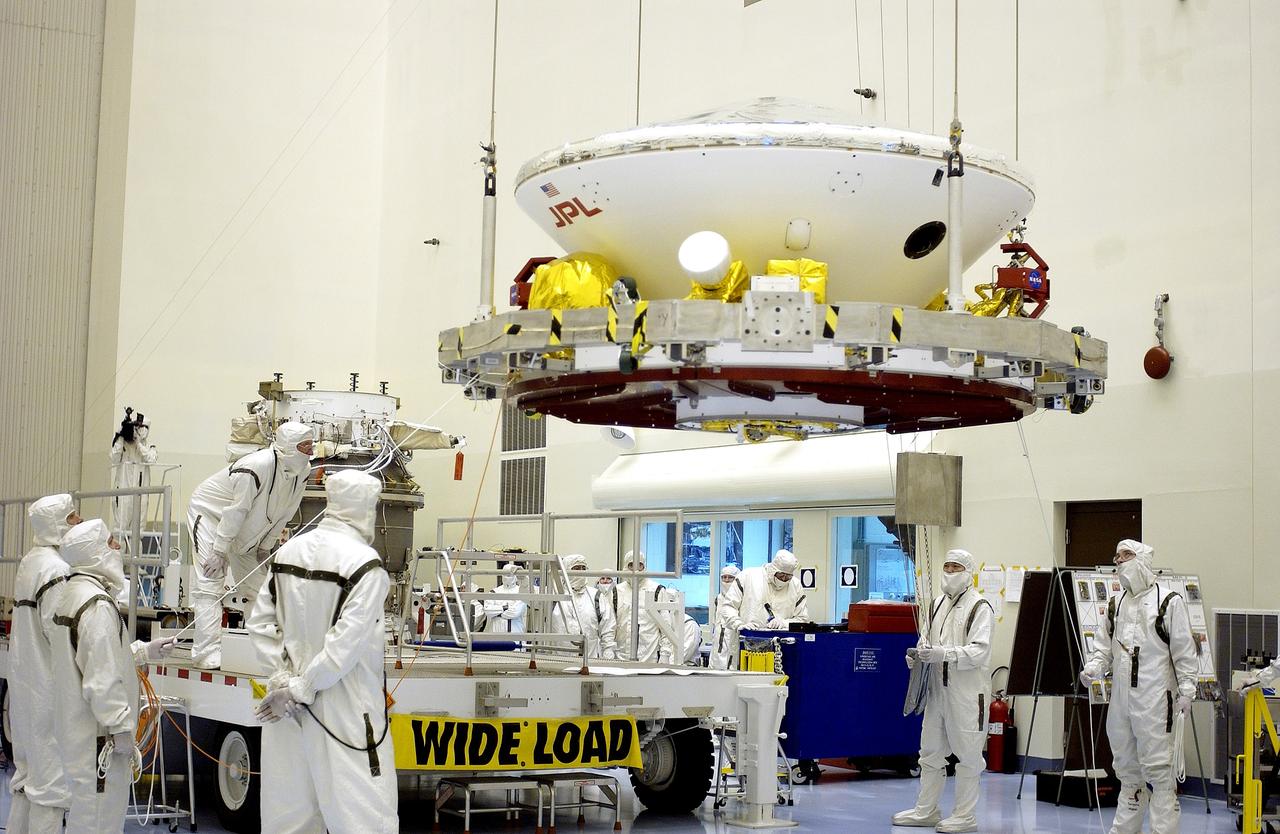
KENNEDY SPACE CENTER, FLA. -  In the Payload Hazardous Servicing Facility, workers prepare to mate the Mars Exploration Rover-2 (MER-2) to the third stage of a Delta II rocket for launch on June 5.  NASA’s twin Mars Exploration Rovers are designed to study the history of water on Mars. These robotic geologists are equipped with a robotic arm, a drilling tool, three spectrometers, and four pairs of cameras that allow them to have a human-like, 3D view of the terrain. Each rover could travel as far as 100 meters in one day to act as Mars scientists' eyes and hands, exploring an environment where humans can’t yet go.  MER-1 (MER-B) will launch June 25.

KENNEDY SPACE CENTER, FLA. - In the Payload Hazardous Servicing Facility, workers prepare to mate the Mars Exploration Rover-2 (MER-2) to the third stage of a Delta II rocket for launch on June 5. NASA’s twin Mars Exploration Rovers are designed to study the history of water on Mars. These robotic geologists are equipped with a robotic arm, a drilling tool, three spectrometers, and four pairs of cameras that allow them to have a human-like, 3D view of the terrain. Each rover could travel as far as 100 meters in one day to act as Mars scientists' eyes and hands, exploring an environment where humans can’t yet go. MER-1 (MER-B) will launch June 25.

Open
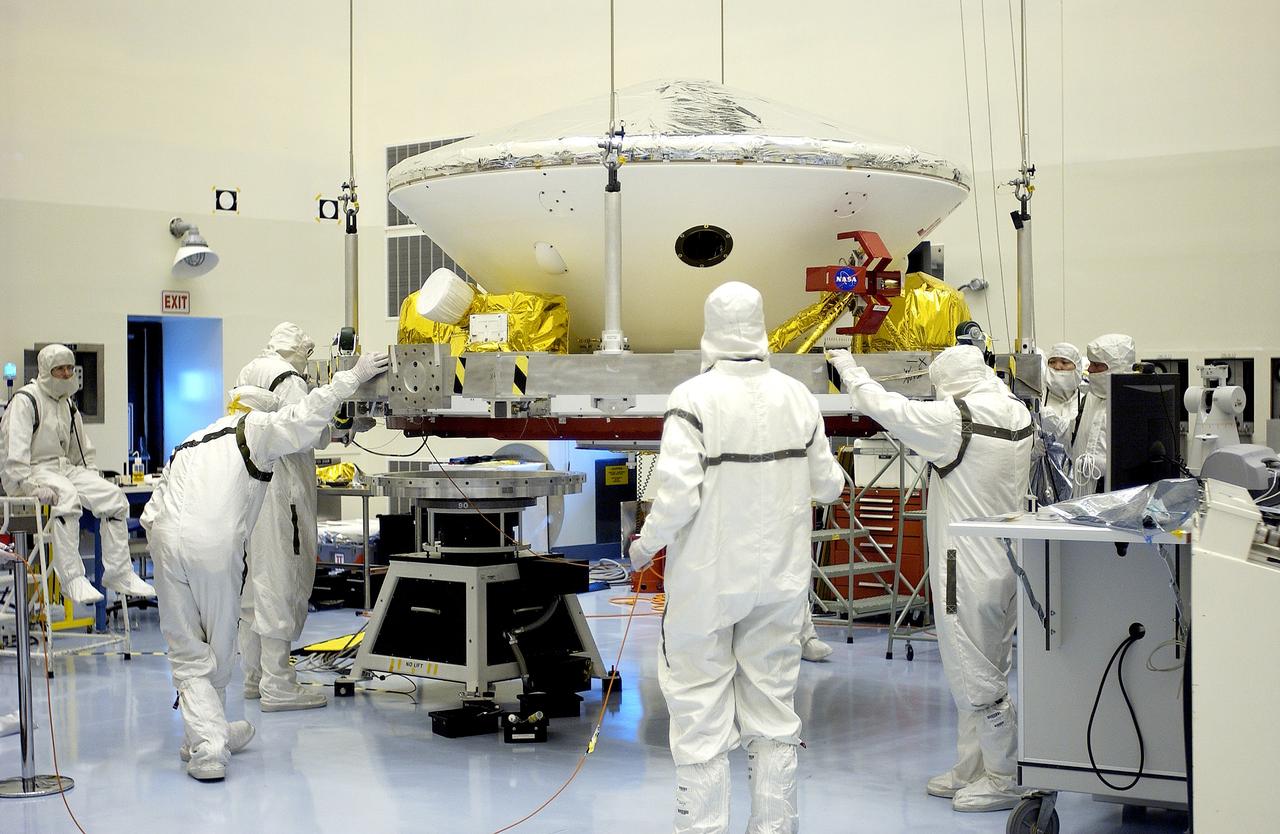
KENNEDY SPACE CENTER, FLA. -  In the Payload Hazardous Servicing Facility, workers prepare to mate the Mars Exploration Rover-2 (MER-2) to the third stage of a Delta II rocket for launch on June 5.  NASA’s twin Mars Exploration Rovers are designed to study the history of water on Mars. These robotic geologists are equipped with a robotic arm, a drilling tool, three spectrometers, and four pairs of cameras that allow them to have a human-like, 3D view of the terrain. Each rover could travel as far as 100 meters in one day to act as Mars scientists' eyes and hands, exploring an environment where humans can’t yet go.  MER-1 (MER-B) will launch June 25.

KENNEDY SPACE CENTER, FLA. - In the Payload Hazardous Servicing Facility, workers prepare to mate the Mars Exploration Rover-2 (MER-2) to the third stage of a Delta II rocket for launch on June 5. NASA’s twin Mars Exploration Rovers are designed to study the history of water on Mars. These robotic geologists are equipped with a robotic arm, a drilling tool, three spectrometers, and four pairs of cameras that allow them to have a human-like, 3D view of the terrain. Each rover could travel as far as 100 meters in one day to act as Mars scientists' eyes and hands, exploring an environment where humans can’t yet go. MER-1 (MER-B) will launch June 25.

Open
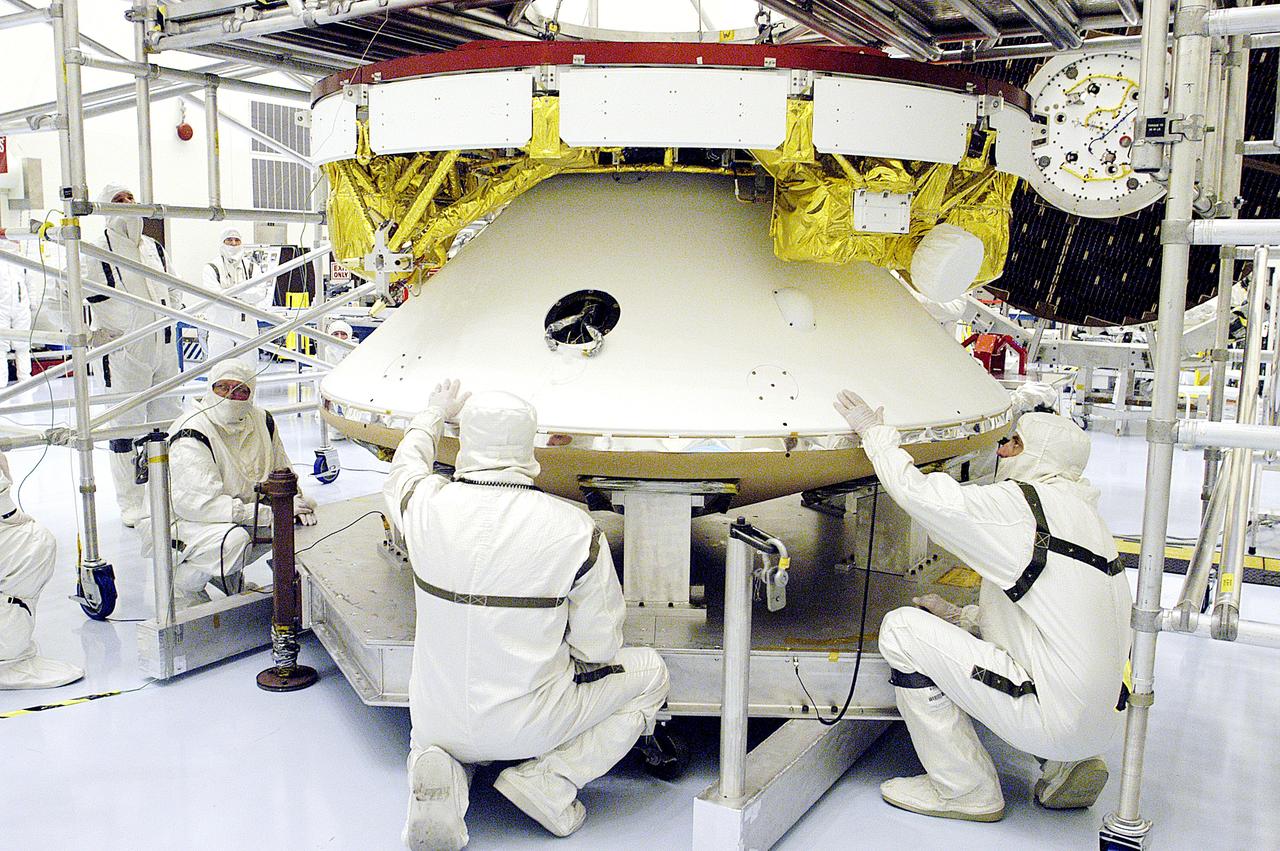
KENNEDY SPACE CENTER, FLA. - The Mars Exploration Rover 2 (MER-2) undergoes a weight and center of gravity determination in the Payload Hazardous Servicing Facility.  NASA's twin Mars Exploration Rovers are designed to study the history of water on Mars. These robotic geologists are equipped with a robotic arm, a drilling tool, three spectrometers, and four pairs of cameras that allow them to have a human-like, 3D view of the terrain. Each rover could travel as far as 100 meters in one day to act as Mars scientists' eyes and hands, exploring an environment where humans can't yet go.  Launch of MER-2 is scheduled for June 5 from Cape Canaveral Air Force Station.

KENNEDY SPACE CENTER, FLA. - The Mars Exploration Rover 2 (MER-2) undergoes a weight and center of gravity determination in the Payload Hazardous Servicing Facility. NASA's twin Mars Exploration Rovers are designed to study the history of water on Mars. These robotic geologists are equipped with a robotic arm, a drilling tool, three spectrometers, and four pairs of cameras that allow them to have a human-like, 3D view of the terrain. Each rover could travel as far as 100 meters in one day to act as Mars scientists' eyes and hands, exploring an environment where humans can't yet go. Launch of MER-2 is scheduled for June 5 from Cape Canaveral Air Force Station.

Open
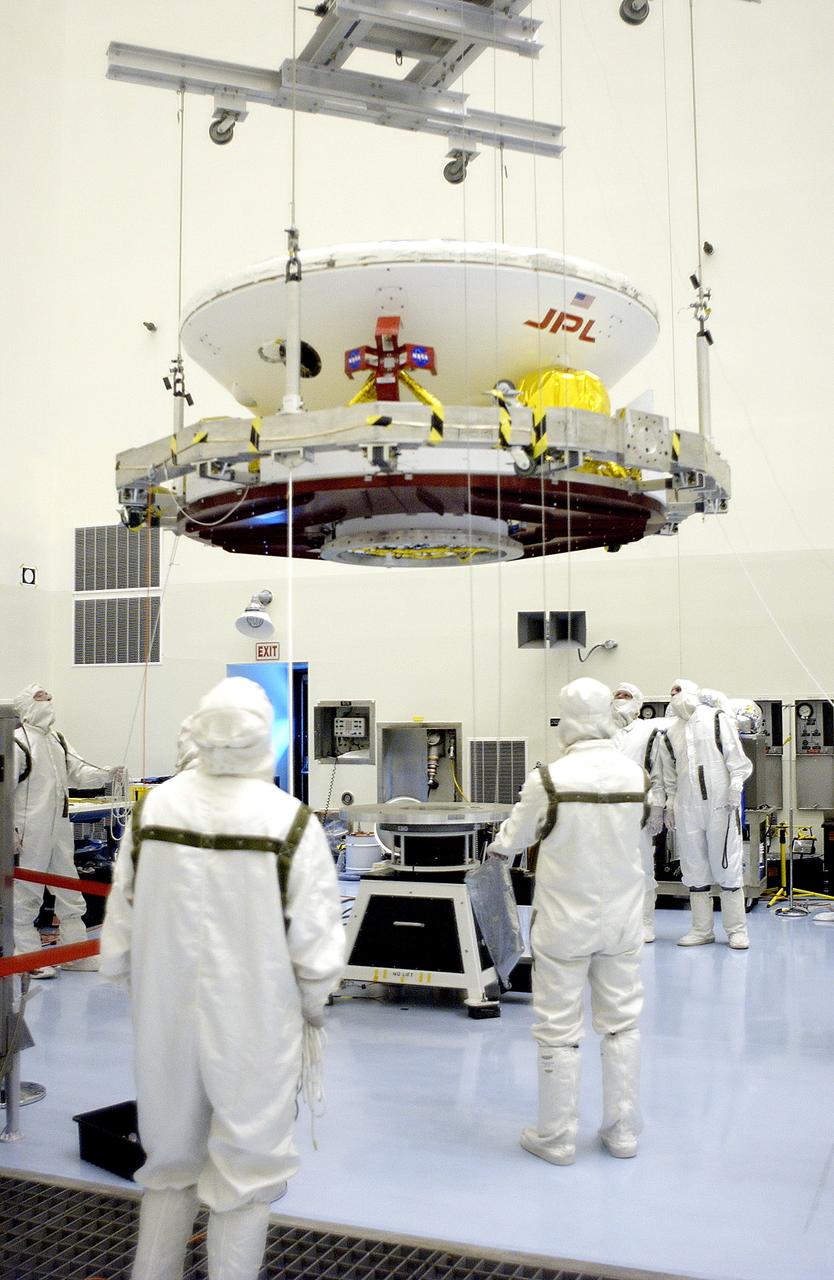
KENNEDY SPACE CENTER, FLA. - In the Payload Hazardous Servicing Facility, the Mars Exploration Rover 2 (MER-2) is moved to a spin table.  NASA’s twin Mars Exploration Rovers are designed to study the history of water on Mars. These robotic geologists are equipped with a robotic arm, a drilling tool, three spectrometers, and four pairs of cameras that allow them to have a human-like, 3D view of the terrain. Each rover could travel as far as 100 meters in one day to act as Mars scientists' eyes and hands, exploring an environment where humans can’t yet go.  The MER-2 is scheduled to launch June 5 from Launch Pad 17-A, Cape Canaveral Air Force Station.

KENNEDY SPACE CENTER, FLA. - In the Payload Hazardous Servicing Facility, the Mars Exploration Rover 2 (MER-2) is moved to a spin table. NASA’s twin Mars Exploration Rovers are designed to study the history of water on Mars. These robotic geologists are equipped with a robotic arm, a drilling tool, three spectrometers, and four pairs of cameras that allow them to have a human-like, 3D view of the terrain. Each rover could travel as far as 100 meters in one day to act as Mars scientists' eyes and hands, exploring an environment where humans can’t yet go. The MER-2 is scheduled to launch June 5 from Launch Pad 17-A, Cape Canaveral Air Force Station.

Open
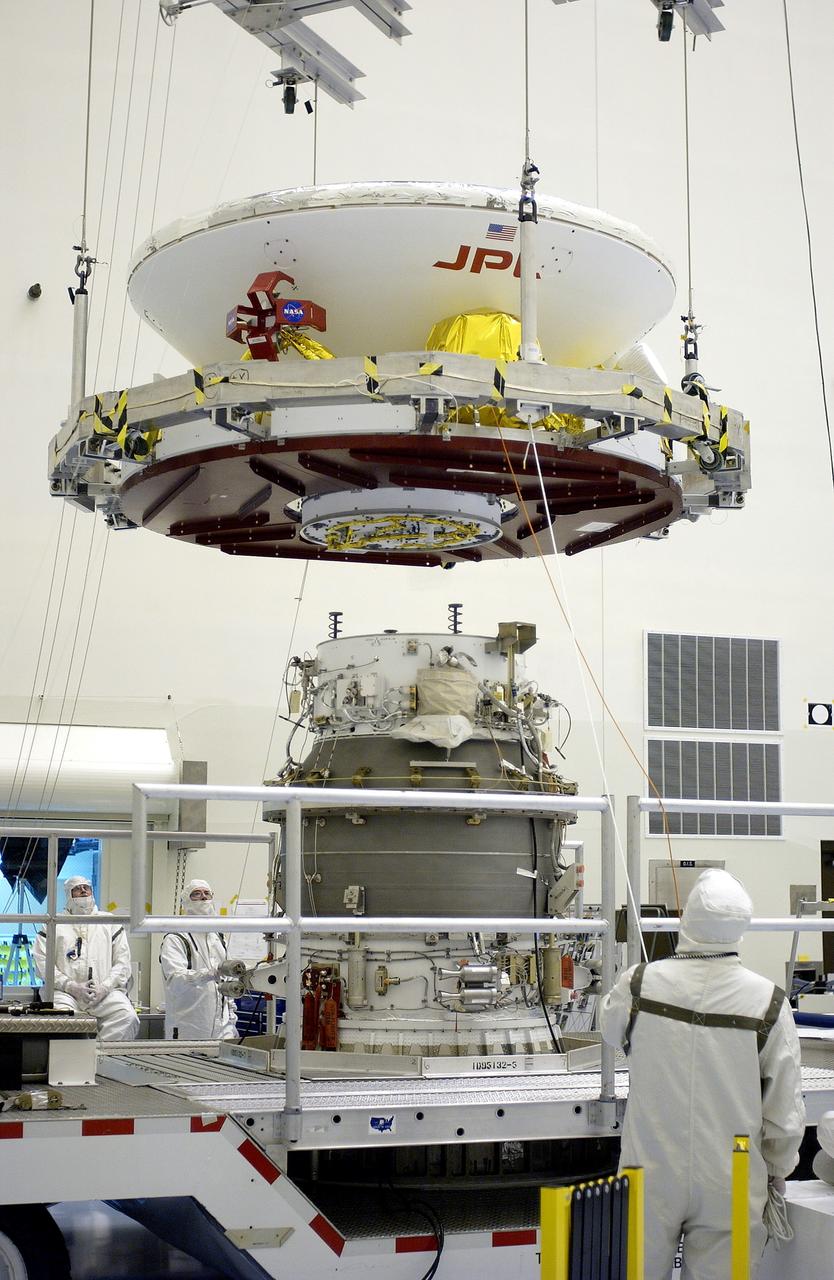
KENNEDY SPACE CENTER, FLA. -  In the Payload Hazardous Servicing Facility, workers prepare to mate the Mars Exploration Rover-2 (MER-2) to the third stage of a Delta II rocket for launch on June 5.  NASA’s twin Mars Exploration Rovers are designed to study the history of water on Mars. These robotic geologists are equipped with a robotic arm, a drilling tool, three spectrometers, and four pairs of cameras that allow them to have a human-like, 3D view of the terrain. Each rover could travel as far as 100 meters in one day to act as Mars scientists' eyes and hands, exploring an environment where humans can’t yet go.  MER-1 (MER-B) will launch June 25.

KENNEDY SPACE CENTER, FLA. - In the Payload Hazardous Servicing Facility, workers prepare to mate the Mars Exploration Rover-2 (MER-2) to the third stage of a Delta II rocket for launch on June 5. NASA’s twin Mars Exploration Rovers are designed to study the history of water on Mars. These robotic geologists are equipped with a robotic arm, a drilling tool, three spectrometers, and four pairs of cameras that allow them to have a human-like, 3D view of the terrain. Each rover could travel as far as 100 meters in one day to act as Mars scientists' eyes and hands, exploring an environment where humans can’t yet go. MER-1 (MER-B) will launch June 25.

Open
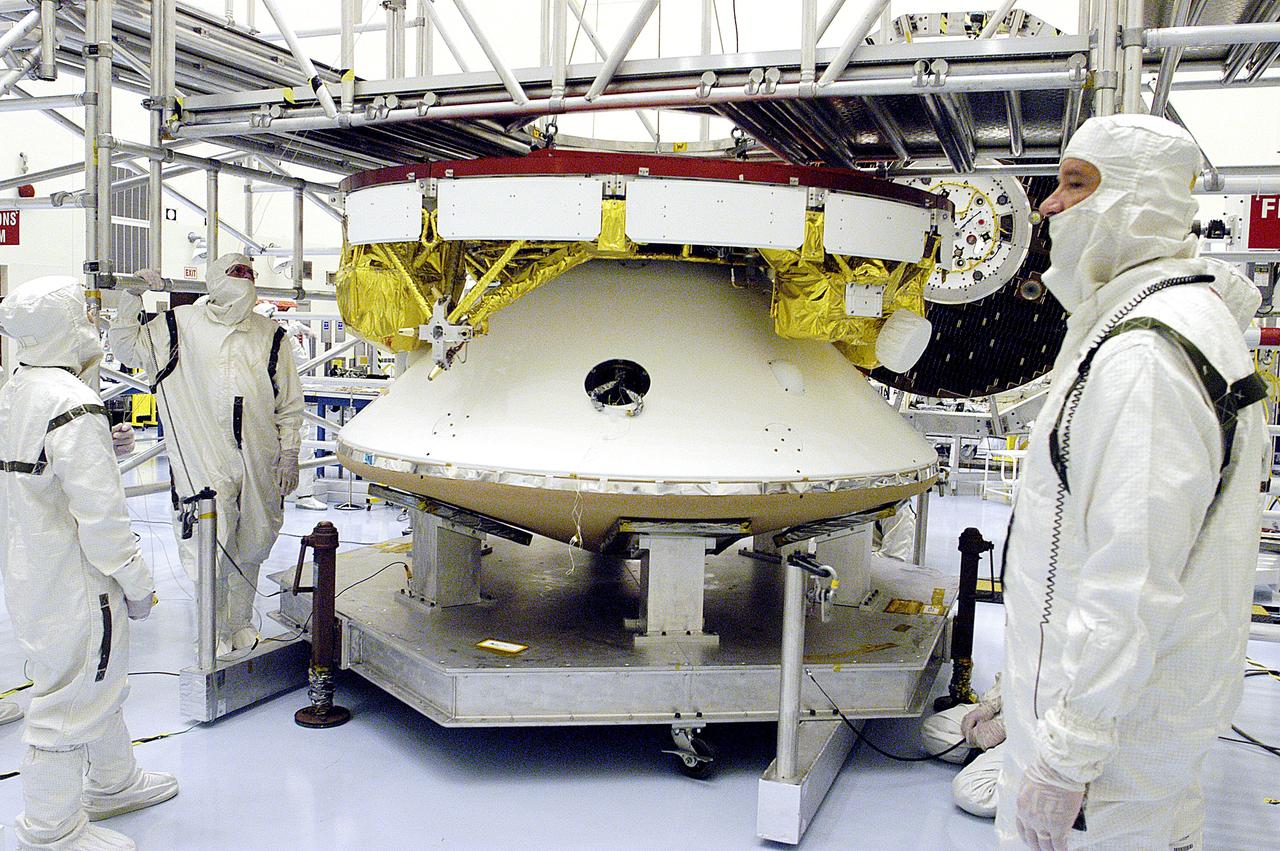
KENNEDY SPACE CENTER, FLA. -  The Mars Exploration Rover 2 (MER-2) undergoes a weight and center of gravity determination in the Payload Hazardous Servicing Facility.  NASA's twin Mars Exploration Rovers are designed to study the history of water on Mars. These robotic geologists are equipped with a robotic arm, a drilling tool, three spectrometers, and four pairs of cameras that allow them to have a human-like, 3D view of the terrain. Each rover could travel as far as 100 meters in one day to act as Mars scientists' eyes and hands, exploring an environment where humans can't yet go.  Launch of MER-2 is scheduled for June 5 from Cape Canaveral Air Force Station.

KENNEDY SPACE CENTER, FLA. - The Mars Exploration Rover 2 (MER-2) undergoes a weight and center of gravity determination in the Payload Hazardous Servicing Facility. NASA's twin Mars Exploration Rovers are designed to study the history of water on Mars. These robotic geologists are equipped with a robotic arm, a drilling tool, three spectrometers, and four pairs of cameras that allow them to have a human-like, 3D view of the terrain. Each rover could travel as far as 100 meters in one day to act as Mars scientists' eyes and hands, exploring an environment where humans can't yet go. Launch of MER-2 is scheduled for June 5 from Cape Canaveral Air Force Station.

Open
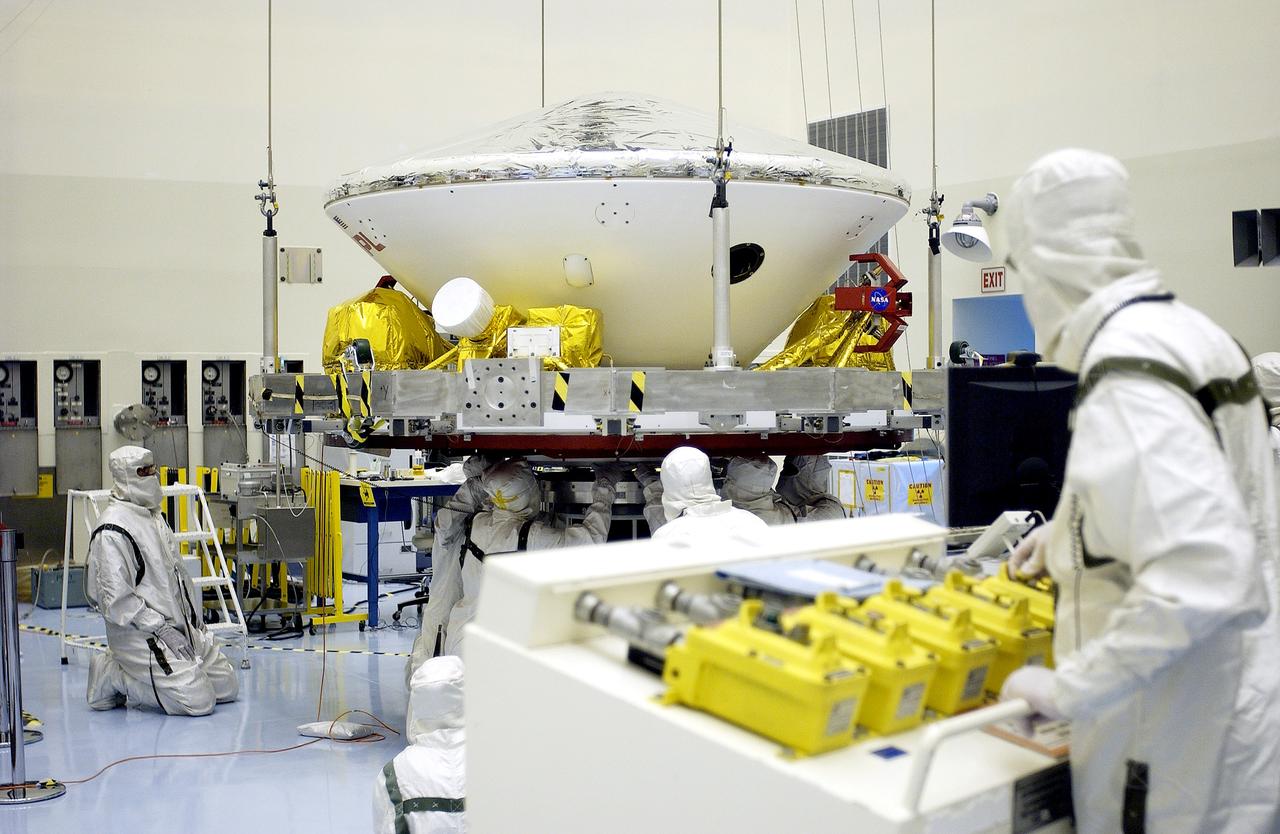
KENNEDY SPACE CENTER, FLA. -  In the Payload Hazardous Servicing Facility, workers prepare to mate the Mars Exploration Rover-2 (MER-2) to the third stage of a Delta II rocket for launch on June 5.  NASA’s twin Mars Exploration Rovers are designed to study the history of water on Mars. These robotic geologists are equipped with a robotic arm, a drilling tool, three spectrometers, and four pairs of cameras that allow them to have a human-like, 3D view of the terrain. Each rover could travel as far as 100 meters in one day to act as Mars scientists' eyes and hands, exploring an environment where humans can’t yet go.  MER-1 (MER-B) will launch June 25.

KENNEDY SPACE CENTER, FLA. - In the Payload Hazardous Servicing Facility, workers prepare to mate the Mars Exploration Rover-2 (MER-2) to the third stage of a Delta II rocket for launch on June 5. NASA’s twin Mars Exploration Rovers are designed to study the history of water on Mars. These robotic geologists are equipped with a robotic arm, a drilling tool, three spectrometers, and four pairs of cameras that allow them to have a human-like, 3D view of the terrain. Each rover could travel as far as 100 meters in one day to act as Mars scientists' eyes and hands, exploring an environment where humans can’t yet go. MER-1 (MER-B) will launch June 25.

Open
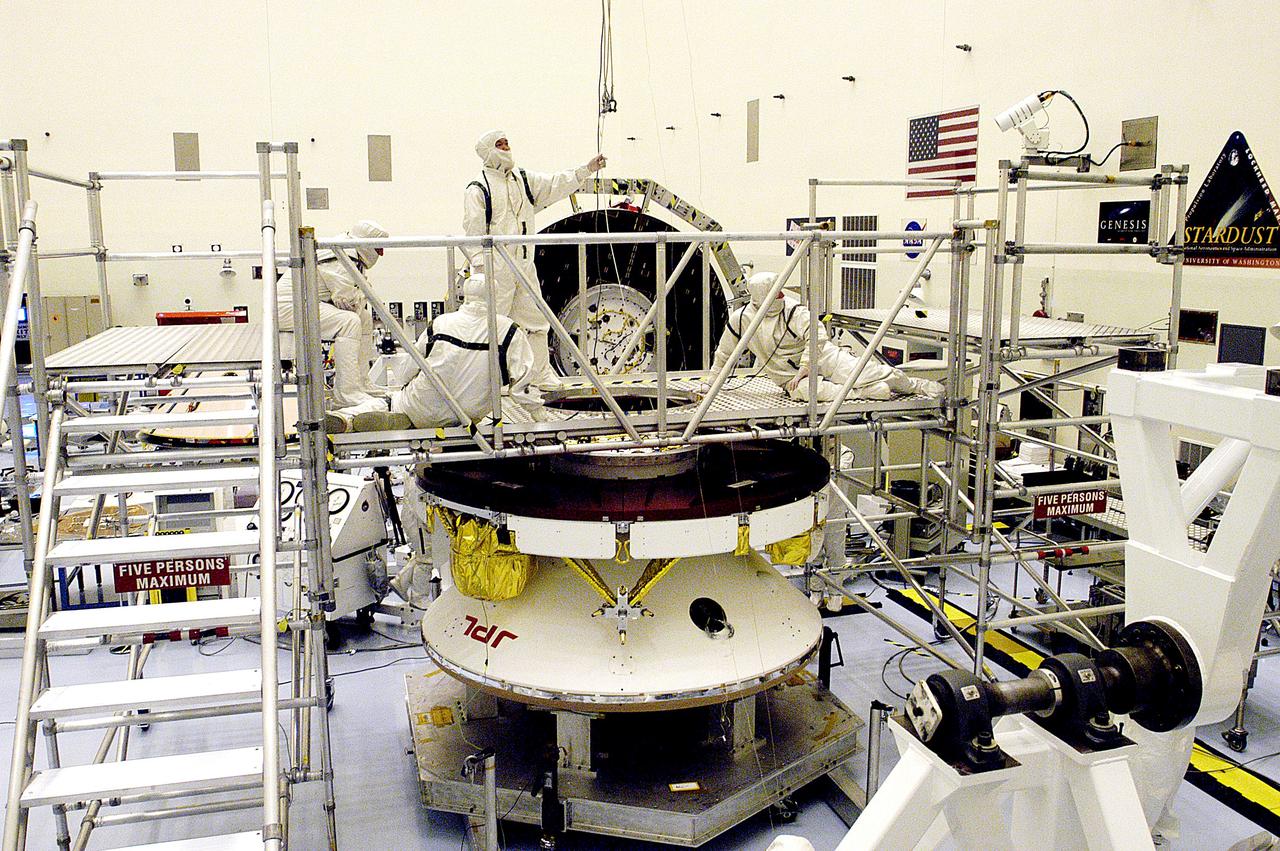
KENNEDY SPACE CENTER, FLA. - Workers in the Payload Hazardous Servicing Facility prepare the Mars Exploration Rover 2 (MER-2) for a weight and center of gravity determination.  NASA's twin Mars Exploration Rovers are designed to study the history of water on Mars. These robotic geologists are equipped with a robotic arm, a drilling tool, three spectrometers, and four pairs of cameras that allow them to have a human-like, 3D view of the terrain. Each rover could travel as far as 100 meters in one day to act as Mars scientists' eyes and hands, exploring an environment where humans can't yet go.  Launch of MER-2 is scheduled for June 5 from Cape Canaveral Air Force Station.

KENNEDY SPACE CENTER, FLA. - Workers in the Payload Hazardous Servicing Facility prepare the Mars Exploration Rover 2 (MER-2) for a weight and center of gravity determination. NASA's twin Mars Exploration Rovers are designed to study the history of water on Mars. These robotic geologists are equipped with a robotic arm, a drilling tool, three spectrometers, and four pairs of cameras that allow them to have a human-like, 3D view of the terrain. Each rover could travel as far as 100 meters in one day to act as Mars scientists' eyes and hands, exploring an environment where humans can't yet go. Launch of MER-2 is scheduled for June 5 from Cape Canaveral Air Force Station.

Open
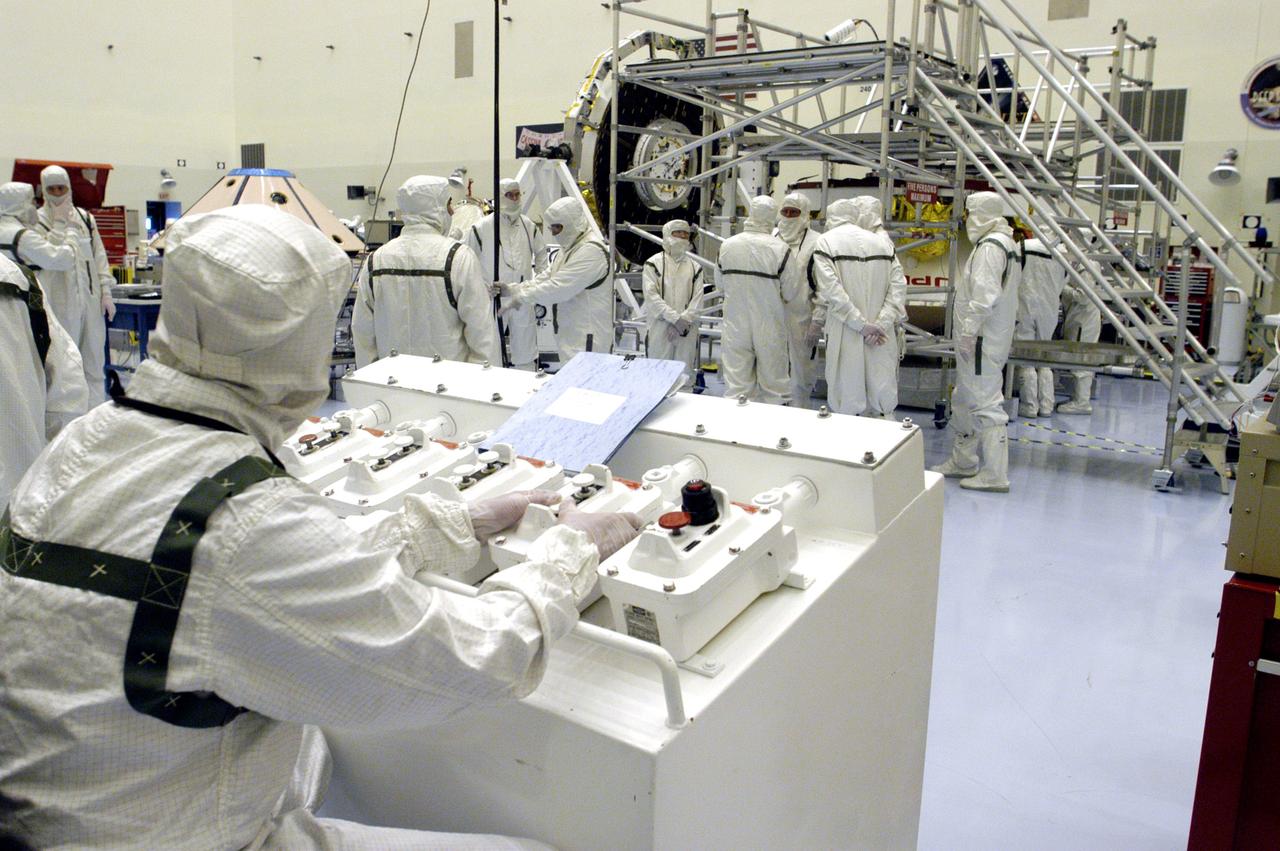
KENNEDY SPACE CENTER, FLA. - Workers in the Payload Hazardous Servicing Facility are preparing to determine weight and center of gravity for the Mars Exploration Rover 2 (MER-2).  NASA's twin Mars Exploration Rovers are designed to study the history of water on Mars. These robotic geologists are equipped with a robotic arm, a drilling tool, three spectrometers, and four pairs of cameras that allow them to have a human-like, 3D view of the terrain. Each rover could travel as far as 100 meters in one day to act as Mars scientists' eyes and hands, exploring an environment where humans can't yet go.  Launch of MER-2 is scheduled for June 5 from Cape Canaveral Air Force Station.

KENNEDY SPACE CENTER, FLA. - Workers in the Payload Hazardous Servicing Facility are preparing to determine weight and center of gravity for the Mars Exploration Rover 2 (MER-2). NASA's twin Mars Exploration Rovers are designed to study the history of water on Mars. These robotic geologists are equipped with a robotic arm, a drilling tool, three spectrometers, and four pairs of cameras that allow them to have a human-like, 3D view of the terrain. Each rover could travel as far as 100 meters in one day to act as Mars scientists' eyes and hands, exploring an environment where humans can't yet go. Launch of MER-2 is scheduled for June 5 from Cape Canaveral Air Force Station.

Open
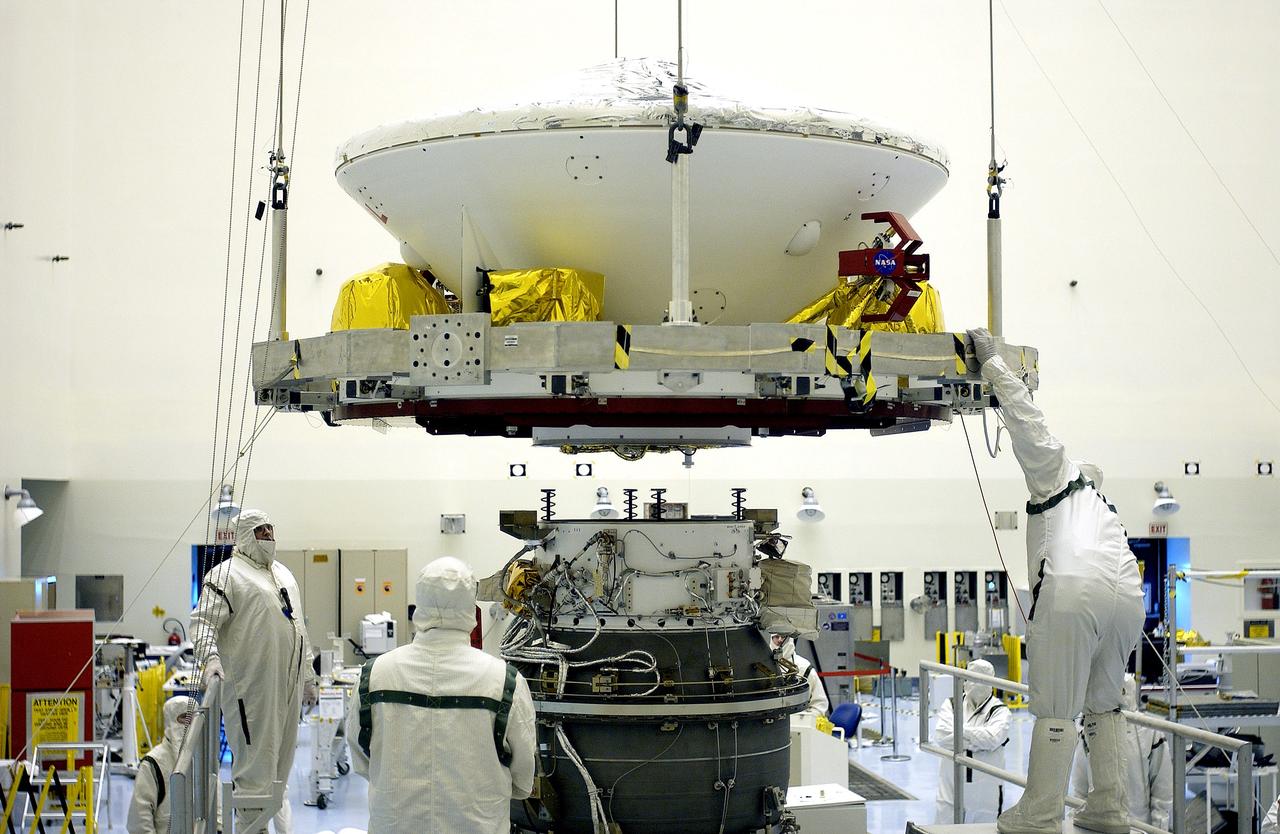
KENNEDY SPACE CENTER, FLA. -  In the Payload Hazardous Servicing Facility, workers prepare to mate the Mars Exploration Rover-2 (MER-2) to the third stage of a Delta II rocket for launch on June 5.  NASA’s twin Mars Exploration Rovers are designed to study the history of water on Mars. These robotic geologists are equipped with a robotic arm, a drilling tool, three spectrometers, and four pairs of cameras that allow them to have a human-like, 3D view of the terrain. Each rover could travel as far as 100 meters in one day to act as Mars scientists' eyes and hands, exploring an environment where humans can’t yet go.  MER-1 (MER-B) will launch June 25.

KENNEDY SPACE CENTER, FLA. - In the Payload Hazardous Servicing Facility, workers prepare to mate the Mars Exploration Rover-2 (MER-2) to the third stage of a Delta II rocket for launch on June 5. NASA’s twin Mars Exploration Rovers are designed to study the history of water on Mars. These robotic geologists are equipped with a robotic arm, a drilling tool, three spectrometers, and four pairs of cameras that allow them to have a human-like, 3D view of the terrain. Each rover could travel as far as 100 meters in one day to act as Mars scientists' eyes and hands, exploring an environment where humans can’t yet go. MER-1 (MER-B) will launch June 25.

Open
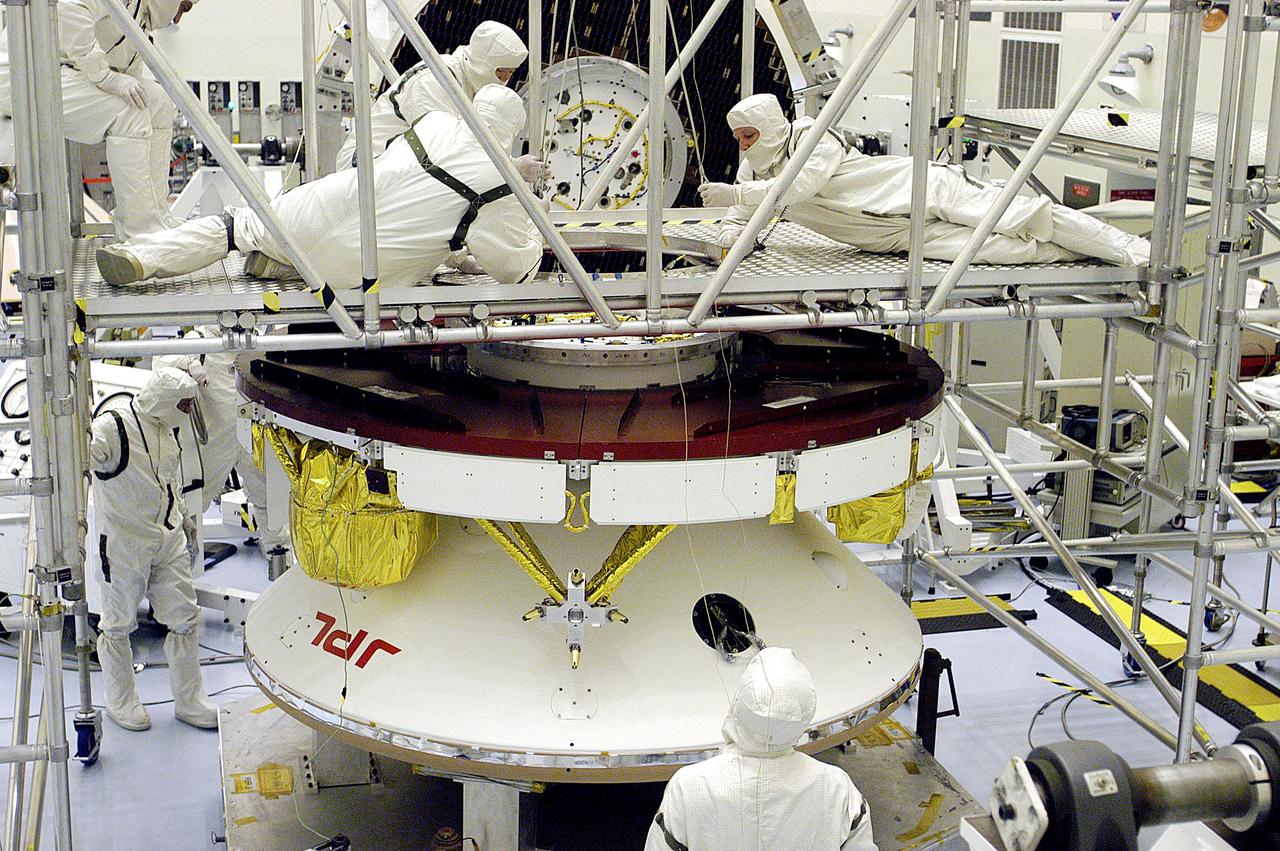
KENNEDY SPACE CENTER, FLA. - Workers in the Payload Hazardous Servicing Facility prepare the Mars Exploration Rover 2 (MER-2) for a weight and center of gravity determination.  NASA's twin Mars Exploration Rovers are designed to study the history of water on Mars. These robotic geologists are equipped with a robotic arm, a drilling tool, three spectrometers, and four pairs of cameras that allow them to have a human-like, 3D view of the terrain. Each rover could travel as far as 100 meters in one day to act as Mars scientists' eyes and hands, exploring an environment where humans can't yet go.  Launch of MER-2 is scheduled for June 5 from Cape Canaveral Air Force Station.

KENNEDY SPACE CENTER, FLA. - Workers in the Payload Hazardous Servicing Facility prepare the Mars Exploration Rover 2 (MER-2) for a weight and center of gravity determination. NASA's twin Mars Exploration Rovers are designed to study the history of water on Mars. These robotic geologists are equipped with a robotic arm, a drilling tool, three spectrometers, and four pairs of cameras that allow them to have a human-like, 3D view of the terrain. Each rover could travel as far as 100 meters in one day to act as Mars scientists' eyes and hands, exploring an environment where humans can't yet go. Launch of MER-2 is scheduled for June 5 from Cape Canaveral Air Force Station.

Open
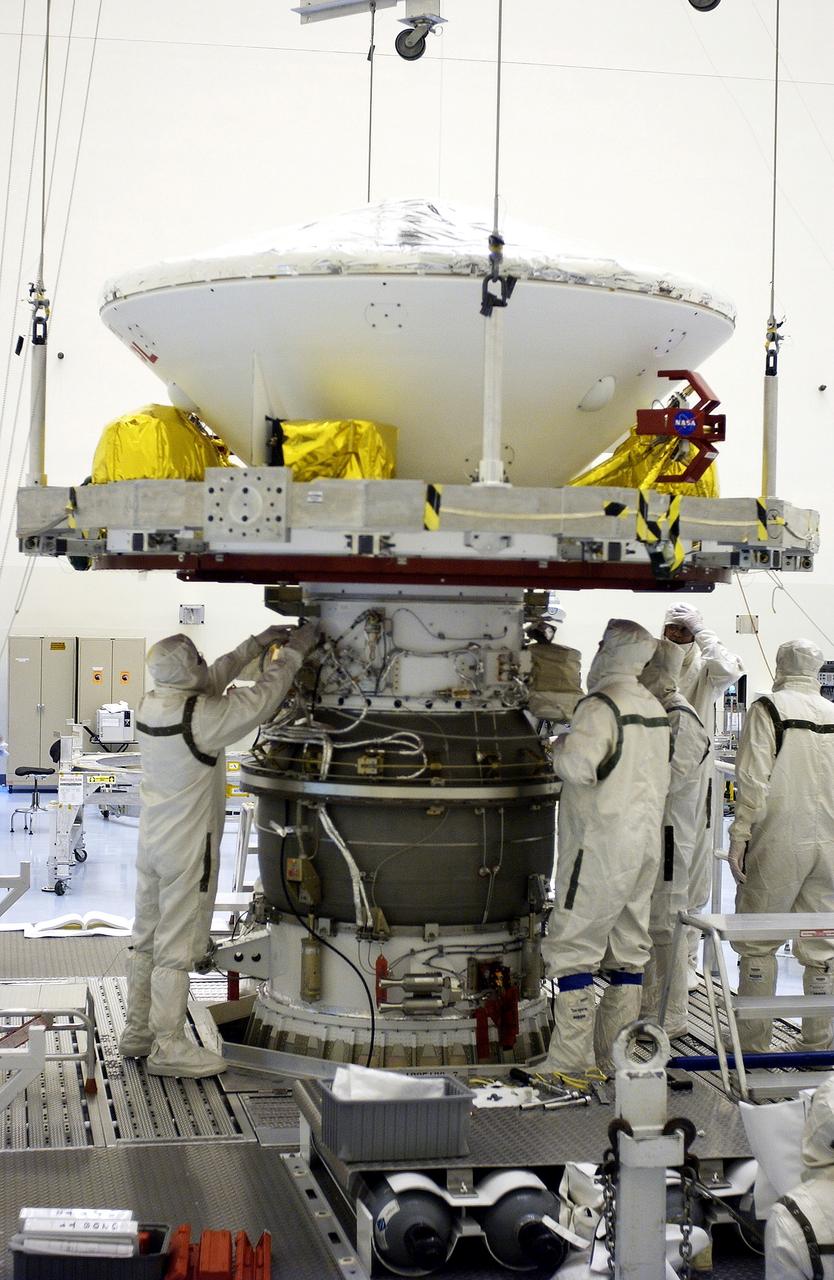
KENNEDY SPACE CENTER, FLA. -  In the Payload Hazardous Servicing Facility, workers mate the Mars Exploration Rover-2 (MER-2) to the third stage of a Delta II rocket for launch on June 5.  NASA’s twin Mars Exploration Rovers are designed to study the history of water on Mars. These robotic geologists are equipped with a robotic arm, a drilling tool, three spectrometers, and four pairs of cameras that allow them to have a human-like, 3D view of the terrain. Each rover could travel as far as 100 meters in one day to act as Mars scientists' eyes and hands, exploring an environment where humans can’t yet go.  MER-1 (MER-B) will launch June 25.

KENNEDY SPACE CENTER, FLA. - In the Payload Hazardous Servicing Facility, workers mate the Mars Exploration Rover-2 (MER-2) to the third stage of a Delta II rocket for launch on June 5. NASA’s twin Mars Exploration Rovers are designed to study the history of water on Mars. These robotic geologists are equipped with a robotic arm, a drilling tool, three spectrometers, and four pairs of cameras that allow them to have a human-like, 3D view of the terrain. Each rover could travel as far as 100 meters in one day to act as Mars scientists' eyes and hands, exploring an environment where humans can’t yet go. MER-1 (MER-B) will launch June 25.

Open
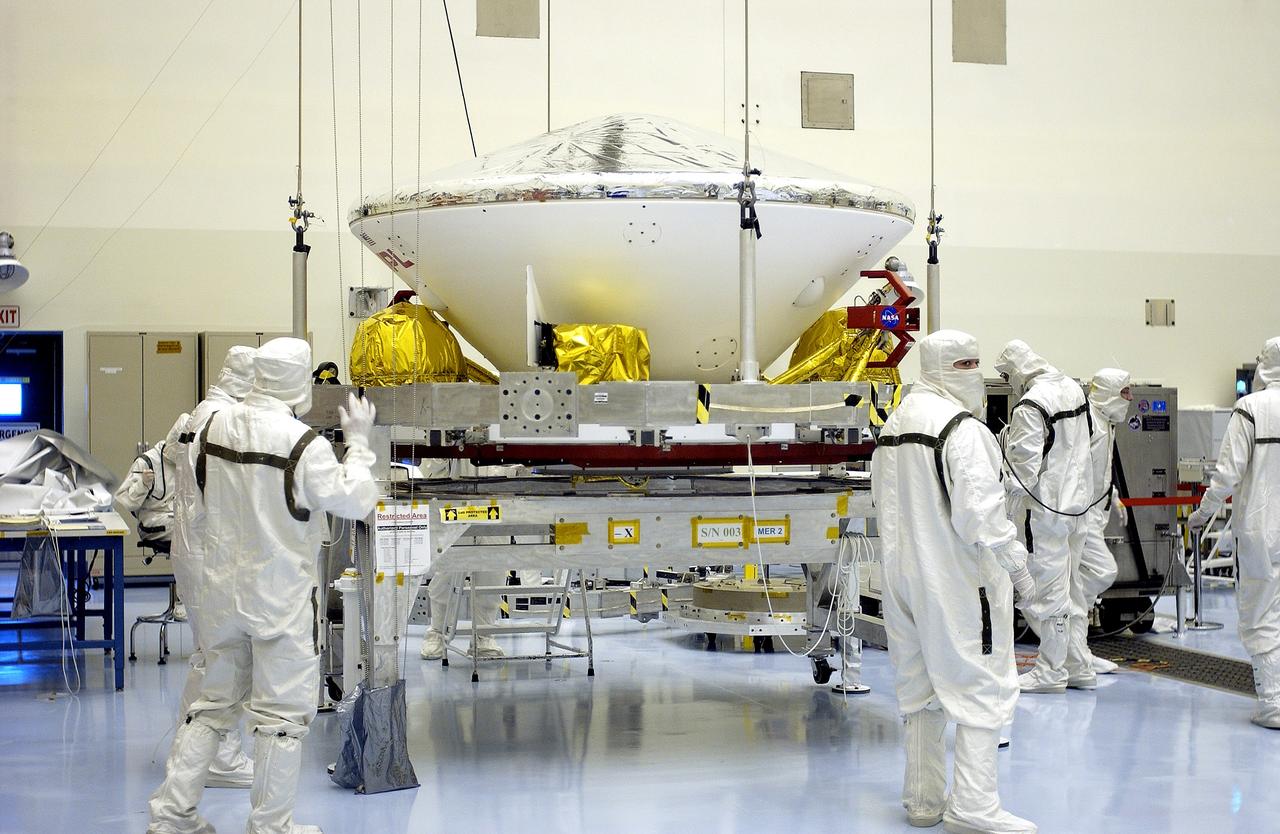
KENNEDY SPACE CENTER, FLA. -  In the Payload Hazardous Servicing Facility, workers prepare to mate the Mars Exploration Rover-2 (MER-2) to the third stage of a Delta II rocket for launch on June 5.  NASA’s twin Mars Exploration Rovers are designed to study the history of water on Mars. These robotic geologists are equipped with a robotic arm, a drilling tool, three spectrometers, and four pairs of cameras that allow them to have a human-like, 3D view of the terrain. Each rover could travel as far as 100 meters in one day to act as Mars scientists' eyes and hands, exploring an environment where humans can’t yet go.  MER-1 (MER-B) will launch June 25.

KENNEDY SPACE CENTER, FLA. - In the Payload Hazardous Servicing Facility, workers prepare to mate the Mars Exploration Rover-2 (MER-2) to the third stage of a Delta II rocket for launch on June 5. NASA’s twin Mars Exploration Rovers are designed to study the history of water on Mars. These robotic geologists are equipped with a robotic arm, a drilling tool, three spectrometers, and four pairs of cameras that allow them to have a human-like, 3D view of the terrain. Each rover could travel as far as 100 meters in one day to act as Mars scientists' eyes and hands, exploring an environment where humans can’t yet go. MER-1 (MER-B) will launch June 25.

Open
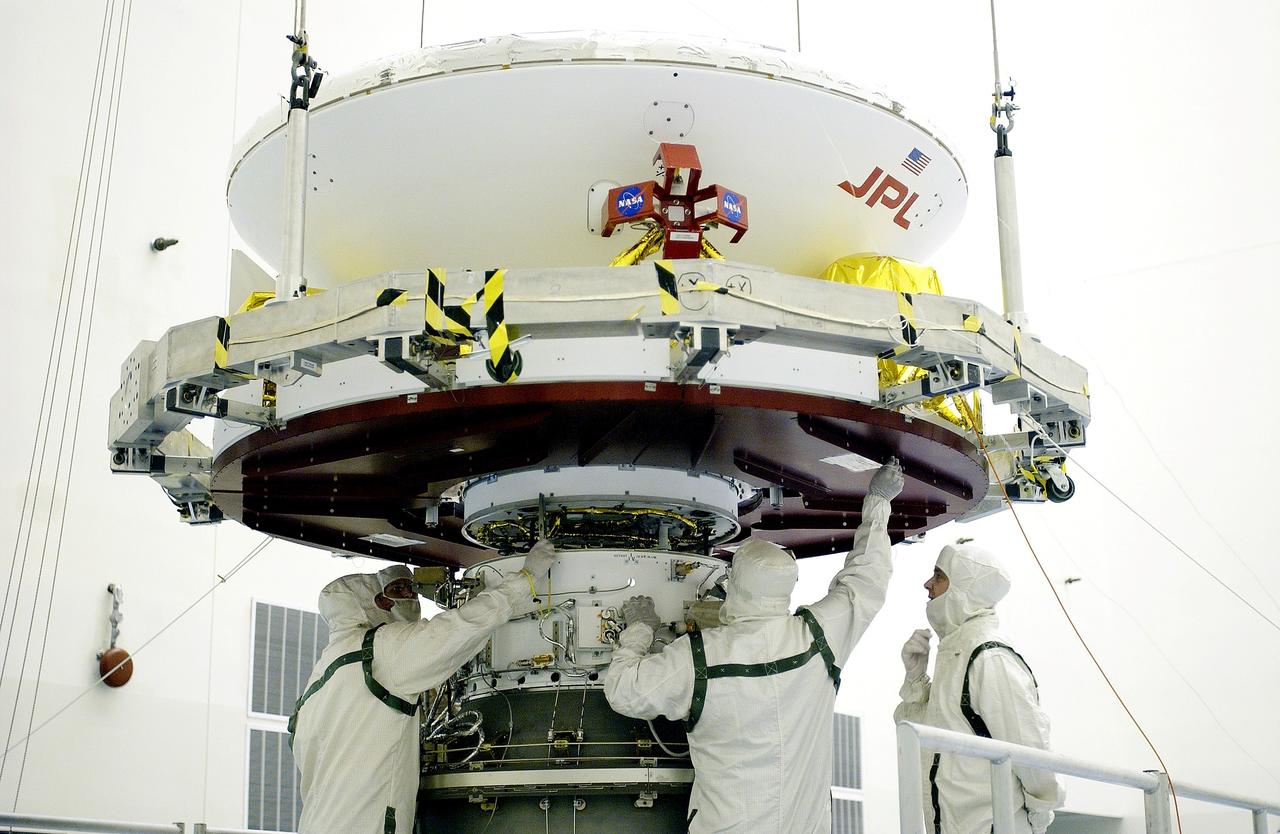
KENNEDY SPACE CENTER, FLA. -  In the Payload Hazardous Servicing Facility, workers mate the Mars Exploration Rover-2 (MER-2) to the third stage of a Delta II rocket for launch on June 5.  NASA’s twin Mars Exploration Rovers are designed to study the history of water on Mars. These robotic geologists are equipped with a robotic arm, a drilling tool, three spectrometers, and four pairs of cameras that allow them to have a human-like, 3D view of the terrain. Each rover could travel as far as 100 meters in one day to act as Mars scientists' eyes and hands, exploring an environment where humans can’t yet go.  MER-1 (MER-B) will launch June 25.

KENNEDY SPACE CENTER, FLA. - In the Payload Hazardous Servicing Facility, workers mate the Mars Exploration Rover-2 (MER-2) to the third stage of a Delta II rocket for launch on June 5. NASA’s twin Mars Exploration Rovers are designed to study the history of water on Mars. These robotic geologists are equipped with a robotic arm, a drilling tool, three spectrometers, and four pairs of cameras that allow them to have a human-like, 3D view of the terrain. Each rover could travel as far as 100 meters in one day to act as Mars scientists' eyes and hands, exploring an environment where humans can’t yet go. MER-1 (MER-B) will launch June 25.

Open
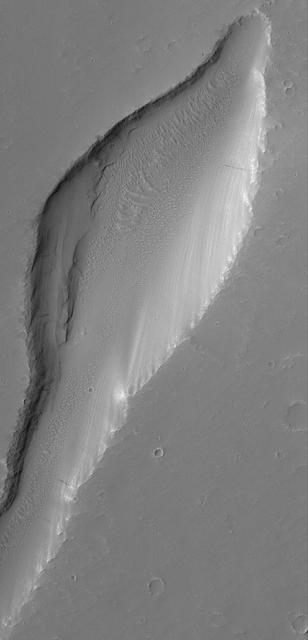
Martian Trough

Martian Trough

Open

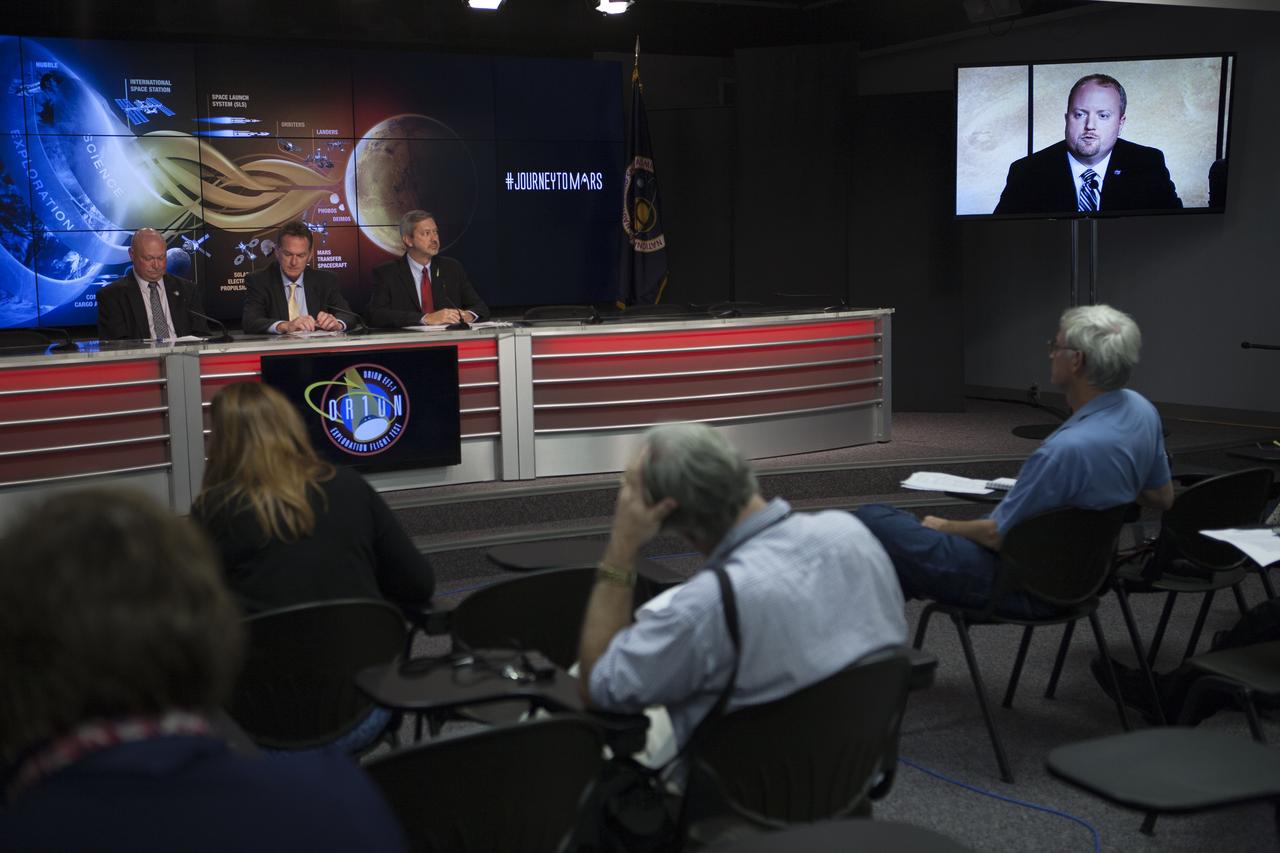
Orion Journey to Mars, L-2 Briefing

Orion Journey to Mars, L-2 Briefing

Open